Rabat Family Sunday Lunch menu
Rabat Family Sunday Lunch — The Capital's Unhurried Weekend Table
In Rabat, as across Morocco, Sunday belongs to the long family lunch built around a single towering dish of couscous. The capital's version is unfussy and generous: seven vegetables steamed over a shared mound of grain, a table of little salads to start, and a bowl of seasonal fruit to close — no rush, no procession, just family around one platter. This menu gives the full Rabat Sunday lunch with a shopping list and a timeline that respects the slow morning. See the recipes and a how-to on steaming couscous the traditional way.
The menu
To start
Salad spread (zaalouk, taktouka, carrot-cumin)
A handful of small cooked and raw salads with bread while the couscous finishes steaming.
Centrepiece
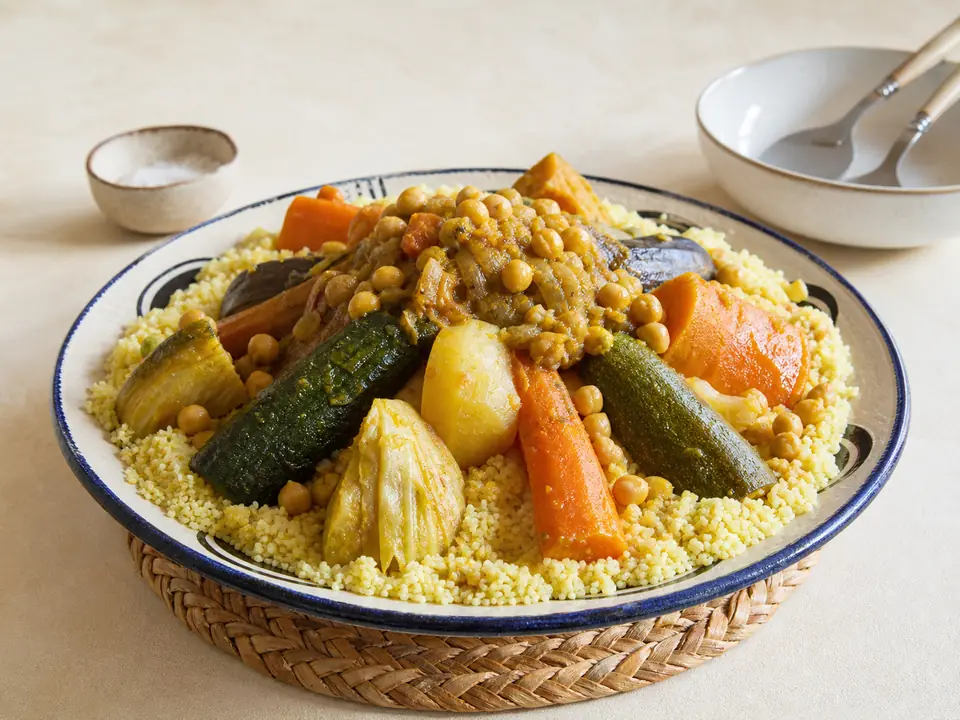
Couscous with seven vegetables
The Sunday institution — grain steamed three times, crowned with pumpkin, carrot, turnip, courgette, cabbage, chickpeas and tomato.
With the couscous
Tfaya (caramelised onion and raisins)
For those who like it sweet: a spoon of honeyed onion-and-raisin tfaya over the grain.
Broth
Reserved vegetable stock
The fragrant steaming broth is served alongside so each person can moisten their own portion.
To finish
Seasonal fruit and mint tea
A platter of oranges, melon or grapes and the ritual pour of mint tea.
Shopping list
- Couscous grain (medium)
- Lamb or beef on the bone, or chicken (for the broth)
- Pumpkin, carrots, turnips, courgettes and cabbage
- Tomatoes, onion and a tin of chickpeas
- Coriander, parsley, ginger, turmeric and saffron
- Aubergines and peppers (for zaalouk and taktouka)
- Raisins, onions and honey (for tfaya)
- Smen or butter (to finish the grain)
- Seasonal fruit and khobz bread
- Gunpowder green tea and fresh mint
Prep timeline
-
Sunday morning
Start the meat and stock base in the bottom of the couscoussier; make the salads and chill them.
-
Mid-morning
Add the hard vegetables to the broth; begin the first steaming of the grain.
-
1 hour before lunch
Steam the couscous a second and third time, rubbing in butter; add the soft vegetables to the broth.
-
30 minutes before
Make the tfaya; mound the grain and arrange the vegetables on top.
-
At the table
Serve the broth alongside, set out the salads, and pour the first tea.
Host's tips
- Steam the grain at least twice — three times is traditional — for the light, separate texture that defines good couscous.
- Never boil couscous; it is steamed over the simmering broth so it drinks in the aroma.
- Serve the broth in a separate jug so each person moistens the grain to their own taste.
- Friday is the classic couscous day in Morocco, but Rabat families keep the ritual going on Sundays too.
- Make the salads first thing while the broth builds; they only improve sitting in the fridge.
Questions about this menu
Why do Moroccans eat couscous on the weekend?
Couscous is the traditional communal dish, most associated with Friday after prayers, but it anchors family gatherings on any weekend day. It is designed to be shared from one platter, which suits a big family lunch.
What are the seven vegetables in couscous?
It varies, but a classic mix is pumpkin, carrot, turnip, courgette, cabbage, tomato and chickpeas. Seven is symbolic of abundance rather than a fixed rule.
Do I need a couscoussier?
It helps enormously — the two-tier pot steams the grain over the broth. You can improvise with a steamer set over a stockpot, but avoid boiling the grain, which turns it stodgy.
What is tfaya?
A sweet topping of onions slow-cooked with honey, cinnamon, saffron and raisins, spooned over couscous or meat. It is optional but beloved for the sweet-savoury contrast.
Can this lunch be made vegetarian?
Easily — build the broth on vegetables, chickpeas and plenty of spice instead of meat. The seven-vegetable couscous is naturally vegetable-forward.
Learn to cook this menu with a local in Marrakech
Every dish here is taught, hands-on, in a Marrakech cooking class — or taste them across the medina on a guided food tour.