Chefchaouen Mountain Dinner menu
Chefchaouen Blue City Dinner — A Rif Mountain Table
High in the Rif mountains, Chefchaouen eats simply and warmly, close to what the surrounding hills produce: fava beans, fresh goat's cheese, olives, herbs and dark mountain honey. This dinner menu captures that rustic northern table — a bowl of silky bissara to start, a homely kefta tagine, and cheese with honey to finish. It is unpretentious mountain food meant to warm you after a cool blue-washed evening. Below are the courses, a simple shopping list and a timeline. Browse the recipes and a how-to for the perfect bissara.
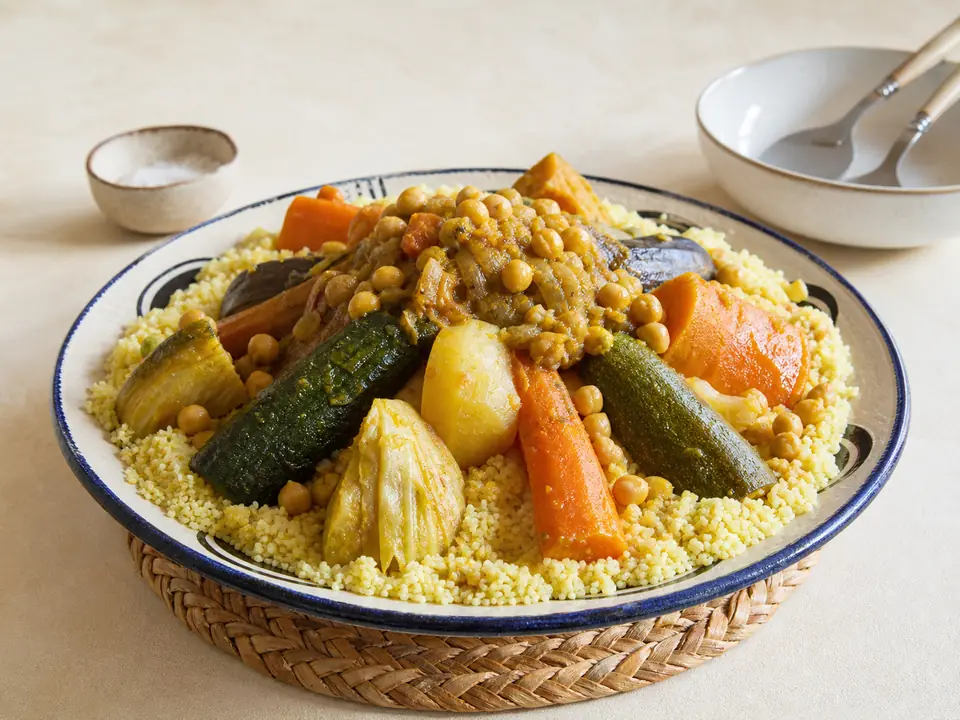
The menu
Starter
Bissara (fava bean soup)
A thick, comforting purée of dried fava beans finished with olive oil, cumin and paprika — Rif comfort in a bowl.
Small plate
Fresh goat's cheese with olives and bread
Soft local jben cheese, cured olives and warm khobz — the mountain larder on a plate.
Main
Kefta tagine with eggs
Spiced beef meatballs simmered in tomato sauce with eggs cracked in at the end, eaten straight from the tagine with bread.
Side
Loubia (white bean stew)
Slow-cooked white beans in tomato and garlic — hearty and cheap, a highland staple.
To finish
Goat's cheese with mountain honey and walnuts
Fresh cheese drizzled with dark Rif honey and scattered with walnuts — sweet, simple, memorable.
Drink
Mint tea with wild herbs
Mountain mint tea, sometimes laced with wild sage or wormwood (chiba) for a highland edge.
Shopping list
- Dried split fava beans (for bissara)
- Garlic, cumin, sweet paprika and good olive oil
- Fresh goat's cheese (jben) and cured olives
- Minced beef, onion, coriander and ras el hanout (for kefta)
- Tomatoes and eggs (for the kefta tagine)
- Dried white beans, garlic and tomato paste (for loubia)
- Mountain honey and walnuts
- Khobz or country bread
- Fresh mint and, if you can find it, dried sage or chiba
- Green tea
Prep timeline
-
Night before
Soak the fava beans and the white beans separately overnight.
-
Afternoon
Cook the bissara until smooth; start the loubia so it has time to soften and thicken.
-
1 hour before
Roll the kefta and build the tomato sauce in the tagine.
-
20 minutes before
Simmer the kefta, then crack the eggs into the sauce to just set.
-
Just before serving
Reheat the bissara, plate the cheese and olives, and brew the herb tea.
Host's tips
- Bissara is all about texture — blend it smooth, then loosen with the bean water to a pourable, silky purée.
- Finish every bissara bowl with a generous swirl of olive oil, a dusting of cumin and paprika, and eat it very hot.
- Crack the eggs into the kefta tagine at the last minute so the yolks stay soft.
- Use the best honey you can for the cheese course — the dark mountain honey of the Rif is the point.
- A little dried chiba (wormwood) in the tea is the true Rif touch, but use it sparingly — it is bitter.
Questions about this menu
What food is Chefchaouen known for?
Simple mountain fare: bissara (fava bean soup), fresh goat's cheese, olives, mountain honey and hearty bean and kefta dishes. The Rif's cool climate favours warming, rustic cooking.
What is bissara?
A thick soup or purée of dried fava beans (sometimes split peas), blended smooth and finished with olive oil, cumin, garlic and paprika. It is a cheap, filling breakfast or supper across northern Morocco.
Is Chefchaouen food spicy?
Not fiery. It is warmly spiced — cumin, paprika, garlic — rather than hot. The emphasis is on comfort and the quality of local produce like cheese and honey.
What is jben?
Fresh, soft, unaged Moroccan cheese, often made from goat's or cow's milk. In the Rif it is eaten with olives and bread, or with honey as a simple dessert.
Can I make this menu vegetarian?
Almost all of it already is — bissara, loubia, cheese and honey are meat-free. Simply swap the kefta tagine for a vegetable tagine or a second bean dish.
Learn to cook this menu with a local in Marrakech
Every dish here is taught, hands-on, in a Marrakech cooking class — or taste them across the medina on a guided food tour.