One-day plans
A Marrakech Sweets-and-Tea Afternoon
Morocco takes its sweets and its tea seriously, and an afternoon is exactly the right amount of time to fall for both. This plan is a slow, sugar-dusted half-day — a pastry crawl through the souks, a hands-on class folding almond-stuffed sweets, and the full ceremony of mint tea, ending on a rooftop as the light turns gold. Bring a sweet tooth and no other agenda.
- Duration
- Afternoon, ~2:00pm–7:00pm
- Pace
- Leisurely, indulgent
- Best for
- Sweet tooths, tea lovers
- Budget
- Low, plus one pastry class
Before you start
Moroccan sweets are their own world — less about sugar for its own sake and more about almonds, honey, sesame, orange-blossom and warm spice. And they are inseparable from mint tea, the drink that Moroccans pour, sweeten and share at every hour of the day. An afternoon built around the two is one of the most relaxing food experiences in Marrakech.
This plan runs from a leisurely pastry crawl in the souks, through a hands-on class where you fold and shape the sweets yourself, to the tea ceremony that ties it all together. The order matters: taste widely first so you know what you like, then learn to make it, then settle in to drink and watch the day end.
It is a gentle, low-cost half-day that pairs beautifully with a lazy morning or a busy one — the perfect counterweight to a hard day of markets and street food.
At a glance
- Moroccan sweets centre on almonds, honey, sesame and orange-blossom, not just sugar.
- Mint tea is a ritual, not a drink — the pour from a height aerates and cools it.
- Taste widely first, then take a pastry class, then settle in for the tea ceremony.
- A sweet, low-cost afternoon that balances a heavy day of markets and grills.
The plan, in order
5 stops, timed morning to night — follow it top to bottom.
Early afternoon
2:00pm – 4:00pmGraze the souk pastry stalls to learn what you love, then get your hands into the dough.
- 1
2:00pm
A pastry crawl through the souks
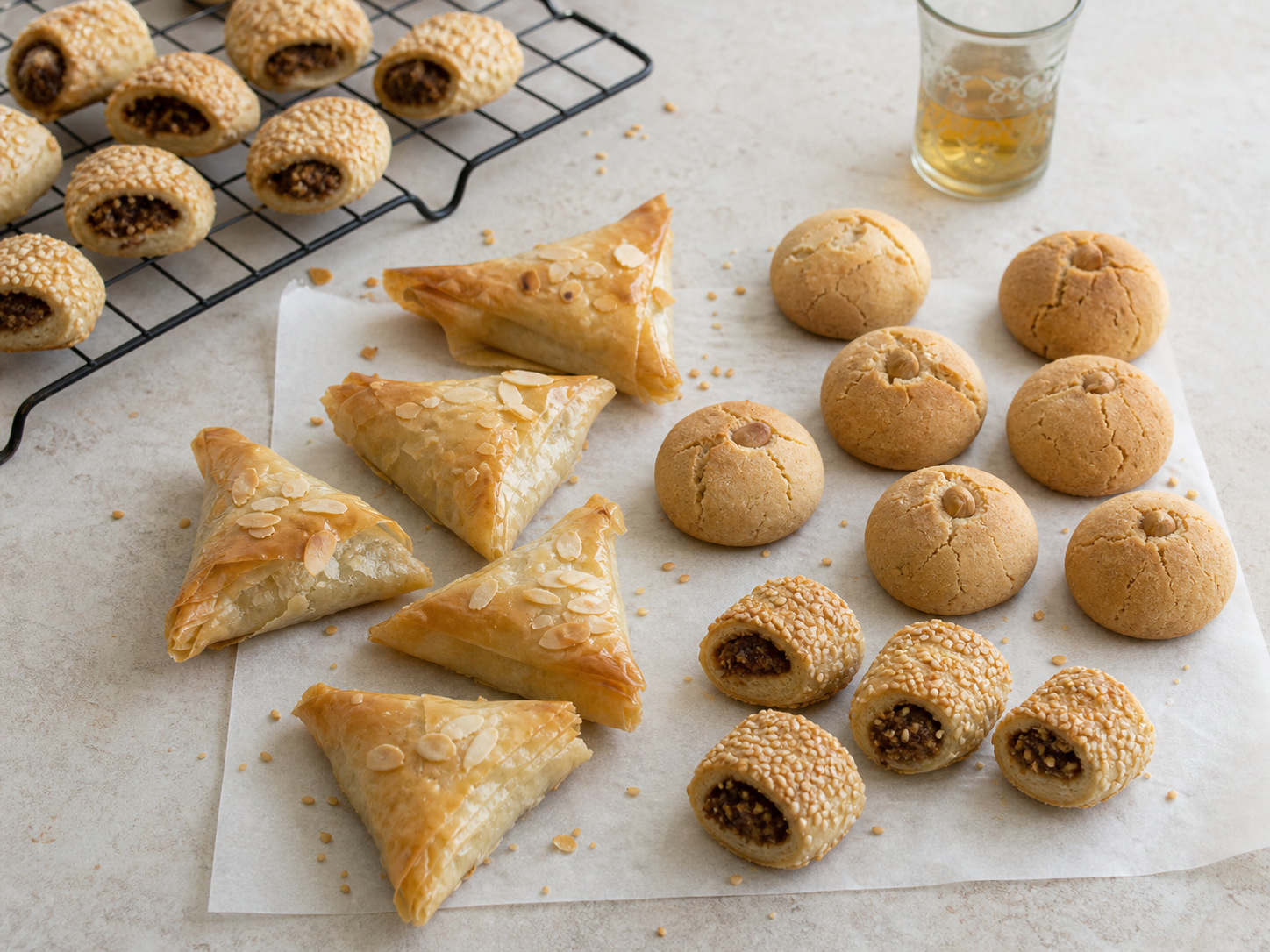
Start by tasting your way along the sweet stalls — chebakia coiled and glazed in honey, kaab el ghazal (gazelle horns) stuffed with almond paste, ghriba shortbreads, briouat triangles and sticky sellou. Buy one of each and compare; this is your map of Moroccan sweets.
Tip: Buy pastries by the piece from busy stalls so you can sample many kinds without committing to a box.
Sweets & pastry crawl - 2
3:00pm
A hands-on Moroccan pastry class
Now make them yourself. A pastry class walks you through shaping gazelle horns, coiling chebakia or folding briouat — fiddly, meditative work that gives you a whole new respect for the stalls you just grazed. You take home both the skill and a box of what you made.
Moroccan pastry class
Late afternoon
4:00pm – 7:00pmLearn the tea ritual, then carry it up to a rooftop for the golden hour.
- 3
4:30pm
The mint-tea ceremony
Sit for the ritual that binds it all together: gunpowder green tea, a fistful of spearmint, plenty of sugar, and the long theatrical pour from height that aerates the tea and builds its foam. Learn why the first glass, second and third each taste different.
The mint-tea ritual - 4
5:00pm
Pair pastries with tea, properly
With the ceremony learned, do it justice — a plate of your favourite pastries and a pot of fresh mint tea, taken slowly. This is the everyday Moroccan pause, and the whole point of the afternoon: sweet, unhurried and social.
Chebakia recipe - 5
6:00pm
A rooftop tea at golden hour
Climb to a café terrace for a last pot of tea as the light turns amber and the call to prayer rolls across the rooftops. It is the softest, most photogenic hour in Marrakech, and there is no better place to end a sweet afternoon.
Moroccan mint tea recipe
Practical tips
- Buy pastries singly rather than by the box so you can taste a wide range in one afternoon.
- Moroccan sweets are rich — a little of many kinds beats a lot of one.
- The tea is traditionally very sweet; ask for less sugar if you prefer, though locals rarely do.
- Time the rooftop tea for late afternoon to catch the golden light and the call to prayer.
Make it your own
Prefer a class that combines both?
A mint-tea and pastry class teaches the sweets and the tea ritual together in one sitting.
Want the drinks side too?
Add a stop on Marrakech's fresh juices and almond-milk drinks — see the drinks and juices guide and the fresh-juice tour.
Frequently asked questions
What are the most famous Moroccan pastries?
The classics are kaab el ghazal (gazelle horns) filled with almond paste, chebakia — sesame pastries coiled and dipped in honey — ghriba shortbreads, briouat triangles and sellou. Most are built around almonds, honey, sesame and orange-blossom rather than plain sugar.
Why is Moroccan mint tea poured from so high?
The long pour from height aerates the tea, builds a light foam on top, and cools it slightly so it can be drunk hot but not scalding. It is also part of the theatre and hospitality of serving — a good pour is a point of pride.
Is a pastry class suitable for beginners?
Yes. Moroccan pastry work is fiddly but not technically hard, and classes are built for beginners — you will shape gazelle horns or coil chebakia by hand with the teacher guiding every fold, and take home a box of what you made.
Make it happen
Ready to turn the plan into a trip? Book the hands-on parts, find a food tour to fill an afternoon, or read up before you go.