One-day plans
A Half-Day Market-and-Cook Morning
If you only carve out one morning for food, make it this. You shop a working Moroccan market with someone who knows it, then carry your basket straight into a kitchen and turn it into lunch. It is the fastest way to understand how Marrakech actually eats — from stall to pot to shared table in a single, unhurried morning.
- Duration
- Half day, ~9:00am–1:30pm
- Pace
- Relaxed, hands-on
- Best for
- Cooks, couples, curious eaters
- Budget
- One class + a little market cash
Before you start
A market-to-table morning is the antidote to eating your way blindly through a foreign city. Instead of pointing at unfamiliar things, you learn what they are, how to pick them, and how they turn into the dishes you have been eating. By lunchtime you have shopped a souk, cooked a tagine and picked up a handful of skills you can use back home.
The rhythm matters. Markets are freshest and coolest first thing, kitchens are calmest before noon, and finishing around lunch leaves your afternoon free for a nap, a hammam or a slow wander. This plan is deliberately light — one market, one kitchen, one long table — so it never feels rushed.
It also happens to be the most transferable food experience in the city: everything you learn about layering a tagine, balancing a spice blend or folding a salad comes home with you. Consider it a crash course in Moroccan home cooking, disguised as a morning out.
At a glance
- Go early — produce is freshest and the souk is coolest before mid-morning.
- Let your host or teacher lead the shopping; the point is learning to choose, not just to buy.
- A market-to-table class ends in a shared lunch of everything you cooked.
- This is the single most skill-building half-day for a home cook in Marrakech.
The plan, in order
5 stops, timed morning to night — follow it top to bottom.
The morning
9:00am – 1:30pmShop the souk with a guide, then cook and eat what you bought — one continuous, hands-on arc.
- 1
9:00am
Meet your host and set the menu
Most market-to-table classes begin with a quick sit-down over tea to agree the menu — usually a tagine, two or three salads and a dessert or bread. This is where you flag anything you do not eat and learn the shopping list you are about to hunt down.
How a market-to-table class works - 2
9:30am
Shop the produce and spice stalls
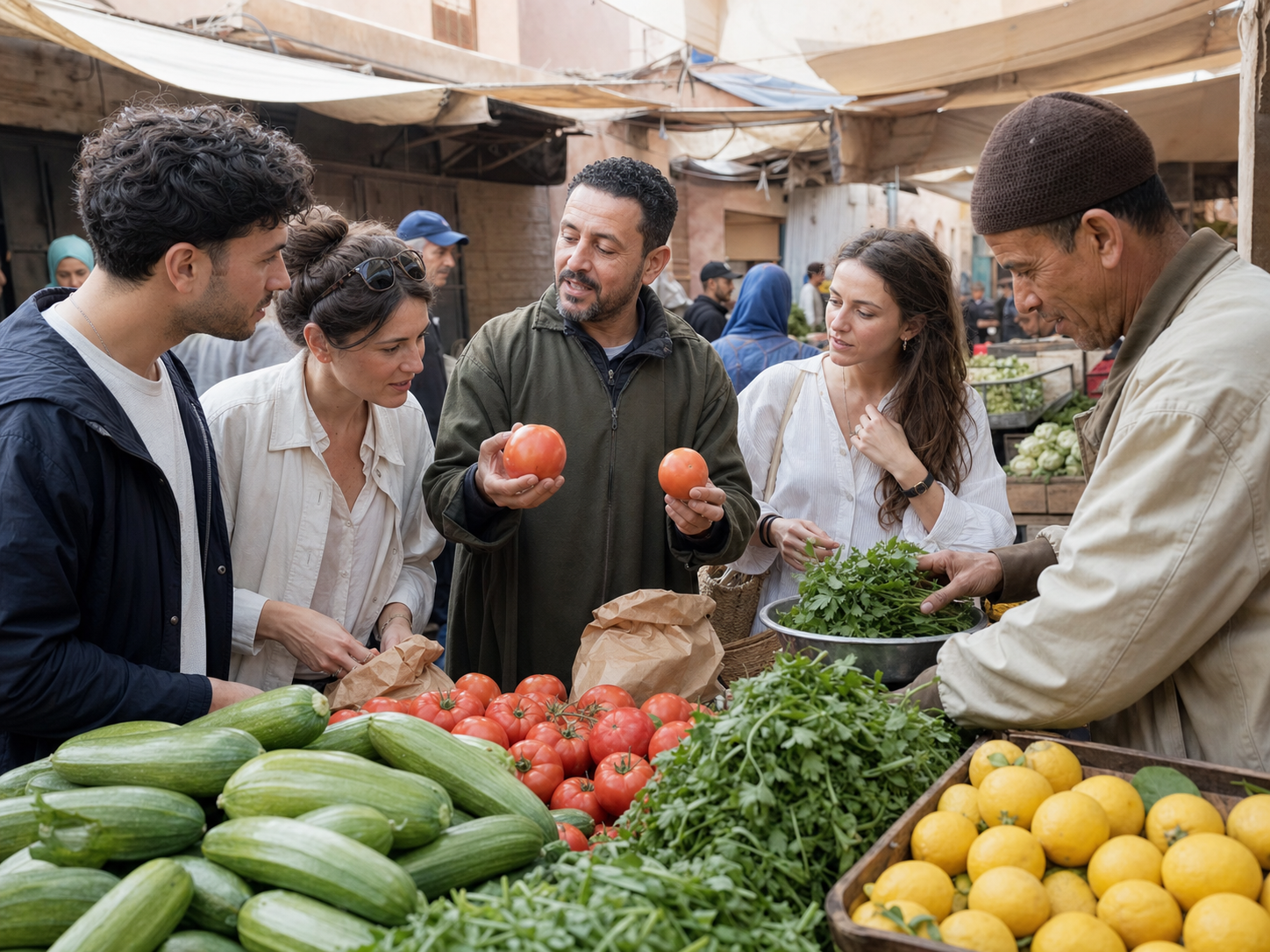
You head into a working neighbourhood market — not a tourist one — to buy vegetables, herbs, olives and spices for your menu. You will learn to judge a ripe tomato, ask for a spoonful of cumin, and understand why preserved lemons and olives sit at the heart of the pantry.
Tip: Watch how your host bargains and greets the sellers — the social rhythm of the souk is half the lesson.
Marrakech markets guide - 3
10:30am
Blend the spices and prep the base
Back in the kitchen, you toast and grind spices, chop the aromatics, and build the foundation of a tagine — onion, garlic, ginger, saffron and the layering that makes it work. A good teacher explains the why behind each step, not just the how.
Ras el hanout, explained - 4
11:15am
Cook the tagine and the salads
With the base built, the tagine goes on to cook low and slow while you turn out cooked salads like zaalouk and taktouka, and perhaps fold msemen or knead bread. This is the hands-in-everything hour that makes the whole morning stick.
How a tagine works - 5
12:30pm
Lunch at the shared table
You sit down to eat everything you made — the tagine, the salads, the bread, the tea poured from a height — usually on a rooftop or in a riad courtyard. It is the natural, satisfying end to the morning and doubles as a generous lunch.
Pouring mint tea, the ritual
Practical tips
- Book a class that explicitly includes the market shop — some skip it and start in the kitchen.
- Eat a light breakfast; the shared lunch at the end is bigger than you expect.
- Bring a small notebook or use your phone to jot the spice ratios you will want to recreate at home.
- Ask your teacher which spices travel well so you can buy the real thing to take home.
Make it your own
Want just the market, not the cooking?
Swap the class for a guided spice-souk tour or a Rahba Kedima wander if you would rather taste and shop than cook.
Travelling with children?
A family cooking class keeps the same market-and-cook shape but pitches the tasks for younger hands.
Frequently asked questions
Do I need cooking experience for a market-to-table morning?
None at all. These classes are built for complete beginners as much as keen cooks — the teacher guides every step, from choosing produce in the souk to layering the tagine. You leave with a real skill set regardless of where you started.
How much of the morning is shopping versus cooking?
Roughly the first hour is the market shop and the rest is hands-on cooking and eating. The shopping is short but deliberate — you learn how to choose and haggle rather than doing a big grocery run.
Will there be enough food for lunch?
Yes — the class ends in a full shared meal of everything you cooked, so it comfortably replaces lunch. Come with a light breakfast and an empty afternoon.
Make it happen
Ready to turn the plan into a trip? Book the hands-on parts, find a food tour to fill an afternoon, or read up before you go.