Fresh, floral & tea · أتاي · الشاي الأخضر · atay · warqa
Gunpowder Green Tea
The rolled green pellets behind every glass of Moroccan mint tea
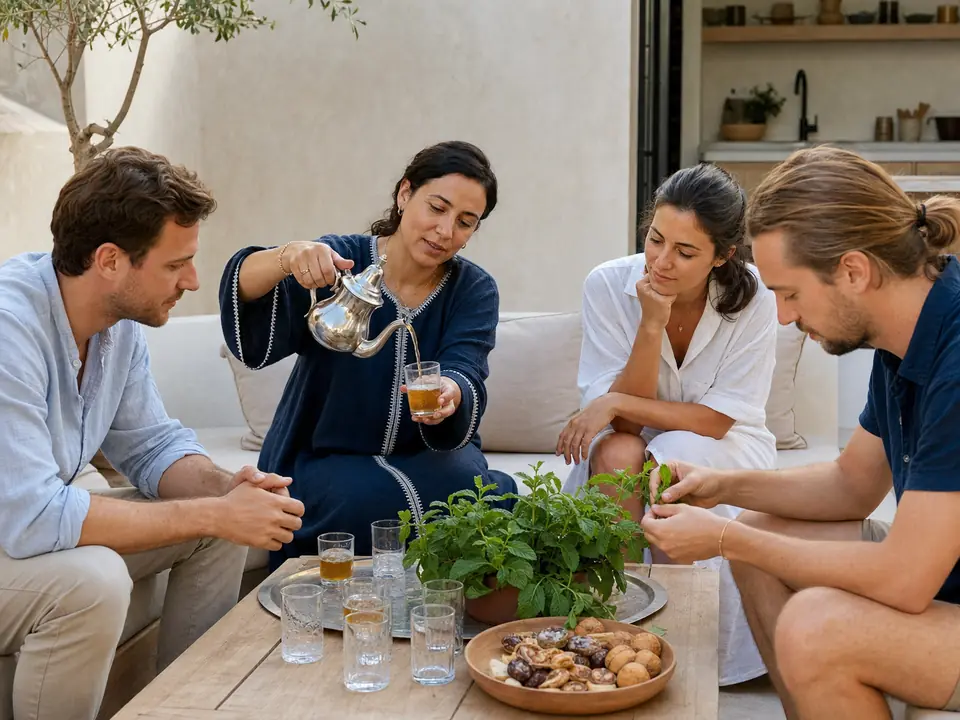
The leaf behind Morocco's national drink is not grown in Morocco at all: it is Chinese gunpowder green tea, its leaves rolled into tight little pellets that unfurl in the pot. Brewed strong, sweetened generously and packed with fresh spearmint, it becomes atay — the mint tea poured from a height into small glasses at every welcome, deal and pause in the day.
- Darija
- atay
- Type
- Chinese gunpowder green
- Form
- Rolled pellets
- Grown in
- China (Zhejiang) — not Morocco
What it is
Gunpowder tea is a green tea whose leaves are steamed, rolled and dried into small, dense pellets that resemble grains of gunpowder — hence the name. Almost all of it is imported from China (chiefly Zhejiang province), and Morocco is one of the world's largest buyers; familiar market names include the long-established brands sold in green-and-gold boxes and tins.
The pellet form matters: tightly rolled leaves keep their freshness and then open up in the hot pot to give the strong, slightly bitter brew that Moroccan tea is built on. A related, more delicate 'chun mee' (warqa) green tea is sometimes used or blended for a smoother cup.
It is a true pantry staple — a box of gunpowder tea sits in every Moroccan kitchen, as essential as sugar and mint — which is why it closes out this pantry pillar.
In the Moroccan kitchen
There is essentially one, all-important preparation: Moroccan mint tea. The gunpowder leaves are rinsed with a first splash of hot water (poured off to wash away dust and bitterness), then brewed strong with a large bunch of fresh spearmint and a generous amount of sugar, and poured from a height to aerate it and build a little foam (the keshkusha) on top.
The ritual matters as much as the recipe: tea is the currency of hospitality, offered to every guest, poured by the host, and drunk in three rounds. In winter, other herbs — wild absinthe (chiba), verbena, sage — are sometimes added or swapped for the mint.
The technique to master is balance: enough tea for strength, enough mint for perfume, enough sugar for the traditional sweetness, and the high pour that gives the glass its signature froth.
- Moroccan mint tea (atay) — the national drink, brewed strong and sweet
- Rinsed first with hot water to wash and de-bitter the leaves
- Steeped with fresh spearmint and sugar, poured from a height
- Winter variations with wild absinthe (chiba), verbena or sage
- Offered in three rounds as the ritual of hospitality
How to choose & store
Good gunpowder tea has tight, hard, evenly rolled pellets with a dull green sheen, not a lot of dust, broken leaf or grey, faded colour. Tighter, shinier pellets generally mean fresher, better tea and a cleaner, less harshly bitter brew. Very cheap, dusty tea makes a rougher cup — drinkable, but blunt.
Buy from a tea-and-spice seller who can show you the loose leaf, and consider a mid-grade gunpowder for everyday tea, keeping a finer chun mee (warqa) for a smoother pot. Boxed brand-name tea is reliable; loose tea from a good stall can be better value and fresher.
Storage — Keep tea airtight, away from light, heat, moisture and strong smells (it readily absorbs odours); a sealed tin in a cool cupboard keeps it fresh for many months. Do not store it near spices.
Buying it in Marrakech
What to look for at the stall — and how to buy well without invented prices to anchor you.
- Buy from tea-and-spice sellers in the souk who stock loose gunpowder by weight as well as the familiar boxed brands.
- Look for tight, hard, evenly rolled pellets with a dull-green sheen and little dust or broken leaf — the tighter and shinier, the fresher.
- Ask to see (and smell) the loose leaf; a good seller will show you the grade and let you compare an everyday gunpowder with a finer chun mee.
- Pick up the classic accompaniments while you are there — a bunch of fresh spearmint and a sugar cone — from the nearby stalls.
- Choose a sealed tin or box for travel, so the tea keeps its freshness and does not pick up other smells.
Substitutes
- Any decent loose green tea can make a mint tea, but gunpowder's strength and body are what stand up to the sugar and mint; a delicate green will taste thin.
- Chun mee (warqa) green tea gives a smoother, less bitter cup and can be used alone or blended with gunpowder.
- For a caffeine-free version, Moroccans brew the same ritual with herbs alone — verbena, wild absinthe or sage with mint and sugar — though it is no longer 'green tea'.
Frequently asked questions
Is Moroccan tea grown in Morocco?
No — the leaf is Chinese gunpowder green tea, imported chiefly from Zhejiang province in China. Morocco is one of the world's biggest buyers of it. What is Moroccan is the preparation: brewed strong with fresh spearmint and plenty of sugar into atay, the national drink.
Why is it called gunpowder tea?
Because the green tea leaves are rolled into small, tight, dense pellets that resemble grains of gunpowder. The rolling keeps them fresh and lets them unfurl in the hot pot to give the strong brew that Moroccan mint tea is built on.
How do I choose good gunpowder tea?
Look for tight, hard, evenly rolled pellets with a dull-green sheen and little dust or broken leaf — tighter and shinier means fresher and a cleaner, less bitter cup. Very cheap, dusty tea makes a rougher brew. A finer chun mee (warqa) gives a smoother pot.
How should I store tea leaves?
Keep them airtight and away from light, heat, moisture and strong smells, since tea readily absorbs odours — so never store it next to spices. A sealed tin in a cool cupboard keeps gunpowder tea fresh for many months.