Fresh, floral & tea · ماء الزهر · ماء الورد · ma zhar · ma ward
Orange-Blossom & Rose Water
Distilled floral waters — the perfume in the pastries and the guest's welcome
Two distilled floral waters perfume the Moroccan kitchen: orange-blossom water, ma zhar, from the blossom of the bitter orange, and rose water, ma ward, distilled from the pink Damask roses of the Dades valley. A few drops scent a tray of pastries, a bowl of sliced oranges, a pot of coffee — and the water sprinkled over a guest's hands at the table.
- Orange blossom
- ma zhar
- Rose water
- ma ward
- Rose region
- Kelaat M'Gouna (Dades)
- Used by
- The drop — very potent
What it is
Orange-blossom water (ma zhar) is the fragrant by-product of distilling the blossom of the bitter (Seville) orange; rose water (ma ward) is distilled from fresh rose petals. Morocco's rose water is bound up with Kelaat M'Gouna in the Dades valley — the 'valley of roses' — whose Damask roses are harvested each spring in a famous rose festival and turned into rose water and oil.
Both are intensely aromatic and used by the drop, not the spoonful. They are pantry staples in the sense that a bottle of each lives in most Moroccan kitchens, brought out for baking, entertaining and the small rituals of hospitality. Because they are distilled waters rather than dried seasonings, they sit here rather than only among the spices.
The crucial distinction is real distilled floral water versus cheap synthetic 'essence' or flavouring — the genuine article smells rounded and natural, the fake sharp and chemical.
In the Moroccan kitchen
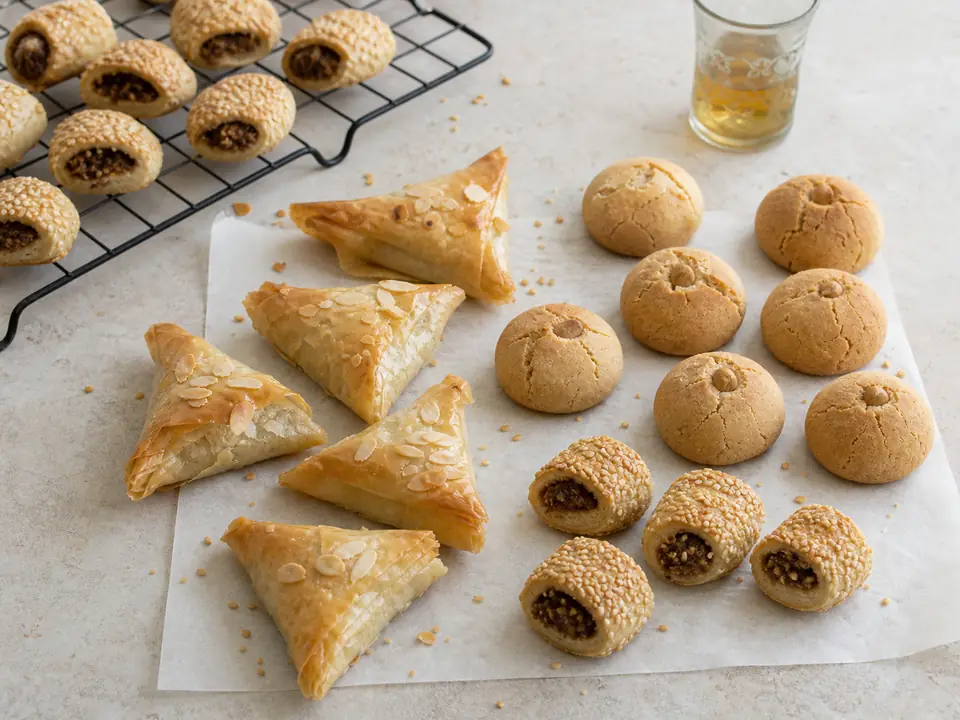
Floral waters are above all pastry perfumes. Orange-blossom water scents the syrup and dough of countless sweets, the toasted seffa and sellou, msemen and pancake batters, and is stirred into fresh orange salad and into coffee. Rose water perfumes pastries, milk puddings, sliced-fruit desserts and some drinks, and both can lift a glass of tea.
Beyond the plate, orange-blossom water plays a ceremonial role: sprinkled from a silver flask (a mrash) over guests' hands or in the air as a gesture of welcome at weddings and feasts. This double life — flavour and hospitality — is part of why the waters are so treasured.
The rule in cooking is restraint: add a few drops, taste, and add more only if needed, because too much turns a dessert soapy and perfumed.
- Scenting pastry syrups, seffa, sellou and msemen (orange blossom)
- Perfuming milk puddings, pastries and fruit desserts (rose water)
- A few drops in fresh orange salad or in coffee
- Lifting a pot of mint tea
- Sprinkled over guests' hands as a welcome (orange blossom)
How to choose & store
Buy genuine distilled floral water, not synthetic essence. Real ma zhar and ma ward smell natural, floral and slightly rounded, and the label (or the seller) should say 'distilled' rather than 'flavouring' or 'essence'; a harsh, chemical, oversweet smell is the mark of a synthetic. Distilled waters are clear, not artificially coloured — rose water is not bright pink.
A little goes a long way, so a small bottle lasts; buy from a herbalist, a reputable grocer or, for rose water, a source connected to the Kelaat M'Gouna trade, and smell before you commit.
Storage — Keep floral waters tightly capped in a cool, dark cupboard away from heat and light; they keep for many months to a year or more. Refrigeration is not needed but does no harm; discard if the aroma fades or turns off.
Buying it in Marrakech
What to look for at the stall — and how to buy well without invented prices to anchor you.
- Look to herbalists and grocers rather than souvenir stalls, and to rose-product sellers who trade in Kelaat M'Gouna rose water and oil.
- Smell before buying — real distilled water is naturally floral and rounded; a sharp, chemical or oversweet nose means synthetic essence.
- Check the label or ask: you want 'distilled' floral water, not 'flavouring' or 'essence'.
- Be wary of bright-pink 'rose water'; genuine distilled rose water is clear, not dyed.
- A small bottle is plenty given how potent it is — buy modest sizes you can use up while fresh.
Substitutes
- Orange-blossom and rose water are not interchangeable — one is citrus-floral, the other rosy — but either can carry the 'floral' role in a dessert if you accept the change of character.
- If you have only a concentrated flower essence, use a tiny fraction of the quantity and taste carefully.
- A strip of orange zest can hint at the citrus-floral note of ma zhar in a syrup, though without its perfume.
Frequently asked questions
What is the difference between orange-blossom water and rose water?
Orange-blossom water (ma zhar) is distilled from the blossom of the bitter orange and is citrus-floral; rose water (ma ward) is distilled from rose petals and is rosy and perfumed. Both are used by the drop to scent Moroccan pastries, drinks and desserts, and are not interchangeable.
Where does Moroccan rose water come from?
Chiefly from Kelaat M'Gouna in the Dades valley — the 'valley of roses' — where Damask roses are harvested each spring, celebrated in a rose festival, and distilled into rose water and rose oil.
How do I avoid buying synthetic floral water?
Smell it first: real distilled floral water is naturally floral and rounded, while synthetic essence smells sharp, chemical or oversweet. Look for 'distilled' on the label rather than 'flavouring' or 'essence', and be suspicious of bright-pink rose water, since the genuine article is clear.
How much floral water should I use?
Very little. These waters are potent, so add a few drops, taste, and add more only if needed. Too much makes a dessert taste soapy or perfumed. A small bottle of each lasts a long time in the kitchen.