Trade & culture
History of Moroccan Hospitality and Diyafa
Ask what most defines Moroccan food culture and many will answer not with a dish but with a value: hospitality. The tradition of diyafa — the near-sacred duty to welcome and feed a guest — shapes how Moroccans cook, serve and share, and its roots run deep in both Amazigh custom and Islamic teaching.
- Read
- 7 min
- Topic
- Trade & culture
- Updated
- 19 July 2026
At a glance
- Diyafa is the Moroccan culture of hospitality, treating the guest as almost sacred.
- It is expressed through food, mint tea and open-handed generosity.
- Its roots lie in both ancient Amazigh custom and Islamic values.
The guest is sacred
In Moroccan culture, a guest is to be honoured, and turning someone away hungry is close to unthinkable. This ethic, often summed up in the idea that the guest is a gift, means hosts will offer the best they have — the finest food, endless tea, the most comfortable place — even at real cost to themselves. Generosity is a matter of honour and identity, not mere politeness.
The values behind it are ancient. The harsh conditions of mountain and desert life made hospitality a survival ethic, since a traveller might depend on a stranger's welcome, while Islam strongly enjoins generosity to guests, giving the custom religious weight.
Hospitality on a tray
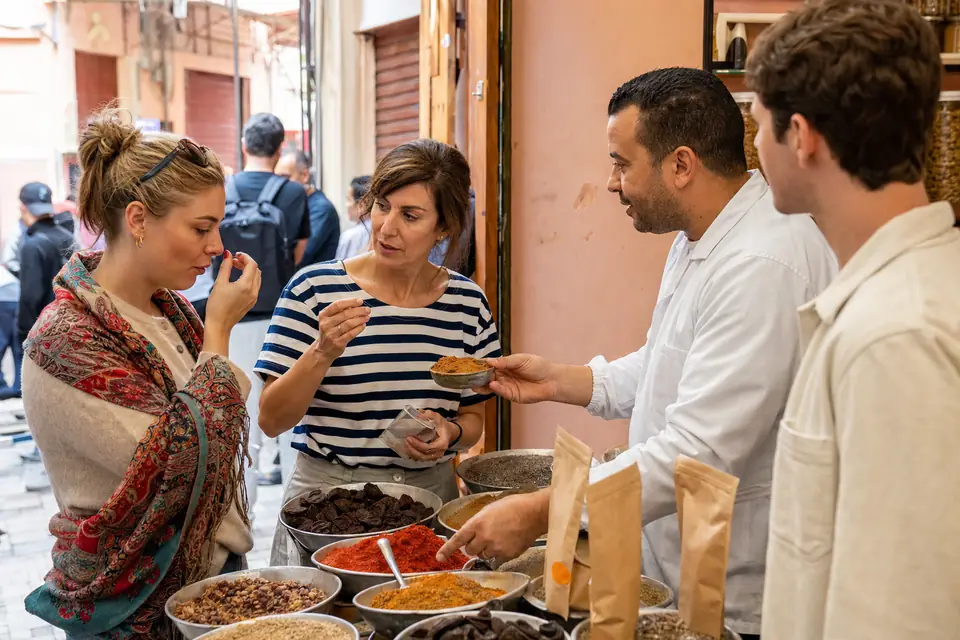
Diyafa is enacted above all through food and drink, following well-understood rituals of welcome that every household knows.
- Mint tea: the first gesture of welcome, poured and served in rounds.
- Dates and milk: a traditional offering to honour an arriving guest.
- Bread and shared dishes: eating together from a common plate as an act of fellowship.
- Abundance: offering more than can be eaten, so no guest feels short-changed.
Feeding the bond
Hospitality is what turns Moroccan cooking from private nourishment into a social act. The most elaborate dishes exist largely to be shared with guests, and the pleasure of feeding others is woven through the cuisine, from a simple glass of tea offered to a passer-by to a wedding banquet for hundreds.
Diyafa underpins the whole festive tradition. Read on with the history of Moroccan festivals and feasting and how Islam shaped Moroccan cuisine.
Frequently asked questions
What is diyafa?
Diyafa is the Moroccan tradition of hospitality — the near-sacred duty to welcome and feed a guest generously. It is expressed through mint tea, food and open-handed giving, and hosts will offer the best they have to honour a visitor.
Why is hospitality so important in Moroccan culture?
Its roots are both practical and religious. The hardships of mountain and desert life made welcoming travellers a survival ethic, while Islam strongly enjoins generosity to guests. Together these made hospitality a matter of honour and identity.
How is Moroccan hospitality shown through food?
It is shown by offering mint tea as a first welcome, sometimes dates and milk, sharing bread and dishes from a common plate, and providing abundance so no guest feels short-changed. Feeding a guest well is central to the culture.
Is it rude to refuse food or tea in Morocco?
Because offering food and tea is a heartfelt gesture of welcome, refusing outright can seem to reject the host's generosity. Accepting at least a little, especially tea, honours the spirit of diyafa even if one cannot eat much.