Trade & culture
History of Moroccan Festivals and Feasting
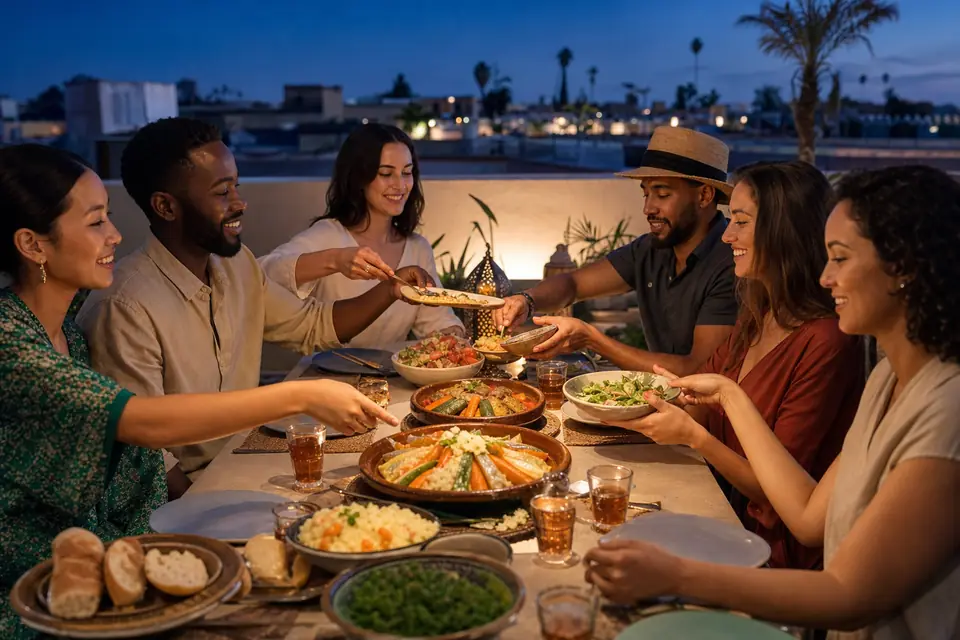
In Morocco the calendar is written in food. The fasting and nightly feasts of Ramadan, the sacrifice of Eid al-Adha, the sweets of Eid al-Fitr, the multi-day banquets of weddings and the local festivals called moussems each bring their own dishes. Feasting is how Moroccans mark faith, family and the turning of the year.
- Read
- 8 min
- Topic
- Trade & culture
- Updated
- 19 July 2026
At a glance
- Religious and social festivals each carry their own signature foods.
- Ramadan shapes a whole month of fasting by day and feasting at night.
- Eid, weddings and local moussems are all defined by special dishes.
The month of Ramadan
No period shapes Moroccan eating like Ramadan, the month of fasting from dawn to sunset. The daily fast is broken at iftar with a table of specific foods — dates, harira, chebakia, hard-boiled eggs, msemen and sweets — and the nights become sociable, generous and food-centred. The contrast between daytime restraint and evening abundance gives the month its distinctive rhythm.
Ramadan ends with Eid al-Fitr, the feast of breaking the fast, celebrated with sweets and family visits — a joyful counterpoint to the discipline of the preceding weeks.
Eid, weddings and moussems
Beyond Ramadan, the year holds other great occasions, each with its culinary heart. Together they weave food through the milestones of religious and social life.
- Eid al-Adha: the feast of sacrifice, when families slaughter a sheep and roast and grill the meat.
- Eid al-Fitr: the end of Ramadan, marked by pastries, sweets and family visits.
- Weddings: multi-course banquets of pastilla, grand tagines, mechoui, couscous and pastries.
- Moussems: local saints' festivals and seasonal fairs with communal cooking and feasting.
Food as celebration
Across all these occasions, the same principle holds: to celebrate is to cook, share and give generously. Feasts call forth the most elaborate dishes, the finest hospitality and often days of preparation, and they reinforce the bonds of family and community. The link between the calendar and the kitchen is one of the deepest features of Moroccan culture.
These feasts draw on the grandest cooking. Read on with the royal cuisine of the Moroccan court and Moroccan hospitality and diyafa.
Frequently asked questions
What foods mark Ramadan in Morocco?
The daily fast is broken at iftar with dates, harira soup, honeyed chebakia, hard-boiled eggs, msemen and sweets. The nights become sociable and food-centred, and the month ends with Eid al-Fitr, celebrated with pastries and family visits.
What is eaten at Eid al-Adha?
Eid al-Adha is the feast of sacrifice, when families slaughter a sheep and roasted and grilled lamb take centre stage, including mechoui and grilled offal. It is one of the great meat feasts of the Moroccan year.
What food is served at Moroccan weddings?
Wedding banquets are lavish and multi-course, typically featuring pastilla, grand spiced tagines, whole roasted mechoui, mounded couscous and trays of pastries with mint tea. They can involve days of preparation and reflect the host's generosity.
What is a moussem?
A moussem is a local festival, often honouring a saint or marking a season, that brings communities together with music, trade and communal cooking and feasting. Each has its own character and, frequently, its own traditional foods.