Preserves & condiments · الزيتون · zaytun / zeitoun
Moroccan Olives
Cracked green, meslalla, violet and oil-cured black — the souk's glistening pyramids
Few sights in Marrakech beat the olive stalls: waist-high pyramids of green, violet, russet and glossy black, each barrel a different cure — cracked and spicy, herb-marinated, salt-shrivelled or slick with oil. Olives are eaten at nearly every Moroccan meal, and knowing the styles is the difference between buying well and buying blind.
- Darija
- zaytun
- Main variety
- Picholine Marocaine
- Colours
- Green → violet → black (ripeness)
- Best souk
- Souk Ableuh
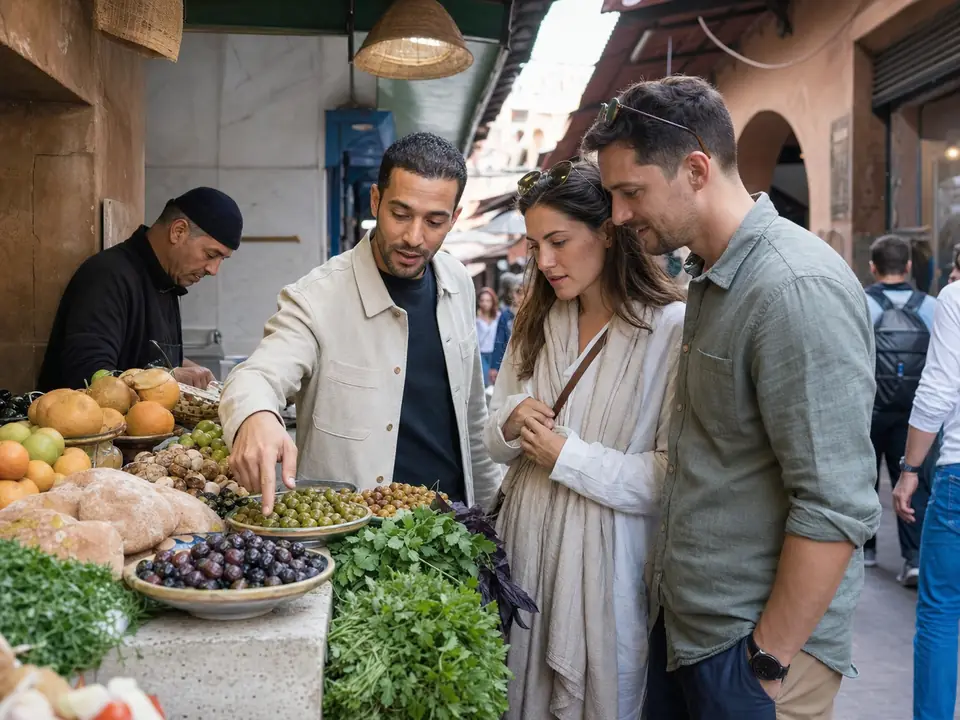
What it is
Almost all of Morocco's table olives come from one dual-purpose cultivar, the Picholine Marocaine (locally just zeitoun beldi), grown for both eating and oil across the Haouz plains around Marrakech, the Meknès region and the north. The colour on the stall tells you the ripeness at harvest, not the type: green olives are picked unripe and firm, violet-to-pink ones are semi-ripe, and black olives are fully ripe and softer.
What really distinguishes one barrel from the next is the cure. Raw olives are inedibly bitter, so each is treated differently: cracked and brined, marinated with herbs and chilli, dry-salted until wrinkled, or slow-cured in oil. The souk names them by that treatment rather than by cultivar.
The everyday stars are meslalla (cracked green olives marinated with garlic, coriander, preserved lemon, olive oil and a little chilli), plain cracked green olives, violet salées, and the wrinkled, intense black oil-cured olives that Moroccans love with bread and oil at breakfast.
In the Moroccan kitchen
Olives play two roles: the table olive eaten as-is, and the cooking olive stirred into the pot. The most famous cooking use is the chicken tagine with olives and preserved lemon, where firm green or violet olives simmer into the sauce and soak up its saffron-and-ginger richness. Pit-in olives are traditional there; warn your guests.
At the table, a bowl of meslalla or oil-cured black olives appears alongside bread before almost every meal, and olives punctuate Moroccan salads, khobz sandwiches and the mezze-like spread of a big family lunch. Green cracked olives brighten fish and lemon tagines; black olives suit heartier lamb and vegetable dishes.
Because the cure already carries salt, garlic and often chilli, olives frequently season the dish themselves — add them and you may need less salt.
- Chicken tagine with olives and preserved lemon — green or violet olives simmered in
- Meslalla as a table olive — cracked green with garlic, coriander and preserved lemon
- Fish and lemon tagines — brightened with green cracked olives
- Khobz sandwiches and Moroccan salads — olives as a savoury accent
- Breakfast bread with oil-cured black olives and olive oil
How to choose & store
Buy by taste, always. A good stall keeps every barrel glistening and topped with brine or oil; the olives should be firm-fleshed (or, for black oil-cured, plump-wrinkled rather than dust-dry) and taste clean, without a musty or fermented-vinegar edge. Cloudy grey scum, a sour-alcohol smell or a slimy surface mean the barrel is past it.
Match the olive to the job: firm green and violet olives for cooking so they hold their shape; softer black and marinated olives for the table. Ask which are pitted if you need them for a recipe — most souk olives keep their stones.
Storage — Keep olives in their brine or oil, covered, in the fridge once home; brined olives last weeks, oil-cured ones even longer. Top brined olives up with lightly salted water if they poke above the liquid.
Buying it in Marrakech
What to look for at the stall — and how to buy well without invented prices to anchor you.
- Head to Souk Ableuh — the small olive souk tucked just off Jemaa el-Fna — or the olive rows inside the Mellah and Bab Doukkala markets, where turnover is high.
- Taste before you commit; vendors expect it and will hand you one from each barrel.
- Look for glossy, well-topped barrels — brine or oil should cover the olives, not sit low and crusted.
- Say how you will use them ('for a tagine' or 'to eat') and the seller will steer you to a firm cooking olive or a softer table one.
- Buy a mixed 200–300g of two or three styles rather than a kilo of one — it is cheap, and you learn what you like.
Substitutes
- For a cooking tagine, firm green olives such as Picholine or Castelvetrano hold up best; avoid soft Kalamata, which disintegrate.
- For the table, oil-cured black olives (often sold as 'Moroccan oil-cured' abroad) are the closest match to the wrinkled beldi style.
- To fake meslalla, toss plain cracked green olives with chopped garlic, coriander, a little slivered preserved lemon, olive oil and a pinch of chilli.
Frequently asked questions
What are the most common Moroccan olives?
Most come from the Picholine Marocaine cultivar, sold by cure rather than variety: cracked green olives, herb-marinated meslalla, violet semi-ripe olives, and wrinkled black oil-cured olives. Green means picked unripe and firm; black means fully ripe and soft.
Which olives should I use in a chicken tagine?
Firm green or violet olives, which hold their shape and soak up the sauce without turning to mush. Traditional tagine olives keep their pits, so pit them yourself if you prefer, or warn diners.
Are Moroccan olives very salty or spicy?
It depends on the cure. Meslalla and many cracked green olives carry garlic, herbs and a little chilli; plain brined olives are simply salty. Because the cure seasons them, taste before adding salt when you cook with them.
How do I keep olives once I've bought them loose?
Store them in their brine or oil, covered, in the fridge. Brined olives keep for weeks; top the brine up with lightly salted water if the olives rise above the liquid. Oil-cured black olives keep even longer.