Food market
Souk Ableuh — the Olive Souk
A short lane off the northwest edge of Jemaa el-Fnaa
Duck into the little lane of Souk Ableuh off the corner of Jemaa el-Fnaa and you're in a tunnel of olives: cones and barrels of green, black, violet and stuffed olives glistening under the awnings, flanked by preserved lemons, pickled vegetables, capers and chillies. It's small, central and one of the easiest places to buy Morocco's great preserved larder.
Go here for
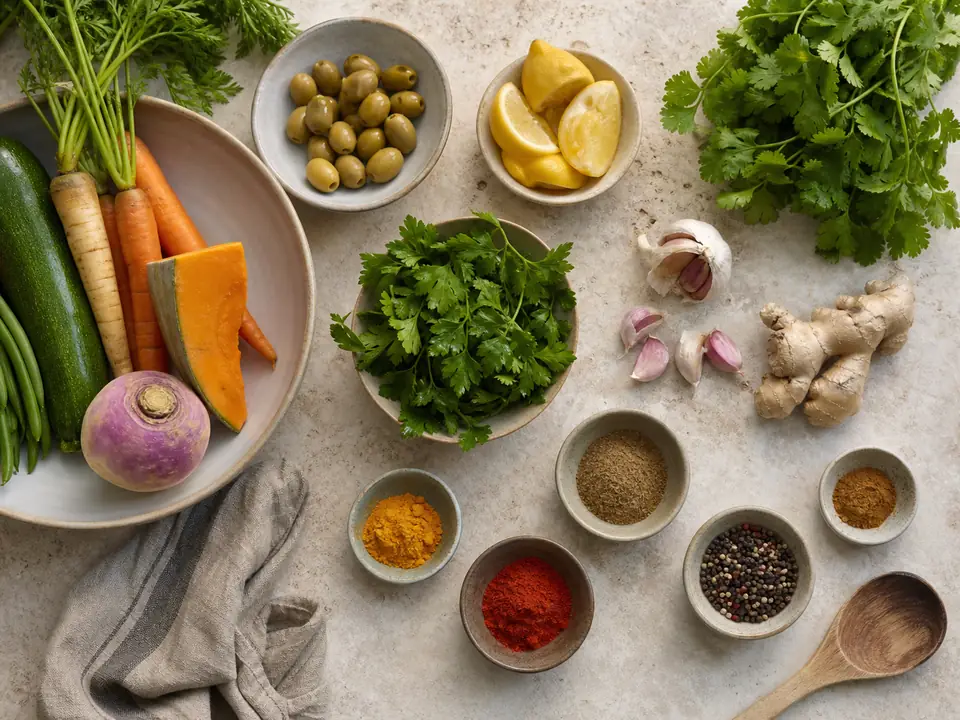
A larder in one alley
Souk Ableuh is compact but dense. Every stall builds its olives into glossy pyramids and open tubs: meslalla (cracked green olives cured with preserved lemon, garlic and herbs), dry-cured wrinkled black beldi, violet picholines, and olives stuffed with peppers or almonds. Beside them sit preserved lemons in their brine, salted capers, pickled turnips and carrots, and pots of fiery harissa.
Because it's steps from Jemaa el-Fnaa it's easy to reach, and the vendors are used to travellers — they'll offer tastes freely and can vacuum-seal olives for a flight.
How to choose
Moroccan olives are defined by their cure, not just their colour. Taste your way along: meslalla is bright and herby, beldi black olives are intense and slightly bitter, violet olives are firm and mild. Buy a mix by the kilo — a scoop of two or three types plus a few preserved lemons is the perfect cook's haul.
Preserved lemons here are the real thing — whole lemons packed in salt until the rind goes soft and mellow, the backbone of a chicken tagine. Buy them loose to eat in Morocco, or sealed if they're flying home.
How to shop like a local
- Taste before buying — every stall expects it, and the cure varies a lot between sellers.
- Buy a mix: a scoop each of green meslalla, black beldi and a stuffed variety covers most Moroccan dishes.
- Ask for the rind-only use of preserved lemons when you cook; buy them whole and loose here for the best value.
- Request a sealed bag or jar if you're travelling; brined olives and lemons need to be leak-proof for the flight.
- Bring small change; these are small, quick cash transactions.
Bargaining etiquette
- Olives are near local prices, so bargain only lightly — round the total down rather than fight per kilo.
- Buying several types from one stall earns a friendlier price than picking a single scoop.
What to avoid
- Don't skip the taste; a mediocre or over-salty cure is common and easy to detect by sampling.
- Avoid pre-bagged olives sitting in the sun — buy from the fresh, high-turnover tubs.
- Don't overpay for 'gourmet' stuffed olives aimed at tourists when the classic cures are better and cheaper.
Frequently asked questions
What is Souk Ableuh?
It's the olive souk — a short covered lane off the northwest corner of Jemaa el-Fnaa lined with stalls selling olives in every cure, plus preserved lemons, capers, pickles and harissa. It's the most central place in Marrakech to buy Morocco's preserved larder.
What kinds of olives can I buy in Marrakech?
The main types are meslalla (cracked green olives cured with preserved lemon and herbs), wrinkled dry-cured black beldi, firm violet picholines, and olives stuffed with peppers or almonds. Taste along the stalls and buy a mix by the kilo.
Can I take preserved lemons and olives home on a plane?
Yes, if they're sealed. Vendors can vacuum-pack olives and provide sealed jars of preserved lemons in brine. Check your airline's liquid rules and pack them in your hold luggage to be safe.
Keep exploring Marrakech food
Turn your market haul into dinner with a hands-on Marrakech cooking class, walk the souks with a guide on a market food tour, learn the Moroccan spices you just bought, or cook them at home with our Moroccan recipes. For the bigger picture, browse our food culture guides.