Buying guide
Where to Buy Preserved Lemons in Marrakech
Souk Ableuh, the Mellah spice market and Bab Doukkala
Preserved lemons — l'hamd markad, whole lemons packed in salt until the rind turns soft, mellow and intensely citrusy — are the secret backbone of Moroccan cooking, above all the classic chicken tagine with olives. They're sold loose and cheap all over Marrakech's food markets, and they're one of the best, most useful souvenirs a cook can carry home.
Go here for
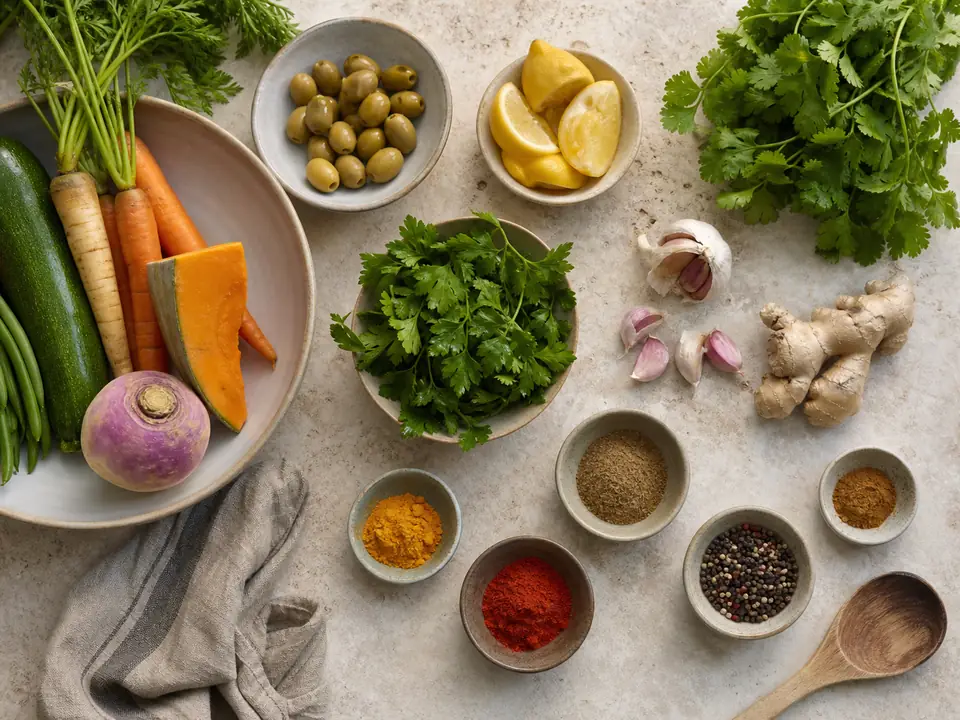
What preserved lemons are
Preserved lemons are simply lemons cured in salt (and their own juice) for weeks until the skin softens and the flavour turns deep, salty and floral rather than sharp. Morocco favours thin-skinned local lemons — doqq and beldi varieties. The magic is in the rind: in cooking you usually discard the salty pulp and slice or chop only the mellow skin.
They go into chicken tagine with olives, fish chermoula, vegetable tagines, salads and dressings — anywhere you want a salty, citrus lift that fresh lemon can't give.
Where to buy and how to carry them
Look for the tubs of lemons sitting in cloudy brine at the olive souk (Souk Ableuh), the Mellah spice market and Bab Doukkala. They're sold loose, so ask for four or five at a time — enough for several tagines. For eating in Morocco, loose is cheapest and best.
To bring them home, ask for a sealed jar packed in brine; they'll survive the flight in your hold luggage and keep for months. They're light, inexpensive and impossible to buy at this quality abroad — the ideal edible souvenir. You can also make them yourself later, but the Marrakech ones are ready now.
How to shop like a local
- Buy loose (four or five at a time) for cooking in Morocco; buy a sealed jar only if they're flying home.
- Choose lemons with soft, intact skin sitting in clear-ish brine, not shrivelled or slimy ones.
- Remember you'll mostly use the rind — buy a few, since a little goes a long way per dish.
- Ask for a sealed, leak-proof jar for travel and pack it in your hold luggage.
- Pair them with a scoop of cracked green olives — the two go together in the classic chicken tagine.
Bargaining etiquette
- Preserved lemons are cheap and near local price — round the total down rather than haggle hard.
- Buying lemons plus olives plus spices from one stall gets a friendlier combined price.
What to avoid
- Don't use the salty pulp in cooking — rinse and use the rind; the pulp will over-salt your dish.
- Avoid jars with murky, off-smelling brine or soft, disintegrating fruit.
- Don't overbuy; a few lemons flavour many dishes, and the rind keeps well.
Frequently asked questions
Where can I buy preserved lemons in Marrakech?
At the food markets — the olive souk (Souk Ableuh) off Jemaa el-Fnaa, the Mellah spice market and Bab Doukkala. Look for tubs of whole lemons sitting in cloudy brine; they're sold loose, so ask for a few at a time.
How do you use preserved lemons?
You usually discard the salty pulp and use only the softened rind, sliced or chopped. It goes into chicken tagine with olives, fish chermoula, vegetable tagines, salads and dressings for a salty, floral citrus lift that fresh lemon can't provide.
Can I take preserved lemons home?
Yes. Ask for a sealed jar packed in brine and put it in your hold luggage; they keep for months. They're light, cheap and hard to find at the same quality abroad, which makes them one of the best edible souvenirs for a cook.
Keep exploring Marrakech food
Turn your market haul into dinner with a hands-on Marrakech cooking class, walk the souks with a guide on a market food tour, learn the Moroccan spices you just bought, or cook them at home with our Moroccan recipes. For the bigger picture, browse our food culture guides.