Bread & pastry
Moroccan Briouats (Filled Pastries)
Briouats (also spelled briwat, briouat or bourek) are Morocco's answer to the filled pastry — crispy triangles, cylinders or cigars of warqa or filo pastry wrapped around a savoury or sweet filling and fried or baked until shattering-crisp. They are appetisers, snacks, Ramadan staples and celebration food all at once.
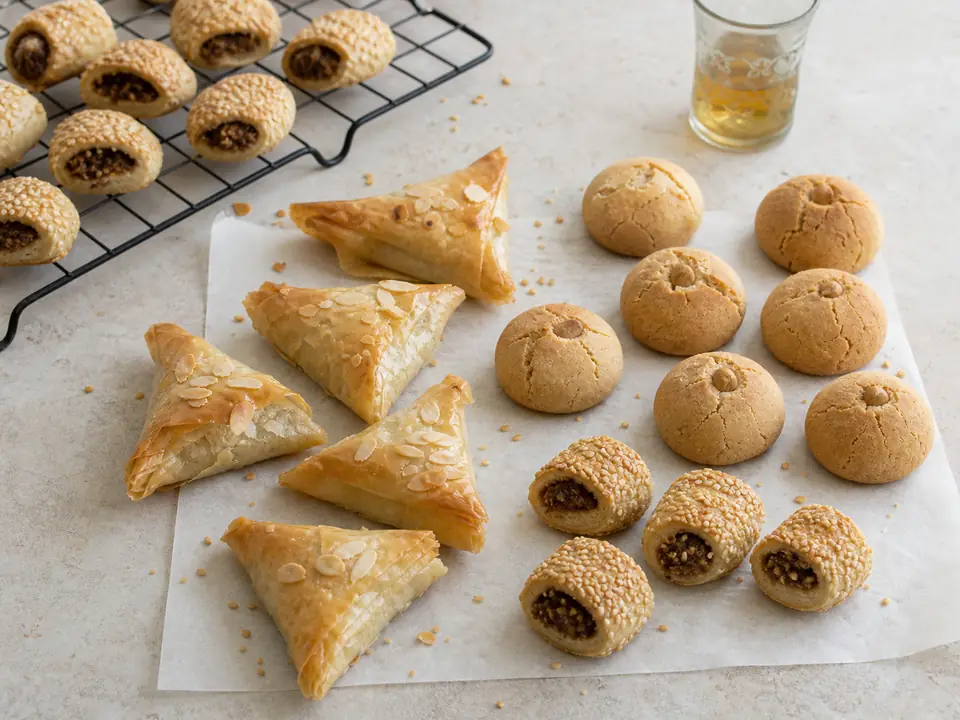
The savoury versions — filled with spiced minced meat, herbed goat cheese, seafood or chicken vermicelli — are served as starters or passed around at parties. The sweet versions — filled with ground almonds, honey and orange-flower water — appear at tea time and celebrations. Both are addictive and disappear fast.
Briouats are one of the first things a Moroccan cook learns to make and one of the most versatile preparations in the repertoire. Every family has a preferred filling, a preferred shape, and a firm opinion about frying versus baking.
Varieties of Briouats
Kefta briouats
Region: Nationwide
Triangular pastries filled with spiced minced beef or lamb, onion, parsley and egg. The most common savoury briouat. Deep-fried until golden.
Cheese briouats
Region: Northern Morocco
Filled with a mixture of soft cheese (jben), fresh herbs and sometimes egg. Lighter and creamier than the meat version.
Seafood briouats
Region: Coastal cities / Casablanca
Cigar-shaped pastries filled with shrimp, vermicelli, and a creamy saffron sauce. A refined appetiser served at upscale restaurants and riads.
Almond briouats
Region: Nationwide
Sweet briouats filled with ground almonds, sugar, cinnamon and orange-flower water, fried and dipped in warm honey. Served at celebrations and with mint tea.
Chicken and vermicelli briouats
Region: Fes
Filled with shredded chicken, vermicelli, onion and spices — essentially a mini pastilla in briouat form. Often served at weddings.
How to eat briouats
Briouats are eaten by hand, usually hot or warm. Savoury briouats are dipped in harissa or a squeeze of lemon. Sweet briouats need nothing — the honey coating is the condiment. They are finger food, meant to be passed around and eaten in two or three bites. At a formal Moroccan dinner, they appear during the starter course alongside cooked salads.
Where to try it in Marrakech
Riads and Moroccan restaurants in Marrakech serve briouats as starters. Street-food stalls sell fried briouats, especially during Ramadan when they are a popular iftar snack. Patisseries in the Mellah and Mouassine sell sweet almond briouats by the piece. A pastry class will teach you the folding and frying technique.
How briouats is made
Warqa pastry (or filo sheets) is cut into strips. A spoonful of filling is placed at one end, and the strip is folded into a triangle (for triangular briouats) or rolled into a cigar shape. The edges are sealed with egg wash. The briouats are then deep-fried in hot oil until golden and crisp (2-3 minutes per side) or baked in a hot oven brushed with melted butter. Sweet briouats are dipped in warm honey immediately after frying.
History and origin
Briouats belong to the family of North African and Middle Eastern filled pastries that includes Turkish borek, Tunisian brik and Algerian bourek. The technique of wrapping fillings in thin pastry has been practised across the Mediterranean and Near East for over a thousand years. In Morocco, briouats have been refined over centuries into a distinctive tradition with its own shapes, fillings and occasions.
Insider tips
- Eat briouats immediately — they lose their crispness within minutes of cooling.
- If making at home, filo pastry is a perfectly acceptable substitute for warqa.
- During Ramadan, special briouat platters appear in every patisserie — this is the best time to sample many varieties.
- The honey dip on sweet briouats should be warm, not cold — it soaks in better and stays glossy.
Related recipes
Frequently asked questions
Are briouats fried or baked?
Both. Traditional briouats are deep-fried for maximum crispness, but baked versions are increasingly common and are lighter. Fried briouats have a richer, more golden crust; baked ones are slightly drier but still excellent.
What is the difference between a briouat and a samosa?
Similar concept — filled pastry — but different traditions. Briouats use warqa or filo pastry (thin, flaky), while samosas use a thicker wheat-flour dough. The fillings and spice profiles are also distinct: Moroccan briouats lean on cumin, parsley and cinnamon; Indian samosas use cumin, coriander, garam masala and chilli.