Street food · Jemaa el-Fnaa & markets
Marrakech Seafood & Fried Fish Tour
Marrakech is inland, but the Atlantic is only a few hours away and fresh fish arrives daily from Essaouira and Safi. At night the Jemaa el-Fnaa fried-fish stalls turn out plates of floured, flash-fried whitebait, calamari and small fish with a wedge of lemon, while the day markets sell sardines to grill and chermoula-marinated fish for tagine. This tour proves that good seafood in the red city is not a contradiction — you just need to know where and when.
- Duration
- 1.5 hours
- Best time
- Evening for fried fish; morning markets for the freshest
- Pace
- Standing and short walks
- Area
- Jemaa el-Fnaa & markets
Overview
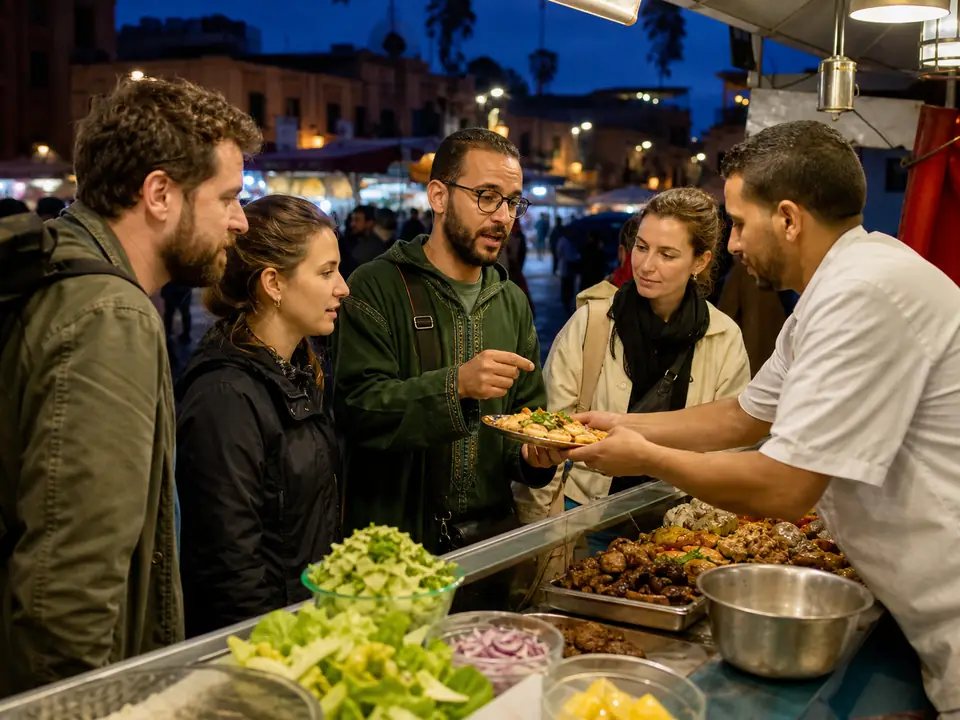
Morocco has a long Atlantic coast and one of the world's biggest sardine industries, so despite Marrakech sitting inland, fresh fish reaches the city daily from the ports at Essaouira and Safi. The result is a small but genuine seafood culture — most visible at night on Jemaa el-Fnaa, where dedicated stalls fry up plates of small fish, calamari and prawns to order.
The classic move is a plate of mixed fried fish — floured, flash-fried, crisp and light, served with lemon and a cumin or harissa dip. Beyond the square, the markets sell whole sardines to grill and firm white fish to cook in a chermoula tagine — the coriander, cumin, garlic and lemon marinade that is Morocco's great fish seasoning. This tour shows the range and how to judge freshness.
What you'll taste
- Mixed fried fish — Whitebait, small fish and floured fillets flash-fried crisp, served by the plate with lemon.
- Fried calamari — Squid rings floured and fried light, a favourite at the square's fish stalls.
- Grilled sardines — Morocco's signature fish, cleaned and grilled simply — oily, rich and cheap at the markets.
- Chermoula fish tagine — Firm white fish marinated in chermoula and cooked with tomato and pepper in a tagine.
- Fried prawns — When available, quick-fried prawns with lemon and a dab of harissa.
- Harissa & cumin — The dips that lift fried fish — fiery harissa and earthy cumin-salt.
The route
- 1
The night fish stalls
On Jemaa el-Fnaa, find a busy fried-fish stall — high turnover means the oil and fish are fresh.
- 2
A mixed fried plate
Order a plate of mixed small fish and calamari with lemon; eat it hot and crisp.
- 3
Judge freshness
Learn what fresh fried fish looks and tastes like — light, non-greasy, sweet-smelling, not fishy.
- 4
Market sardines
By day, see the sardines and whole fish at the markets, brought up from the Atlantic ports.
- 5
Chermoula tagine
Try a chermoula-marinated fish tagine to taste Morocco's great fish seasoning.
- 6
Dips and lemon
Finish with harissa, cumin and a squeeze of lemon — the simple, perfect fish condiments.
When to go & what it costs
The Jemaa el-Fnaa fried-fish stalls are an evening affair, best in the first hours of service when the oil is clean and the fish is freshly fried. For the freshest raw fish to grill or cook, the markets are a morning event, when the catch arrives from Essaouira and Safi. Fish is best eaten the day it arrives.
Cost & cash: Fried-fish plates are cheap; confirm the price and portion before ordering, as with all square stalls.
Insider tips
- Choose fried-fish stalls with high turnover — busy means fresh fish and clean oil.
- Fresh fried fish is light and non-greasy and smells sweetly of the sea, not strongly fishy.
- Grilled sardines are the classic, cheap Moroccan fish — try them at the markets or coast.
- Chermoula (coriander, cumin, garlic, lemon) is the marinade to look for on any fish dish.
- Confirm the price and portion at square stalls before ordering, as with all Jemaa el-Fnaa food.
Etiquette & how to eat like a local
- Agree the plate and price before it is cooked to avoid the classic square overcharge.
- Squeeze lemon and dip; eat fried fish hot and with your hands or bread.
- Share plates communally as is normal at the stalls.
- Ask before close-up photos of the fryers.
- Do not linger over a small plate at a busy stall; eat and free the bench.
Frequently asked questions
Is seafood in Marrakech fresh if the city is inland?
It can be very fresh. Morocco has a major Atlantic fishing industry, and fish arrives daily in Marrakech from the ports at Essaouira and Safi. Choose busy stalls and morning markets with high turnover, eat fish the day it arrives, and you can eat well despite the city being inland.
What is the best fish to eat in Marrakech?
A plate of mixed fried fish and calamari from a busy Jemaa el-Fnaa stall is the classic street option. Grilled sardines — Morocco's signature fish — are cheap and excellent, and a chermoula-marinated fish tagine showcases the country's great fish seasoning. Choose by freshness and turnover.
What is chermoula?
Chermoula is Morocco's classic marinade and sauce for fish, made from coriander, parsley, garlic, cumin, paprika, lemon and olive oil, sometimes with chilli. Fish is marinated in it and then grilled or cooked in a tagine with tomato and pepper. It is bright, herby and the defining flavour of Moroccan seafood.
How do I know if the fried fish is fresh?
Fresh fried fish is light and crisp rather than greasy, and smells sweetly of the sea rather than strongly fishy. A busy stall with high turnover is the best sign — the oil is cleaner and the fish moves quickly. Order it hot and cooked to order, and eat it straight away.
Cook what you tasted
Loved something on the walk? Take it home. Learn the dish hands-on with a Marrakech chef, or follow a free step-by-step recipe.