Salads & cooked mezze
Moroccan Maakouda
Maakouda are crisp, golden potato fritters: mashed potato seasoned with garlic, cumin, paprika and coriander, shaped into little patties, dipped in egg or batter and fried until crunchy outside and fluffy within. Cheap, hot and satisfying, they are a classic medina street snack — eaten on their own with a dab of harissa or stuffed into a bread roll.
معقودة · maʿqūda
- Origin
- Across Morocco, Maghreb street food
- Type
- Fried potato cake
- Eaten at
- Street snack, Ramadan, sandwiches
- Key flavour
- Cumin, garlic, paprika, coriander
What Maakouda is
Maakouda is a fried patty of seasoned mashed potato. Boiled potato is mashed with garlic, chopped coriander and parsley, cumin, paprika and often a little turmeric for colour, then formed into small rounds, coated in beaten egg or a light flour batter and shallow-fried until deep gold and crisp.
The contrast is the pleasure: a shatteringly crunchy shell around a soft, well-spiced potato centre. They're served hot, and a squeeze of harissa or a dip in a spicy tomato sauce is the usual accompaniment.
Origin & story
Maakouda is street and snack food across the Maghreb, and in Morocco it is a familiar sight at fry-stalls and sandwich carts in the medina, especially in the late afternoon and during Ramadan when fried snacks fill the pre-iftar tables. It is cheap, quick and filling — food for a busy street.
Because it's potato-based and meat-free, it's also a staple of thrifty home cooking and a favourite with children. Its simplicity means it rarely appears on smart restaurant menus, staying instead in the world of carts, stalls and home kitchens.
Key ingredients at a glance
- Floury potatoes, boiled and mashed
- Garlic, fresh coriander and parsley
- Cumin, paprika and turmeric
- Egg or flour batter for coating
- Oil for frying
- Harissa or spicy tomato sauce to serve
This is a flavour snapshot, not a recipe.
When & how it's eaten
Maakouda is eaten hot from the pan as a standing snack, but its most famous form in Morocco is inside a sandwich: a split bread roll packed with maakouda, sometimes with fried aubergine, egg, olives and a spoon of harissa — a cheap, filling street lunch. On its own it's finger food with a spicy dip.
It comes into its own during Ramadan, when fried bites like maakouda and briouat crowd the table to break the fast alongside harira.
Regional variations
The main variations are the coating (egg-dipped versus battered) and the shape and size. Some cooks add grated onion or a little cheese; spice levels vary with the amount of harissa. A close relative uses the same mash as a filling for briouat or sandwiches.
It sits in the medina fry-stall world beside other quick bites and is often sold at the same carts that make bread sandwiches to order.
Where to try it in Marrakech
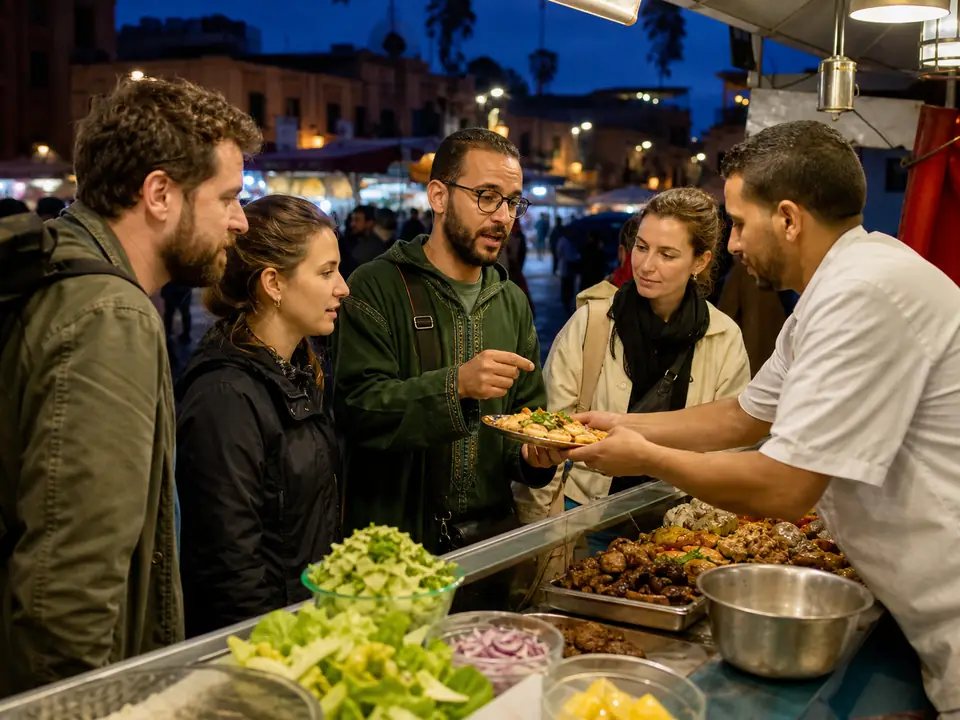
Head for the sandwich and fry stalls of the medina — a medina street food tour or the Jemaa el-Fnaa night tour will take you to carts that fry maakouda to order and build the classic loaded sandwich.
To cook it, a street food cooking class covers the fried-snack repertoire. It's a great vegetarian bite — see our vegetarian street food tour — and pairs with a harissa kick. Explore more in the guides.
Frequently asked questions
What is maakouda made of?
Seasoned mashed potato — with garlic, coriander, cumin and paprika — shaped into small cakes, coated in egg or batter and fried until crisp and golden.
How is maakouda eaten in Morocco?
As a hot street snack with a spicy dip, or — most popularly — stuffed into a bread-roll sandwich with harissa and other fillings. It's also a Ramadan favourite.
Is maakouda vegetarian?
The potato mixture is vegetarian and often vegan (if battered rather than egg-dipped). It's a popular meat-free street food across Morocco.