Celebrations
Eid al-Fitr: Sweets and Celebration
Eid al-Fitr, the festival that marks the end of Ramadan's month of fasting, is a joyful celebration in which sweets take centre stage. After weeks of daytime fasting, the return to daytime eating is marked with special breakfasts, trays of pastries and cookies, family visits and an atmosphere of sweetness and relief — it is sometimes called the 'sweet Eid'.
The end of the fast
Eid al-Fitr begins the day after Ramadan ends, following the sighting of the new moon, and starts with communal Eid prayers in the morning. For the first time in a month, food is eaten in the daytime, and this is celebrated — the morning of Eid brings a special breakfast, a meaningful return to daytime eating after the discipline of the fast.
There's a sense of joy, relief and accomplishment at completing the month, and food is how it's expressed. Families dress in their best, exchange greetings and visits, and the day is given over to celebration and togetherness centred on the table.
The festival of sweets
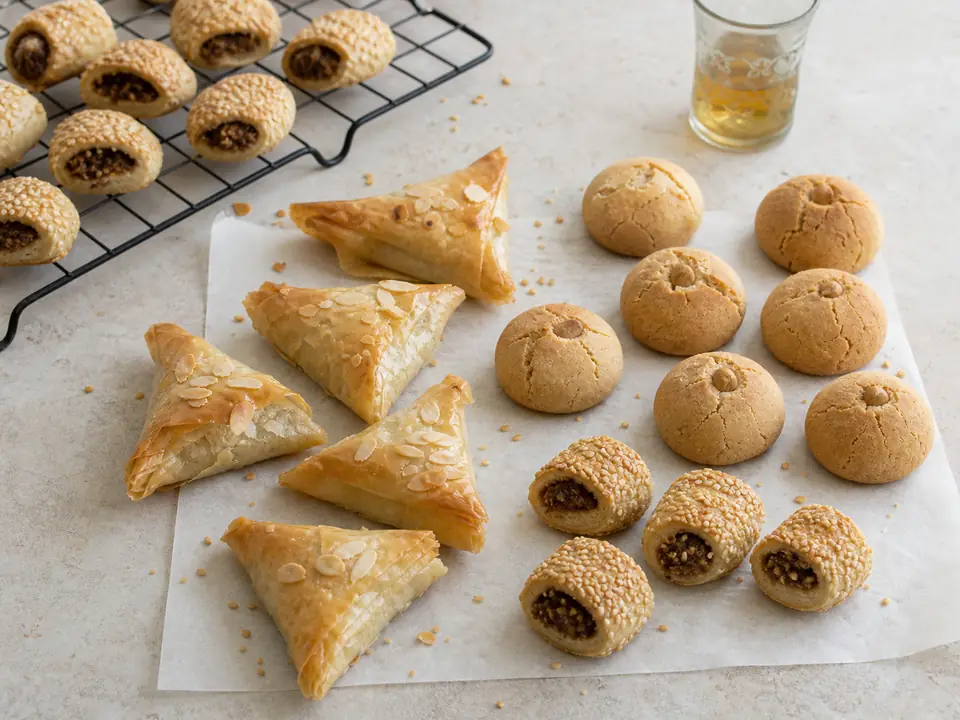
Sweets define Eid al-Fitr. In the run-up, households bake huge quantities of Moroccan cookies and pastries — ghriba (crackle-topped shortbreads), kaab el ghzal (gazelle horns), fekkas, briouat, and a whole array of almond, sesame and honey confections. On the day, these are served to the constant stream of visiting family and friends, alongside mint tea and coffee.
The sweetness is both literal and symbolic — a celebration of the fast's completion and an expression of joy and hospitality. Trays of assorted pastries are a point of pride, and offering them to guests, and being offered them at every home you visit, is the heart of the day's food culture.
Visiting and sharing
Eid al-Fitr is a time of visiting — going round to family and neighbours, exchanging Eid greetings, and being received everywhere with sweets and tea. Children often receive gifts or money, and there's a warm, festive, sociable atmosphere. The giving of charity (zakat al-fitr) before the Eid prayer ensures that the poor too can celebrate and eat well, tying the joy of the festival to the value of sharing.
After a month in which food was so structured around fasting and the iftar table, Eid al-Fitr releases into open celebration and the pleasures of sweets, family and hospitality. It's one of the happiest food occasions of the Moroccan year — a festival where generosity, sweetness and togetherness come together on trays of home-baked pastries.
Good to know
- Eid al-Fitr ends Ramadan with a special daytime breakfast after a month of fasting.
- Households bake trays of cookies and pastries — ghriba, gazelle horns, fekkas and more.
- Sweets and mint tea are served to the constant stream of visiting family and friends.
- Children often receive gifts or money as part of the festive day.
- Charity (zakat al-fitr) before the Eid prayer ensures the poor can celebrate too.
Frequently asked questions
What is Eid al-Fitr?
Eid al-Fitr is the joyful festival marking the end of Ramadan's month of fasting. It begins with communal morning prayers and a special daytime breakfast, then celebrates with sweets, family visits and hospitality — sometimes called the 'sweet Eid'.
What sweets are eaten at Eid al-Fitr?
Households bake trays of Moroccan cookies and pastries — ghriba (crackle-topped shortbreads), kaab el ghzal (gazelle horns), fekkas, briouat and other almond, sesame and honey confections — served to visiting family and friends with mint tea.
How is Eid al-Fitr celebrated in Morocco?
With morning Eid prayers, a special breakfast, and a day of visiting family and neighbours who receive you with sweets and tea. Children often get gifts or money, and charity before the prayer ensures the poor can celebrate too.
From the kitchen
Explore the food behind the culture with these recipes: