Judeo-Moroccan
Best Mellah Food in Fes — The Jewish Quarter's Culinary Legacy
Fes founded Morocco's first mellah, the walled Jewish quarter beside the royal palace in Fes el-Jdid, and Judeo-Moroccan cooking left a lasting mark on the city's table. Its dishes — slow Sabbath stews, preserved foods and distinctive pastries — are woven into Fassi cuisine.
- City
- Fes
- Cuisine
- Judeo-Moroccan
- Typical price
- 50-250 MAD
The Fes mellah, established in the 15th century next to the Royal Palace and the brass-studded gates of Fes el-Jdid, was for centuries home to a large Jewish community whose food traditions shaped the wider city. The emblematic dish is skhina (dafina) — a slow-cooked Sabbath pot of beef, chickpeas, potatoes, eggs and wheat left to cook overnight so no fire need be lit on the Sabbath. The eggs, cooked in their shells for hours, turn creamy brown and are a delicacy in their own right.
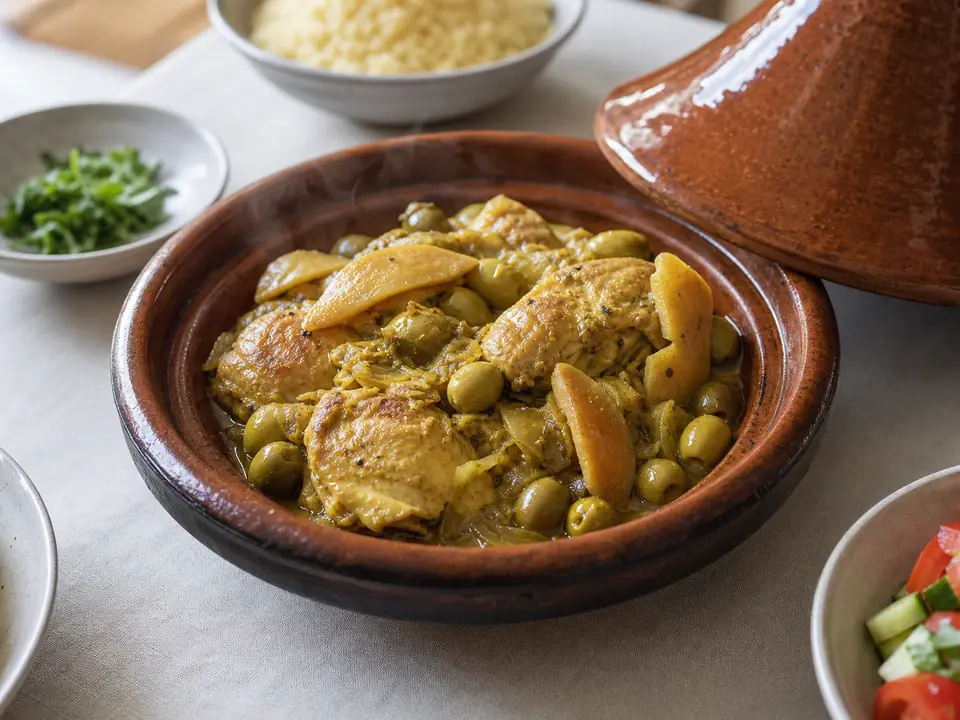
Judeo-Moroccan cooking is also known for its bold use of preserved lemons, olives and pickles, for sweet-savoury tagines, and for pastries and confections tied to the Jewish calendar. Many techniques — long slow cooking, preserving, particular spice blends — flowed both ways between Muslim and Jewish Fassi kitchens over centuries of shared city life. Walking the mellah's main street today, with its distinctive wooden-balconied houses facing the street (unusual in Moroccan architecture), you can still trace this heritage.
Fes's Jewish community is very small now, so you are unlikely to find a dedicated kosher restaurant, but the culinary legacy survives on Fassi menus and in home cooking. Ask riads and cooks about skhina and Judeo-Moroccan dishes, visit the mellah, the Ibn Danan synagogue and the Jewish cemetery to understand the context, and treat this as living food history rather than a themed novelty.
How to eat well
- 1
Look for skhina (dafina), the slow-cooked Sabbath stew of beef, chickpeas, potatoes and long-cooked eggs.
- 2
Walk the mellah's main street in Fes el-Jdid to see the distinctive street-facing wooden balconies.
- 3
Ask riad cooks about Judeo-Moroccan dishes — the tradition survives in home cooking more than restaurants.
- 4
Visit the Ibn Danan synagogue and the Jewish cemetery to understand the quarter's history.
- 5
Note the heavy use of preserved lemon, olives and pickles — a hallmark of the mellah's kitchen.
Frequently asked questions
What is Jewish Moroccan food in Fes?
It centres on dishes like skhina (dafina), a slow-cooked overnight Sabbath stew of beef, chickpeas, potatoes and eggs, along with sweet-savoury tagines and preserved foods. This Judeo-Moroccan tradition shaped wider Fassi cuisine.
Where is the Jewish quarter in Fes?
The mellah is in Fes el-Jdid, beside the Royal Palace, and was Morocco's first Jewish quarter, founded in the 15th century. Its street-facing wooden balconies make it architecturally distinct from the rest of the medina.
Can you still eat Jewish food in Fes today?
The community is very small now, so dedicated kosher restaurants are rare, but the culinary legacy lives on in Fassi home cooking and on riad menus. Ask cooks about skhina and Judeo-Moroccan specialities.