Moroccan tagine
Best Tagine in Fes — Refined Fassi Slow Cooking
Fassi cuisine is considered Morocco's most refined, and its tagines show it: delicately spiced, often finished with honeyed fruit and almonds, and cooked with a subtlety that reflects the city's long culinary pedigree. The medina is the place to taste them at their best.
- City
- Fes
- Cuisine
- Moroccan tagine
- Typical price
- 55-150 MAD
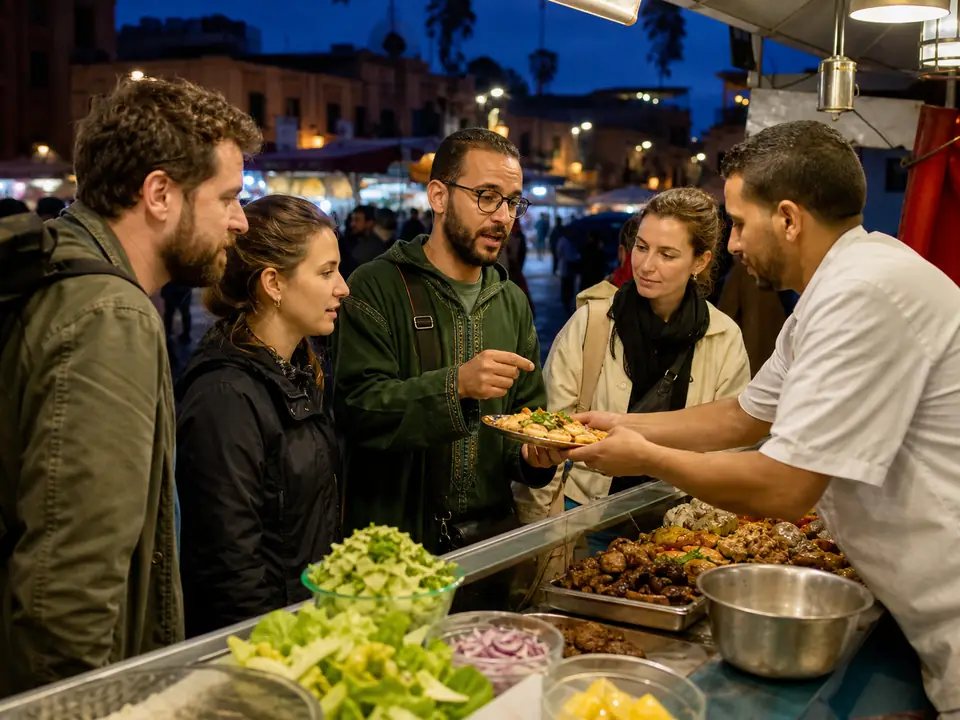
Fes is widely regarded as the birthplace of Morocco's most sophisticated cooking, and its tagines carry that reputation. The signature is a slow-cooked lamb or beef with prunes, apricots or dates, almonds and a whisper of cinnamon and honey — richer and sweeter than the coastal versions, balanced by savoury onion and saffron. Chicken tagine with preserved lemon and olives is the everyday classic, and mqualli (a saffron-and-ginger style) and mhammer (a paprika-and-cumin style) are the two great Fassi sauce families to know.
What sets a Fassi tagine apart is restraint and layering: the spicing is deep but never harsh, the sauce reduced to a glossy, almost jammy base, and the garnishes — toasted almonds, sesame, soft-cooked fruit — added with care. Look for tagines made with khlii (preserved dried meat cooked in its own fat), a Fassi speciality that gives an intense, aged depth, sometimes served folded through eggs for breakfast.
The medina of Fes el-Bali — the largest car-free urban area in the world — is where to eat. Traditional restaurants set in restored riads plate tagines beautifully, while the small canteens along Talaa Kebira and Talaa Seghira and near the R'cif and Boujloud gates serve honest workers' versions at lunch. As in Marrakech, a tagine is a lunch dish that rewards arriving hungry in the early afternoon.
Order a tagine to share with plenty of Fassi bread — the round khobz here is excellent — and don't be surprised by the sweetness of the fruit versions; it is the point. A glass of mint tea to finish, and you have eaten as Fassis have for centuries.
How to eat well
- 1
Try a lamb-with-prunes tagine for the sweeter, honeyed Fassi style the city is known for.
- 2
Look for khlii (preserved dried meat), a Fassi speciality, in tagines or folded through breakfast eggs.
- 3
Eat tagine at lunch in the medina's small canteens along Talaa Kebira for honest, well-priced versions.
- 4
Learn the two sauce styles: mqualli (saffron and ginger) and mhammer (paprika and cumin).
- 5
Share one tagine between two with plenty of bread — the reduced sauce is meant to be mopped up.
Frequently asked questions
What makes Fassi tagine different?
Fassi cooking is Morocco's most refined, so its tagines tend to be more delicately spiced and often sweeter, finished with honeyed fruit, almonds and cinnamon over a deeply layered but restrained base.
Where should I eat tagine in Fes?
In the medina of Fes el-Bali: restored-riad restaurants for a refined version, or the small canteens along Talaa Kebira and Talaa Seghira and near the R'cif gate for honest, cheaper workers' tagines at lunch.
What is khlii?
Khlii is Fassi preserved meat — strips of beef or lamb cured, dried and cooked in fat so they keep for months. It has an intense, aged flavour and turns up in tagines and in eggs at breakfast.