Practical tips
Street Food vs Restaurants in Morocco
The best Moroccan food trip is not a choice between street food and restaurants but a balance of both. Street stalls and cook-shops deliver the country's most soulful, best-value eating; restaurants and riads bring comfort, refinement and the slow-cooked dishes that take hours. Knowing which dishes belong where lets you eat the real Morocco without missing either side.
- Read
- 8 min
- Guide
- Practical tips
- Updated
- 19 July 2026
At a glance
- Street food and cook-shops offer the best value and often the most soul.
- Restaurants and riads shine for slow-cooked dishes, comfort and atmosphere.
- Balance both across a trip, and match each dish to the setting that does it best.
What street food does best
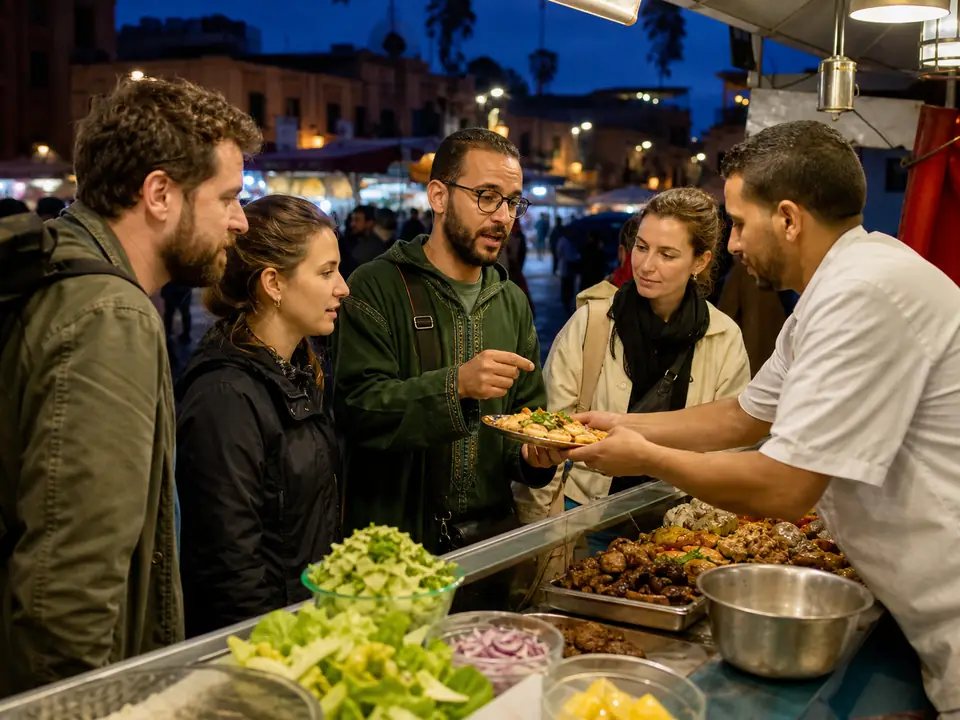
Street food is where Morocco eats fastest and, often, best. Grilled and fried dishes cooked hot to order, soups, sandwiches and sweets are the natural stars, and prices are a fraction of restaurant tables. The energy of a night market or a bakery at dawn is an experience in itself.
Choose busy stalls with high turnover and food cooked in front of you, and you get freshness plus theatre. This is the domain of the snail-soup cart, the merguez grill, the sfenj doughnut fryer and the harira counter.
- Best on the street: grills, harira, bissara, sfenj, msemen, snacks and sweets.
- Value: unbeatable — the cheapest and often tastiest way to eat.
- Watch: pick high-turnover stalls; follow basic food-safety habits.
What restaurants and riads do best
Some dishes need time, space and a kitchen, and that is where sit-down places win. Slow-cooked tagines, couscous, mechoui, pastilla and elaborate multi-course meals are best in a restaurant or a riad, where the cooking can take the hours it deserves. You also get comfort, seating, bathrooms, wine where licensed, and a calmer setting for a special evening.
Riads in particular offer home-style cooking in beautiful courtyards, and rooftop restaurants trade partly on the view. Pay attention to whether you are paying for the food or the setting, and seek out places locals rate rather than only the most photogenic terraces.
Building a trip that uses both
A good rhythm alternates the two. Graze street food and cook-shop lunches by day for value and authenticity, and book the occasional restaurant or riad dinner for slow-cooked classics and atmosphere. A food tour is a great way to eat street food safely with guidance, and a cooking class shows you how the restaurant dishes are built.
Do not let safety fears push you into only restaurants — with sensible habits, street food is a highlight, not a hazard. See our food safety guide to eat boldly, and our authentic food guide to avoid the tourist-terrace trap.
Frequently asked questions
Is street food or restaurant food better in Morocco?
Neither is simply better; they excel at different things. Street food and cook-shops offer the best value and some of the most soulful eating, while restaurants and riads do slow-cooked tagines, couscous and pastilla best. The ideal trip balances both rather than choosing one.
Which dishes are best eaten as street food?
Anything grilled or fried hot to order, plus soups and snacks: merguez and brochettes, harira and bissara, sfenj doughnuts, msemen, sandwiches and sweets. These shine on the street where turnover is high, whereas slow-cooked tagines and couscous are better from a kitchen.
Is street food in Morocco worth the risk?
Yes, when chosen well. The risk is manageable with simple habits — busy stalls, high turnover, food cooked hot in front of you. Skipping street food to play it safe means missing some of the country's best and cheapest eating. Follow basic food-safety guidance and enjoy it.
Are Moroccan restaurants overpriced compared to street food?
Restaurants cost more, but the gap reflects setting and service as much as food, and slow-cooked dishes genuinely need a kitchen. Tourist terraces charge a premium for the view, so seek places locals rate. Reserve restaurants for classics and special evenings, and eat street food by day for value.