Practical tips
How to Eat During Ramadan as a Tourist
Ramadan is not off-limits to travellers, and for the curious it can be one of the most memorable times to visit. The daytime rhythm changes — most locals fast from dawn to sunset — but food never disappears; it just shifts to the evening and becomes, in many ways, more special. The key is knowing where to eat by day and how to behave with respect.
- Read
- 8 min
- Guide
- Practical tips
- Updated
- 19 July 2026
At a glance
- Fasting is dawn to sunset; the day quietens and comes alive after the iftar call.
- Tourist-facing restaurants, hotels and larger cities still serve food during the day.
- Eat, drink and smoke discreetly in public during daylight out of respect.
Finding food during the day
In cities used to visitors — Marrakech, Fes, Casablanca and coastal resorts — you will still find open cafés, hotel restaurants and tourist eateries serving lunch. In smaller towns and rural areas, daytime options shrink dramatically, so plan ahead and stock a few snacks for travel days.
Riads and hotels will happily arrange breakfast and lunch for guests. If you are self-catering, markets and supermarkets stay open, though hours may shift, and the fresh-produce souks are busiest in the late afternoon as families shop for the evening meal.
- Bigger cities: tourist restaurants and hotels serve lunch as usual.
- Small towns: daytime dining is scarce — carry snacks and water.
- Markets: open, and liveliest in the hours before sunset.
Joining iftar, the meal that breaks the fast
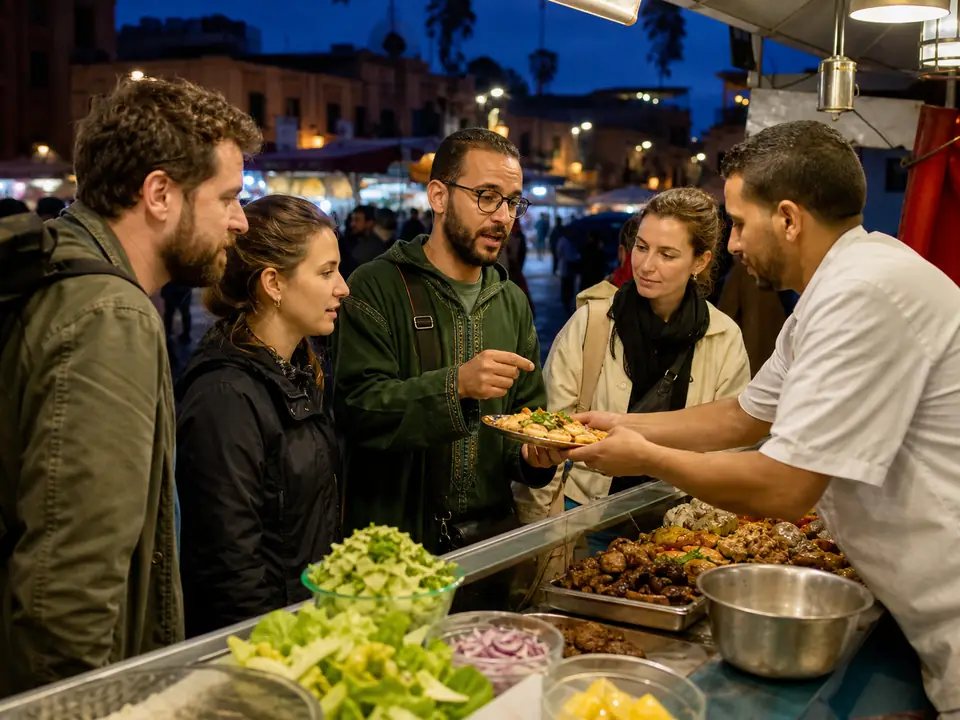
The nightly iftar is the highlight. As the sunset call sounds, the whole country sits down together to break the fast, traditionally with dates and milk, then harira soup, chebakia (sesame-and-honey pastries), hard-boiled eggs, msemen and sweet drinks. Many riads and restaurants offer a special iftar spread, and being invited to share one in a home is a genuine honour.
Book an iftar experience ahead where you can — tables fill fast — and arrive a little before sunset so you are seated when the fast breaks. It is a warm, communal, unforgettable meal.
Eating respectfully in public
You are not expected to fast, but a little discretion goes a long way. Avoid eating, drinking or smoking conspicuously on the street in front of people who are fasting; step into a café, your riad, or a quiet spot instead. Dress and behave a touch more modestly, and be patient — service can be slower and tempers shorter by late afternoon when energy dips.
After sunset the mood transforms: streets buzz, cafés overflow, and eating continues late into the night, often with a pre-dawn meal (suhoor) too. Lean into that evening rhythm and you will experience a side of Morocco most visitors never see.
Frequently asked questions
Can tourists eat in public during Ramadan in Morocco?
Yes, but discreetly. Tourist restaurants, hotels and cafés in larger cities serve food during the day, and you are not expected to fast. Out of respect, avoid eating, drinking or smoking openly on the street in front of people who are fasting.
What is iftar and can visitors join?
Iftar is the meal that breaks the daily fast at sunset — dates, harira soup, pastries and sweet drinks. Many riads and restaurants offer special iftar spreads and welcome visitors; book ahead, as tables fill quickly. Being invited to a family iftar is a real honour.
Is Ramadan a good time to visit Morocco for food?
It is a fascinating time if you want to experience the nightly iftar and late-night atmosphere, but daytime dining is limited outside big cities. If your trip is built around daytime market tours and cooking classes, you may prefer to visit outside Ramadan.
Do restaurants and cooking classes still operate during Ramadan?
Many do, but on adjusted schedules — some pause daytime service and focus on iftar, and cooking classes may run reduced hours. Confirm availability directly, and expect the day to be quieter and the evening far livelier than usual.