Techniques
How to Make Chermoula Marinade
Chermoula is Morocco's great all-purpose marinade — a vivid green paste of fresh coriander and parsley, garlic, cumin, paprika, lemon and oil. It is best known slathered on fish before grilling or baking, but it lifts chicken, vegetables and even bread, and it doubles as a sauce spooned over the finished dish.
At a glance
- Base: coriander, parsley, garlic, cumin, paprika, lemon and olive oil
- Keep it loose and pourable — a marinade, not a dry rub
- Pound in a mortar for fragrance or blitz for a smooth sauce
- Reserve some raw to spoon over the finished dish
Guide
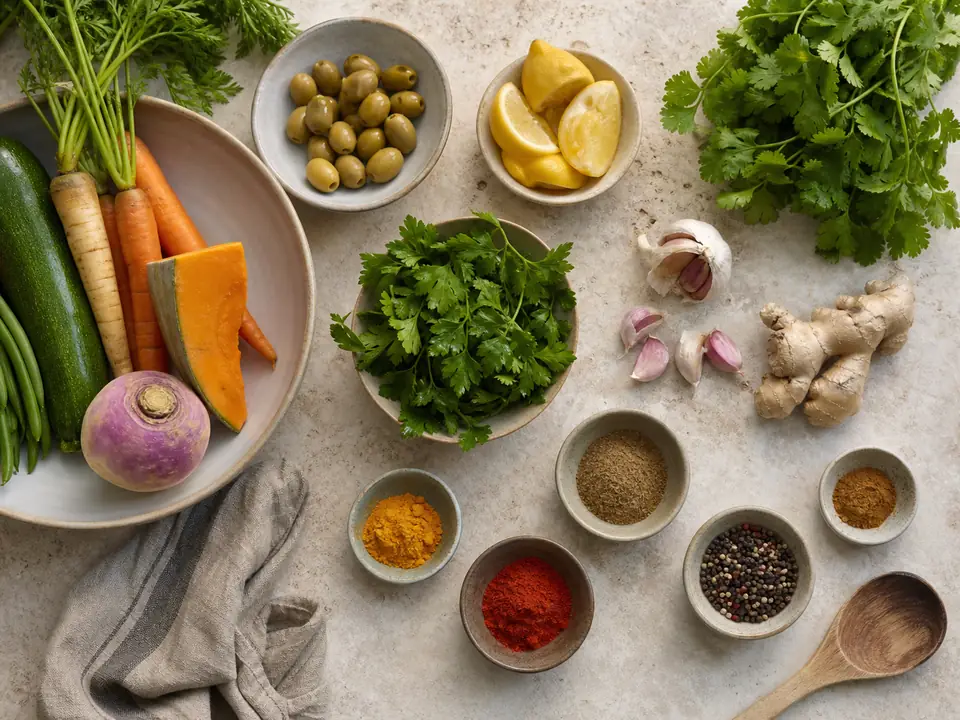
The backbone is a big bunch each of coriander and flat-leaf parsley, finely chopped or pounded, with several cloves of garlic. To that go the warm spices: ground cumin above all, sweet paprika for colour and body, and often a pinch of chilli or cayenne for heat and a little ground ginger. Lemon juice brings the acidity, and good olive oil binds it into a loose paste. Salt to taste. Many cooks add a spoonful of chopped preserved lemon or a strand of saffron for depth.
You can make it in a mortar and pestle for a rougher, more fragrant paste, or blitz it in a small processor for speed and a smoother sauce. Either way, keep it loose and pourable with enough oil and lemon — chermoula should cling to fish, not sit on it like a dry rub. Taste and balance: it wants to be herby, garlicky, gently spiced and bright with lemon, none of them dominating.
To use it as a marinade, coat your fish, chicken or vegetables and leave them for 30 minutes to a few hours in the fridge — fish needs less time, meat can take longer. Reserve a little unused chermoula to spoon over at the end as a fresh sauce, because the cooked and raw versions taste quite different and both are good. It keeps several days in the fridge under a film of oil.
Practical tips
- 1
Cumin is the defining spice — be generous with it and toast it first for depth.
- 2
A spoon of chopped preserved lemon takes chermoula from good to unmistakably Moroccan.
- 3
Marinate fish only 30–60 minutes; the lemon will start to 'cook' and soften it if left too long.
- 4
Make double and freeze half in an ice-cube tray for instant marinade later.
- 5
Loosen leftover chermoula with extra oil and lemon and use it as a dressing or dip.
Frequently asked questions
What is chermoula used for?
Most classically as a marinade and sauce for fish, but it also works on chicken, lamb, vegetables and potatoes, and as a bright dressing spooned over finished dishes.
What is the difference between chermoula and pesto?
Both are herb pastes, but chermoula is built on coriander and parsley with cumin, paprika, garlic and lemon rather than basil, pine nuts and cheese — it is savoury, spiced and citrus-forward, not rich and nutty.
How long does chermoula keep?
Several days in the fridge under a film of oil, and it freezes well. Freeze it in an ice-cube tray so you can thaw just the amount you need.
Try the recipes
Put the tip into practice with these free step-by-step recipes: