Spice blends & pastes
How to Make Harissa (Chilli Paste)
Harissa is North Africa's great chilli paste — more associated with Tunisia but deeply woven into Moroccan cooking too, where a spoonful is stirred into couscous broth, harira, tagines and the sausage-maker's merguez, or simply thinned with oil as a fiery table condiment. Made from scratch it is a revelation next to the tinned version: smoky, garlicky, aromatic with toasted seeds, and exactly as hot as you choose to make it.
- Difficulty
- Moderate
- Active time
- 25 min, plus soaking
- Yields
- A small jar of paste
- Best tool
- A mortar or small processor
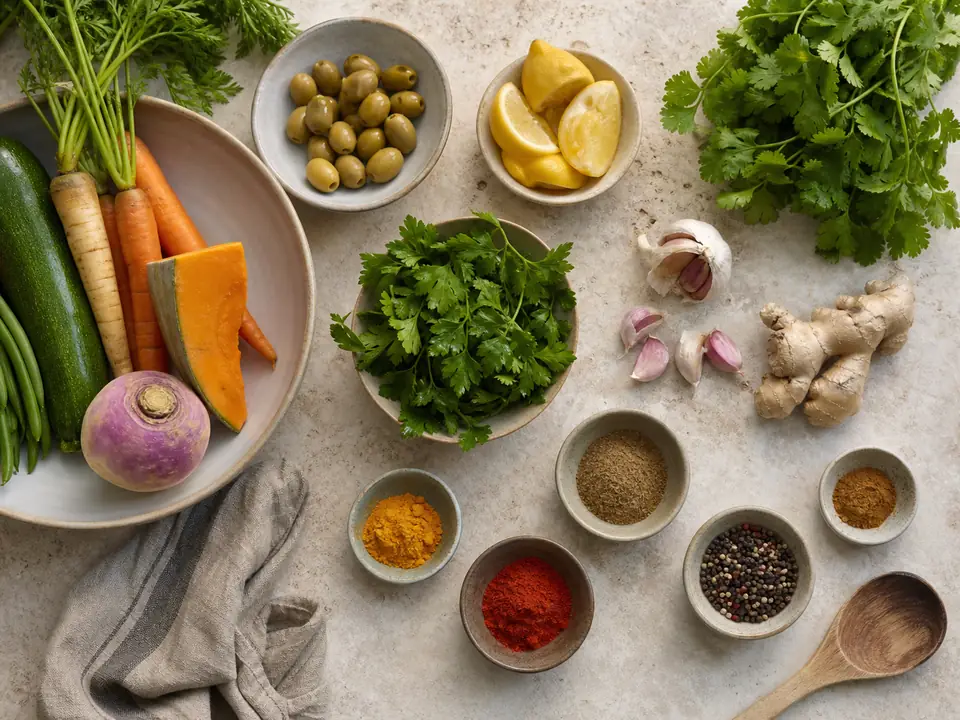
What you need
- Dried red chillies — a mix of mild (for body) and hot (for kick)
- Garlic, and whole cumin, coriander and caraway seeds to toast
- Sweet paprika, salt and good olive oil
- Optionally a little preserved lemon or a splash of vinegar
- A mortar and pestle, or a small food processor; a jar to store
Why it matters
The character of harissa is built from dried, not fresh, chillies — which is what gives it that deep, leathery, smoky-fruity heat rather than the sharp bite of a fresh chilli sauce. Rehydrating and pounding them with toasted seeds and garlic creates layers: the caraway in particular is the signature aromatic that makes harissa taste like harissa and not just chilli paste.
Making it yourself gives you total control over the heat and the freshness. You choose the chillies — a base of mild ones for colour and body, a few hot ones for the kick — and whether to keep or discard the seeds. And because it is preserved under a layer of oil, one batch seasons weeks of couscous, soups and grills.
Step-by-step method
- 1
Choose and prepare the chillies
Pick a mix of dried red chillies: mostly mild, fleshy ones for body and colour, with a few hotter ones to set the heat level. Wipe them, pull off the stems, and shake or scrape out the seeds if you want a smoother, more controlled heat.
- 2
Rehydrate in hot water
Cover the chillies with just-boiled water and leave them to soften for 20–30 minutes until fully pliable. Then drain them well and squeeze out the excess water — too much liquid makes a watery paste.
- 3
Toast the seeds
While they soak, dry-toast the cumin, coriander and caraway seeds in a pan until fragrant, then cool and grind them. This toasting step, as with any Moroccan spice, is what gives depth rather than rawness.
- 4
Pound with garlic and salt
Crush peeled garlic with salt to a paste in the mortar, then add the drained chillies and pound them down. Work in the ground toasted seeds and the paprika. Keep pounding to a thick, red paste (or pulse in a processor).
- 5
Slacken with oil
Beat in olive oil a little at a time until you have a smooth, thick, spoonable paste with a glossy sheen. A little preserved lemon or a splash of vinegar brightens and helps preserve it.
- 6
Taste and adjust the heat
Taste carefully — it is fierce. Balance with more salt, more paprika for sweetness and colour, or more oil to mellow. If it is too hot, more mild chilli or paprika tames it; you cannot easily remove heat once it is in.
- 7
Jar under oil
Pack the paste into a clean jar, level the top, and cover it with a film of olive oil to seal it from air. Kept sealed and topped with oil in the fridge, it lasts for several weeks.
Common mistakes
- Using only fierce chillies. A paste built entirely from hot chillies is punishing and one-dimensional. Base it on mild, fleshy chillies and add heat deliberately.
- Not draining the soaked chillies. Excess soaking water makes a thin, watery paste that will not keep. Squeeze them dry before pounding.
- Skipping the caraway. Caraway is the defining aromatic of harissa. Leave it out and you have a generic chilli paste, not harissa.
- Not toasting the seeds. Raw ground seeds taste flat. Toast them first for the deep, warm background.
- Leaving it exposed to air. Air and moisture spoil the paste and dull the colour. Always seal the surface under a layer of oil.
- Tasting fearlessly with a big spoon. It is very hot; taste a tiny smear so you can still judge the balance afterwards.
Tips
- Wear gloves when handling and deseeding dried chillies, and keep your hands away from your eyes.
- Thin a spoonful of harissa with olive oil and a little lemon for an instant fiery dip for bread or grilled meat.
- A spoonful stirred into the broth is the classic way to add heat to couscous and harira without cooking chilli into the whole pot.
Recipes and dishes that use this
Keep exploring
Frequently asked questions
What is harissa made of?
Harissa is a chilli paste made from rehydrated dried red chillies pounded with garlic, salt, olive oil and toasted spices — classically cumin, coriander and caraway — plus sweet paprika. Caraway is the aromatic that most defines its flavour.
How hot is homemade harissa?
Exactly as hot as you make it. By basing the paste on mild, fleshy dried chillies and adding only a few hot ones — and by removing the seeds — you control the heat completely, which is a key advantage over shop-bought versions.
How long does harissa keep?
Packed into a clean jar and sealed under a film of olive oil in the fridge, harissa keeps for several weeks. Always re-cover the surface with oil after each use to protect it from air.