Religious & festival
Isra and Mi'raj: Night Journey Foods in Morocco
Laylat al-Isra wa al-Mi'raj commemorates the Prophet Muhammad's miraculous night journey from Mecca to Jerusalem and his ascent through the heavens. In Morocco, the twenty-seventh night of the month of Rajab is observed with prayer, recitation and a table of blessed foods — milk and dates chief among them. It is a quieter festival than Eid, but it carries deep meaning and its own gentle food customs.
- Read
- 7 min
- Season
- Religious & festival
- Updated
- 20 July 2026
At a glance
- The night commemorates the Prophet's miraculous journey and ascent.
- Milk and dates are the symbolic foods, echoing prophetic tradition.
- Many families prepare couscous or sweet dishes for the occasion.
- The date shifts each year with the Islamic lunar calendar.
The night and its meaning
Isra refers to the night journey from Mecca to the Al-Aqsa mosque in Jerusalem, and Mi'raj to the ascent through the heavens that followed. In Morocco, the night is spent in prayer and the recitation of the Quran, and mosques hold special gatherings. It is not a public holiday, but it is felt in the home — a blessed night marked with devotion and food that carries spiritual significance.
As with all Islamic observances, the date follows the lunar calendar and moves earlier each year relative to the Western calendar.
The food of the night
The table for Isra and Mi'raj is modest and symbolic rather than lavish. Milk and dates are offered to guests and family, following the prophetic tradition that the Prophet was offered milk on his night journey and chose it as a sign of guidance. In many households this is supplemented with a generous couscous — often with seven vegetables or chicken — and sweet dishes.
- Milk: offered fresh and sometimes sweetened with orange-blossom water, recalling the Prophet's choice during the Mi'raj.
- Dates: the classic food of blessing and hospitality.
- Couscous: a generous plate, often the seven-vegetable version, shared communally.
- Sweet dishes: seffa, sweet couscous with raisins and almonds, or honeyed pastries.
A quiet, devotional evening
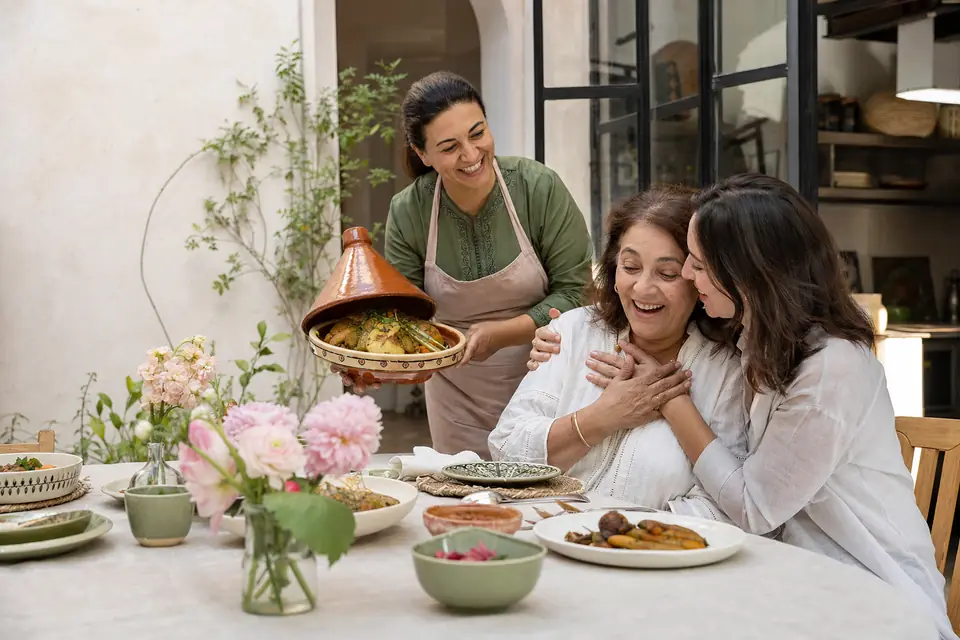
Unlike the great feasts of Eid, Isra and Mi'raj is a contemplative night. Families gather after the evening prayer, eat together, and often stay up late with Quran recitation and prayer. The food is generous but not excessive — it is about blessing and togetherness rather than a grand celebration. Children receive sweets, and neighbours may exchange plates of couscous or pastries.
For the wider tradition of sweet foods at religious occasions, see festive Moroccan desserts by season, and for the other night festivals, Mouloud and the Prophet's birthday.
Frequently asked questions
What is Isra and Mi'raj?
Laylat al-Isra wa al-Mi'raj commemorates the night journey of the Prophet Muhammad from Mecca to Jerusalem (Isra) and his ascent through the heavens (Mi'raj). In Morocco it is observed on the twenty-seventh night of Rajab with prayer, recitation and blessed food. The date shifts each year with the Islamic lunar calendar.
What food is served on Isra and Mi'raj in Morocco?
Milk and dates are the symbolic foods, echoing the prophetic tradition. Many families also prepare a generous couscous and sweet dishes such as seffa or honeyed pastries. The table is modest and meaningful rather than lavish — the emphasis is on blessing and sharing.
Why is milk significant on this night?
According to Islamic tradition, during the Mi'raj the Prophet was offered a choice between milk and wine, and chose milk. This choice is interpreted as a sign of guidance and the natural way, and offering milk on the night of Isra and Mi'raj recalls that moment.