By city
Dades and Todra Gorge Dining: What to Expect
The Dades and Todra gorges, where rivers have carved dramatic canyons through the eastern High Atlas, are among Morocco's most scenic drives and a classic stop on the route between Marrakech and the Sahara. Dining here is not about sophistication but about hearty Berber mountain cooking and oasis produce, often eaten in kasbah guesthouses or riverside terraces beneath towering rock walls. Here is what to expect.
- Read
- 7 min
- Guide
- By city
- Updated
- 19 July 2026
At a glance
- The gorges offer dramatic canyon settings for simple, hearty food.
- Berber mountain tagines and oasis produce are the mainstay.
- Most dining is in kasbah guesthouses and riverside terraces.
- Expect warm, filling food suited to the cool mountain climate.
Mountain and oasis food
This is Berber heartland, and the food reflects a mountain and oasis way of life: robust, warming and built on what the valleys grow and the flocks provide. The gorges themselves are lined with palm-filled oases and small farms producing dates, figs, almonds, vegetables and herbs, while lamb and goat come from the surrounding hills. The cooking is honest and unshowy — the kind of food that has sustained travellers and villagers on this route for centuries.
Because the area is a driving destination rather than a dining one, most meals happen where you stay: kasbah hotels and guesthouses, roadside restaurants at the classic viewpoints, and terraces perched beside the rivers with the canyon walls rising overhead. The setting is the luxury here, not the menu.
What to eat
Keep expectations aligned with a remote mountain region and enjoy the hearty local staples at their most authentic.
- Berber tagine: lamb or chicken slow-cooked with local vegetables, a mountain staple.
- Berber omelette: eggs cooked in a tagine with tomato, onion and spices — a filling favourite.
- Oasis produce: fresh dates, figs, almonds and walnuts from the valley palm groves.
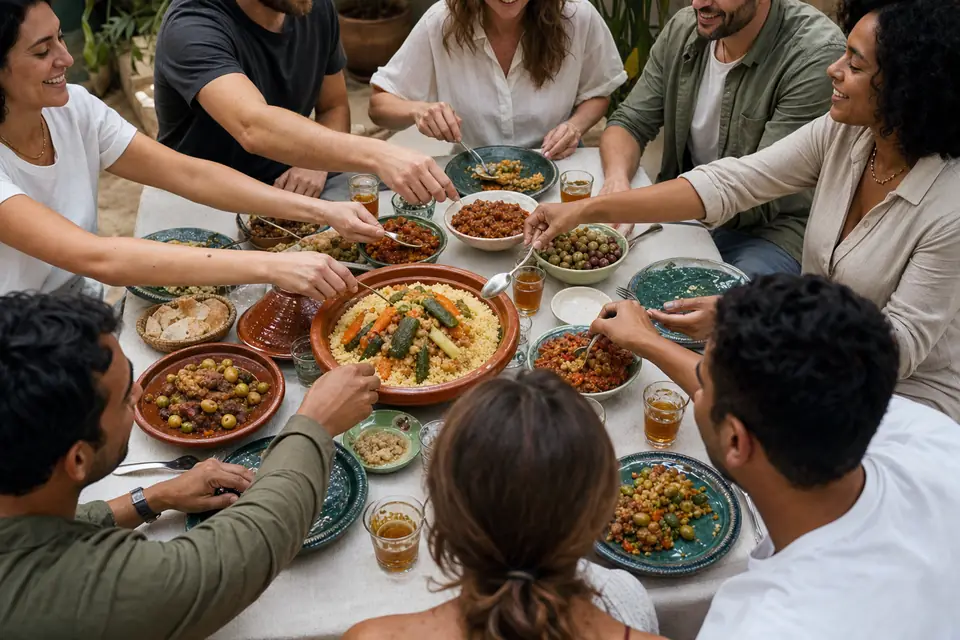
- Couscous: often the Friday dish, generous and warming after a day on the road.
- Mint tea and bread: the constant companions, offered with Berber hospitality.
How to eat well on the road
The practical reality is that this is a place you pass through, so plan meals around your stops. Kasbah guesthouses generally offer the best cooking, often home-style and made with valley produce, and are well worth booking a dinner at; the viewpoint restaurants trade on their spectacular positions, so go for the scenery and keep the order simple with a reliable tagine. Portions are hearty and the cool mountain air makes warm, filling food especially welcome, even in summer.
The gorges are a natural leg of the Marrakech-to-desert route — the desert-dining end is covered in Dakhla and the home-cooking tradition in Atlas village home dining.
Frequently asked questions
What food is served in the Dades and Todra gorges?
Hearty Berber mountain and oasis cooking: lamb or chicken tagines with local vegetables, the tomato-and-egg Berber omelette, generous couscous, and fresh oasis produce like dates, figs and almonds. It is honest, warming and unshowy food suited to the cool climate, usually eaten in kasbah guesthouses or at riverside terraces beneath the canyon walls.
Where should I eat in the gorges?
Mostly where you stay. Kasbah guesthouses and hotels generally offer the best cooking, often home-style and made with valley produce, so booking a dinner there is worthwhile. Viewpoint restaurants trade on their spectacular canyon positions — go for the scenery and keep the order to a reliable tagine. The dramatic setting is the real draw rather than culinary sophistication.
What is a Berber omelette?
A Berber omelette is eggs cooked in a tagine dish with tomato, onion and spices, more like a spiced baked-egg dish than a folded French omelette. Filling, simple and warming, it is a popular option across the Atlas and gorge region, especially for breakfast or a light meal, and reflects the robust, resourceful character of Berber mountain cooking.
Are the gorges a food destination?
Not primarily — they are a scenic driving destination on the route between Marrakech and the Sahara. The food is hearty and authentic rather than sophisticated, and the spectacular canyon setting is the luxury. Plan meals around your stops, favour kasbah guesthouse kitchens for the best cooking, and enjoy simple Berber tagines amid dramatic Atlas scenery.