By city
Desert Camp Dining in Merzouga: Eating Under the Sahara Stars
Sleeping in a tented camp among the great dunes of Erg Chebbi near Merzouga is one of Morocco's signature experiences, and dinner under the stars is part of the deal. Desert dining is necessarily simple — there is no market for miles — but a good camp turns that simplicity into something magical: a tagine simmered over coals, bread from the fire, drumming after dark, and a sky thick with stars.
- Read
- 8 min
- Guide
- By city
- Updated
- 19 July 2026
At a glance
- Camp dinners are usually a set menu — soup, a communal tagine, fruit and tea.
- Everything is cooked on-site over gas or coals; simplicity is the nature of it.
- Flag dietary needs when you book the camp, not on arrival in the dunes.
- Mint tea and often music are part of the ritual, not extras.
How desert camp meals work
A desert camp is fully catered because there is nowhere to eat out — the nearest shops are back in Merzouga or Rissani. So dinner is a fixed communal meal cooked by the camp crew and served in a central dining tent or outside on rugs and low tables. The classic sequence is a bowl of harira or vegetable soup, a large shared tagine or couscous with bread, and fresh fruit with mint tea to finish. Breakfast the next morning is bread, eggs, jam, olive oil and coffee before the sunrise camel ride out.
It is not haute cuisine and does not pretend to be — the appeal is eating a warm, honest Moroccan meal in one of the most extraordinary settings on earth, with the dunes glowing and the stars overhead.
What gets cooked, and how
Given the constraints, camps cook the dishes that travel and keep well, prepared over gas rings or coals brought in for the purpose.
- Tagine over coals: chicken or lamb with vegetables, or a vegetable tagine, slow-cooked and shared from the pot.
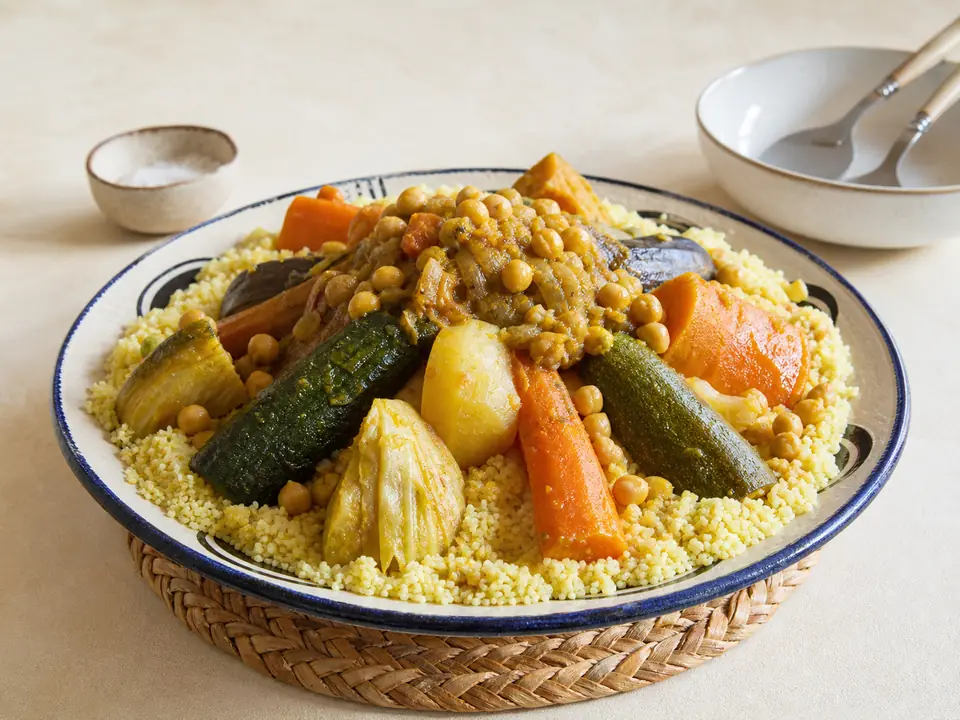
- Couscous: often the alternative main, especially for larger groups.
- Harira or vegetable soup: the warming starter, welcome once the desert night turns cold.
- Bread from the fire: some camps still bake khobz or medfouna-style bread in the embers or hot sand.
- Mint tea and fruit: the standard, restorative close to the meal.
Booking well and eating comfortably
The single most important thing is to communicate dietary needs when you book, not when you arrive — a camp in the dunes cannot improvise a vegan or gluten-free meal on the spot, but will happily prepare one with notice. Ask what dinner and breakfast include so there are no surprises. Bring water and a warm layer: desert nights are cold even after scorching days, and dinner outdoors gets chilly fast.
Standards vary from basic bivouacs to luxury camps with elaborate spreads, so the food tracks the price of the camp. Wherever you land, the meal is really about the setting. To connect the desert to the wider food culture, pair the trip with a Marrakech cooking class before you head south, so you recognise what is in the pot under the stars.
Frequently asked questions
What food is served at a Sahara desert camp near Merzouga?
A set communal dinner, usually a bowl of harira or vegetable soup, a large shared tagine or couscous with bread, and fresh fruit with mint tea. Breakfast is bread, eggs, jam, olive oil and coffee. It is simple, warming Moroccan food cooked on-site, with the setting doing the magic.
Can desert camps cater to dietary requirements?
Yes, but you must tell them when you book, not on arrival. A camp deep in the dunes has no shops nearby and cannot improvise, but will happily prepare vegetarian, vegan or gluten-free meals with advance notice. Confirm what dinner and breakfast include at the same time.
Is the food good at a Merzouga desert camp?
It is simple by necessity — there is no market for miles — but a good camp cooks a warm, honest tagine or couscous over coals and serves it under the stars, which is the whole point. Standards rise with the price of the camp, from basic bivouacs to luxury camps with elaborate spreads.
Is mint tea part of the desert camp experience?
Very much so. Mint tea is offered as a welcome on arrival and again after dinner, and many camps add drumming and music around the fire once night falls. The tea ritual and the shared meal are part of the hospitality, not optional extras, and mark the rhythm of the desert evening.