Wedding Feast menu
Moroccan Wedding Feast Menu — A Lavish Multi-Course Celebration
A Moroccan wedding banquet is abundance made ceremony — course after course carried out in grand procession, each more lavish than the last, ending deep into the night with couscous and towers of pastries. This menu recreates that celebration for a large gathering: a golden pastilla, a whole mechoui roast lamb, a chicken tagine with preserved lemon, the communal couscous, and a sweet table to finish. It is a feast that traditionally feeds dozens, cooked with help and served with pride. Scale it to your numbers, lean on practised technique for the pastilla and mechoui, and give yourself days to prepare. Opulent, ceremonial and unforgettable.
The menu
Ceremonial opener
Chicken pastilla
The grand sweet-savoury pie of spiced chicken, almonds and cinnamon in crisp warqa, dusted with sugar. Carried out first in true wedding style.
Roast centrepiece
Mechoui — whole slow-roasted lamb
A whole lamb roasted until the meat falls from the bone, served with cumin and salt for dipping. The showpiece of any wedding feast.
Poultry course
Chicken tagine with preserved lemon and olives
An elegant second main of golden chicken with saffron, ginger and preserved lemon, brought out after the lamb.
Communal grain
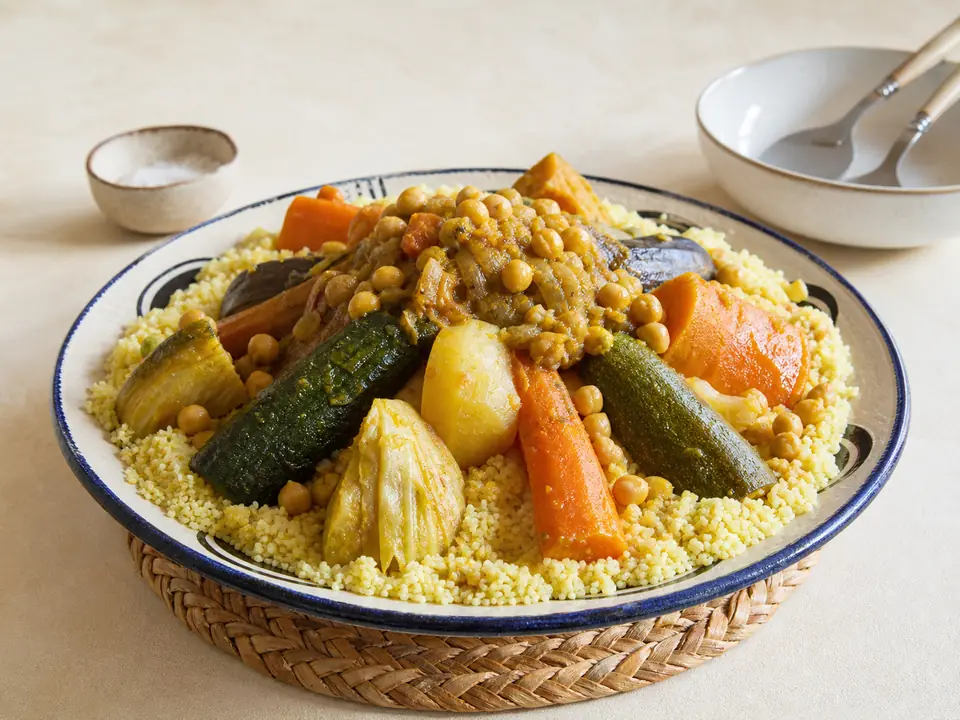
Seven-vegetable couscous
The great mound of couscous crowned with vegetables that traditionally closes the savoury feast late in the night. Steamed three times for a wedding.
Sweet table
Kaab el ghazal, chebakia, briouats and fruit
A towering assortment of almond pastries, honey-soaked chebakia, sweet briouats and seasonal fruit for the celebration's sweet finale.
Drinks
Mint tea, almond milk and fresh juices
Ceremonial mint tea poured from height, rich almond milk and fresh juices flowing throughout the long celebration.
Shopping list
- A whole lamb or a large leg and shoulder (for mechoui)
- Chicken pieces and warqa pastry (for pastilla and tagine)
- Blanched almonds, icing sugar and cinnamon
- Preserved lemon, green olives and saffron
- Onions, garlic, fresh ginger, coriander and parsley
- Ras el hanout, cumin, ginger and butter or smen
- Couscous (large quantity) and the seven vegetables
- Honey, sesame seeds and warqa (for chebakia and briouats)
- Seasonal fruit for the sweet table
- Gunpowder green tea, fresh mint and almonds for milk
Prep timeline
-
Several days before
Make chebakia and the keeping pastries in big batches. Order the lamb and plan help — a wedding feast is cooked in company.
-
Day before
Assemble the pastilla ready to bake. Marinate the lamb and chicken. Prepare the sweet-table pastries and cooked salads.
-
Feast morning
Begin the mechoui early — a whole lamb roasts for hours until falling apart. Start the chicken tagine and steam the couscous.
-
Afternoon
Bake the pastilla golden and dust with sugar. Reduce the tagine sauce and give the couscous further steamings.
-
Through the evening
Serve in ceremonial procession: pastilla, then mechoui, then chicken tagine, then the couscous late, closing with the sweet table and tea.
Host's tips
- A wedding feast is cooked with help — enlist family and share the labour of the pastilla, mechoui and pastries.
- Serve in stately procession, one grand course at a time, rather than all at once; the pacing is part of the ceremony.
- Steam the couscous three times for a wedding — the lightest possible grain marks the importance of the occasion.
- Make the keeping pastries days ahead so the sweet table towers without last-minute panic.
- Roast the mechoui low and slow for hours; the meat should surrender completely and need only cumin and salt.
Questions about this menu
What is served at a Moroccan wedding feast?
A lavish sequence of courses carried out in procession: pastilla to open, mechoui (whole roast lamb), a chicken tagine with preserved lemon, then communal couscous late in the night, closing with a towering sweet table of pastries and fruit. Mint tea, almond milk and juices flow throughout the long celebration.
What is mechoui?
Mechoui is a whole lamb slow-roasted, traditionally in a pit or wood oven, until the meat is meltingly tender and falls from the bone. Rubbed simply with butter, cumin and salt, it is served with little dishes of cumin and salt for dipping. It is the ceremonial centrepiece of grand Moroccan celebrations.
How is the food served at a Moroccan wedding?
In grand, unhurried procession — each major dish is carried out on its own, admired, and shared family-style before the next arrives. The pacing can stretch a banquet across many hours, with couscous appearing late at night. This stately rhythm, punctuated by tea, is central to the celebration's sense of occasion.
Can I recreate a wedding feast at home for a smaller party?
Yes — scale it down and keep the ceremony. A pastilla, a roast leg of lamb in place of a whole mechoui, a chicken tagine, couscous and a generous pastry plate recreate the sequence for a dozen guests. Serve the courses one at a time in procession to keep the celebratory, unhurried spirit.
How far ahead should I prepare?
Give yourself days. Keeping pastries and chebakia are made well in advance, the pastilla is assembled the day before, and salads and marinades are prepared ahead. The mechoui, tagine and couscous are cooked on the day, ideally with help — a wedding feast has always been a communal cooking effort.
Learn to cook this menu with a local in Marrakech
Every dish here is taught, hands-on, in a Marrakech cooking class — or taste them across the medina on a guided food tour.