Breakfast Spread menu
Moroccan Breakfast Spread — Bread, Honey, Olive Oil and Eggs
A Moroccan breakfast is a savoury, unhurried affair built around bread — several kinds, torn and dipped in olive oil, honey, soft cheese and, on colder mornings, a bowl of bissara. It is heartier and less sweet than many Western breakfasts, designed to sustain a morning's work. This spread for four gathers the classics: warm khobz and buttery harcha, honey and fresh olive oil, olives, jben cheese, a pot of bissara and eggs, with plenty of mint tea and coffee. Little cooking is required beyond the breads. Lay it all out together and let everyone build their own plate. Explore more morning breads. Savoury, sustaining and generous.
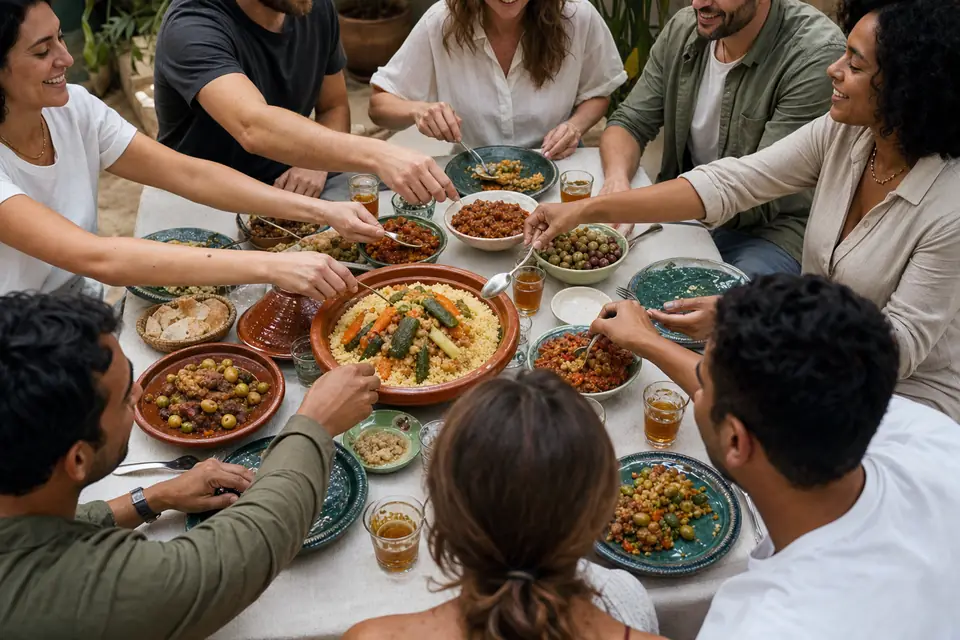
The menu
Breads
Warm khobz and harcha
Round khobz and buttery semolina harcha, warm and ready for tearing and dipping. The foundation of any Moroccan breakfast table.
To dip
Honey, olive oil and butter
Little bowls of honey, fresh olive oil and butter — often oil and honey together — for dunking the warm bread. Simple and beloved.
Savoury spread
Olives, jben cheese and jam
Marinated olives, fresh soft jben cheese and a fruit jam to build endless bread combinations, savoury and sweet.
Hot dish
Bissara or eggs
A warming bowl of split-fava bissara on cold mornings, or simply eggs — boiled, or fried with cumin — for something hot and filling.
Sweet extra
Baghrir or sfenj (optional)
Lacy baghrir pancakes with honey-butter or fried sfenj doughnuts if you want a sweeter, more indulgent weekend spread.
Drinks
Mint tea and coffee
Sweet mint tea and coffee, often nous-nous (half coffee, half milk), with fresh orange juice alongside. The essential morning drinks.
Shopping list
- Bread or flour for khobz, and semolina for harcha
- Honey, butter and good olive oil
- Mixed olives and soft jben cheese
- Fruit jam (apricot or fig)
- Dried split fava beans (for bissara) or eggs
- Cumin and paprika
- Flour and yeast (for optional baghrir or sfenj)
- Oranges for juicing
- Coffee and milk
- Green tea and fresh mint
Prep timeline
-
Night before
If making bissara, soak the favas overnight. Prepare any baghrir batter or sfenj dough to rest until morning.
-
Morning, first
Bake or warm the khobz and griddle the harcha. If serving bissara, cook it now so it is ready and warm.
-
20 minutes before
Set out the olives, cheese, jam, honey, oil and butter in little bowls. Squeeze the orange juice.
-
10 minutes before
Cook the eggs to order, brew the mint tea and make the coffee. Warm the breads through if needed.
-
At the table
Lay everything out together, keep the bread warm and coming, and let everyone dip, spread and build their own plate.
Host's tips
- A Moroccan breakfast is savoury and bread-led — offer several breads and let people tear and dip rather than plating up.
- Serve honey and good olive oil together in one bowl for dipping; the sweet-savoury combination is a classic.
- Bissara makes a wonderfully warming, filling breakfast on a cold morning and is very cheap to make.
- Fresh soft jben cheese with a drizzle of honey or oil is a simple, authentic highlight of the spread.
- Keep the mint tea and coffee flowing — Moroccan breakfast is unhurried and drink-led as much as food-led.
Questions about this menu
What do Moroccans eat for breakfast?
Chiefly bread — khobz, harcha, msemen or baghrir — torn and dipped in olive oil, honey, butter and soft cheese, with olives and jam alongside. On cold mornings a bowl of bissara is common, and eggs feature too. It is a savoury, bread-led breakfast, washed down with mint tea and coffee, heartier and less sweet than many expect.
What is harcha?
Harcha is a pan-cooked Moroccan bread made from semolina, giving it a distinctive golden, slightly crumbly, cornbread-like texture. Cooked on a griddle until crisp outside and soft within, it is split and eaten warm with butter, honey, cheese or jam. A breakfast and teatime staple, it is quick to make and deeply comforting.
Is Moroccan breakfast sweet or savoury?
Predominantly savoury, though sweet elements feature. The core is bread with olive oil, cheese and olives, often with bissara or eggs — hearty and savoury. Honey, jam and sweet breads like baghrir add sweetness, especially at weekends. The balance leans savoury and substantial, reflecting a breakfast meant to sustain a working morning rather than a light sweet start.
What drinks are typical at breakfast?
Sweet mint tea and coffee both feature, coffee often served as nous-nous, meaning half coffee and half milk. Fresh orange juice is common too. The drinks are central to the unhurried, sociable character of a Moroccan breakfast, refilled as the household gathers and works its way through the spread of breads and dips.
Can I prepare a breakfast spread with little morning effort?
Yes. Bake or buy the bread ahead and simply warm it, soak the favas the night before for bissara, and set out the cold elements — olives, cheese, jam, honey and oil — in minutes. Only the eggs and any fresh griddle breads need morning cooking, so a generous spread comes together with little fuss.
Learn to cook this menu with a local in Marrakech
Every dish here is taught, hands-on, in a Marrakech cooking class — or taste them across the medina on a guided food tour.