Mawlid al-Nabi menu
Mawlid Celebration Menu — Sellou, Sweets and a Family Gathering
Mawlid al-Nabi, marking the birth of the Prophet, is centred on sellou — the toasted flour, almond and sesame sweet made in large batches and shared with neighbours and the mosque, alongside Quran recitation at home. A family lunch and a standing sweets table fill out the rest of the day. This menu covers the sellou itself, the meal around it, and the giving that is central to how the day is marked.
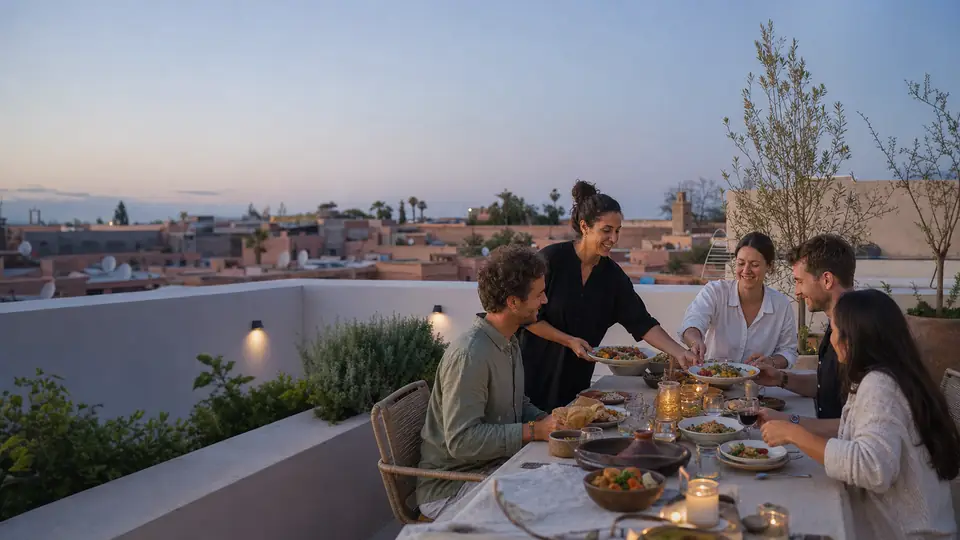
The menu
The main sweet
Sellou, made in a large batch
Toasted flour, almonds, sesame seeds and honey pounded together into a rich paste, portioned for the household and for sharing.
For giving
Extra sellou or pastries for neighbours and the mosque
Set aside specifically to distribute, reflecting the charitable, communal character of how Mawlid is marked.
Sweets table
Ghriba, fekkas and dates alongside the sellou
Kept out for the steady stream of visitors who call in through the day to mark the occasion together.
Family lunch
Couscous or a chicken tagine
A more substantial dish for the immediate family, usually served around midday between periods of recitation and prayer.
For children
Small sweets and dates
In some regions, children are given sweets specifically tied to Mawlid celebrations, alongside candles or small gifts.
To drink
Mint tea, poured for visitors throughout the day
The usual constant of any Moroccan gathering, kept going as people come to pay their respects to the occasion.
Shopping list
- Flour, blanched almonds and sesame seeds (for sellou)
- Honey, cinnamon and anise seeds
- Butter or smen
- Extra portions of everything, specifically for sharing
- Ghriba, fekkas or other cookies for the sweets table
- Dates
- Couscous or chicken for the family lunch
- Saffron and ginger
- Small containers or bags for distributing sellou to neighbours
- Gunpowder green tea and fresh mint
Prep timeline
-
2-3 days before
Toast the flour, almonds and sesame slowly — this is the step that takes real time and cannot be rushed without the sellou tasting raw.
-
Day before
Finish pounding and sweetening the sellou, then portion it into what stays home and what goes to neighbours or the mosque.
-
Morning of Mawlid
Deliver the shared portions and set out the sweets table for visitors.
-
Midday
Serve the family lunch, timed around any recitation or gathering planned for the day.
-
Throughout the day
Keep tea and sweets ready as people call in to mark the occasion.
Host's tips
- Toast the flour for sellou patiently over low heat — rushing this step is the most common reason it tastes gritty or raw.
- Make more sellou than the household will eat; sharing a portion with neighbours or the mosque is a central part of the day.
- Sellou keeps for weeks in an airtight container, so it can genuinely be made well ahead of Mawlid.
- Keep the family lunch simple, since the sweets table and the giving are really the heart of the celebration.
Questions about this menu
What is sellou and why is it linked to Mawlid?
Sellou is a sweet paste of toasted flour, almonds, sesame seeds and honey, traditionally made in large batches around Mawlid al-Nabi and shared with family, neighbours and the mosque as part of the day's charitable, communal character.
How is Mawlid al-Nabi traditionally marked in Morocco?
With Quran recitation and religious gatherings at home or the mosque, a family meal, and the preparation and sharing of sellou and other sweets, rather than gift-giving in the style of some other celebrations.
How long does sellou keep?
Well — properly toasted and stored in an airtight container, sellou keeps for several weeks, which is why households often make a large batch once for Mawlid rather than cooking it fresh throughout the celebration.
Is Mawlid a public holiday in Morocco?
Yes, Mawlid al-Nabi is an official public holiday in Morocco, and many families use the day to gather, share sellou and sweets with neighbours, and attend religious gatherings or recitations.
Do children have a special role on Mawlid?
In some regions children are given small sweets or treats tied to the occasion, and family gatherings often include younger relatives, though the day's focus remains primarily religious and communal rather than centred on children specifically.
Learn to cook this menu with a local in Marrakech
Every dish here is taught, hands-on, in a Marrakech cooking class — or taste them across the medina on a guided food tour.