Laylat al-Qadr menu
Laylat al-Qadr Menu — Food for the Night of Power
Laylat al-Qadr, believed to fall among the last odd nights of Ramadan, is marked less by a special dish than by generosity and a longer night of prayer. Many households prepare a slightly more generous harira and extra pastries to share with neighbours or the mosque, then plan a sustaining suhoor to carry them through prayers until dawn. This menu covers the iftar, the charity food often cooked in bulk, and the suhoor that follows the long night.
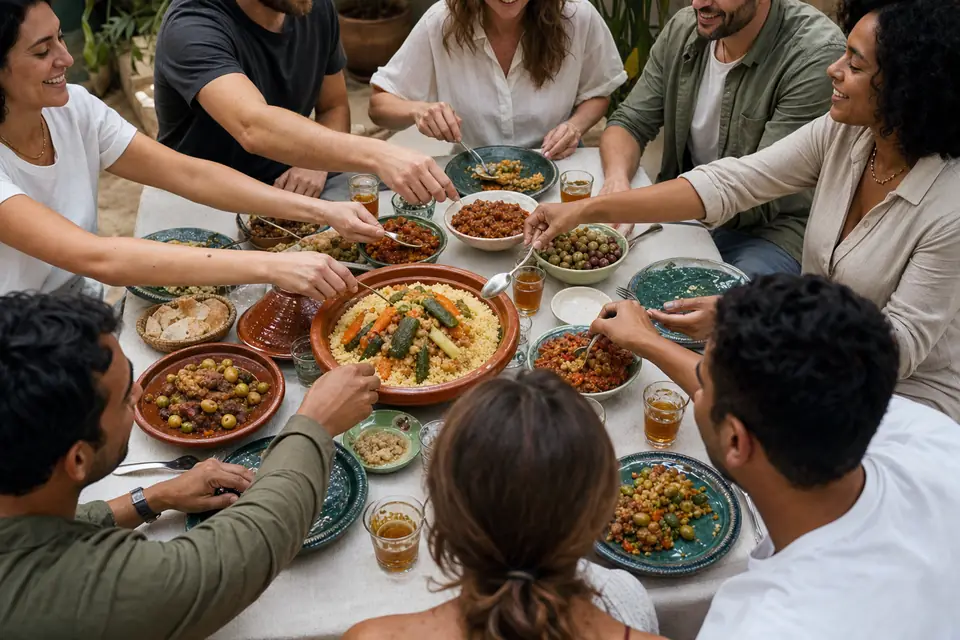
The menu
Iftar, as usual but more
Harira, dates, chebakia and briouats, in larger quantity
The regular iftar table, simply scaled up since extra portions are often set aside to share with the mosque or neighbours.
For sharing
A second pot of harira or a tray of pastries for charity
Cooked specifically to give away, reflecting the emphasis on generosity associated with this night.
Late-night
Tea and dates for those staying up in prayer
A light, easy refreshment kept ready through the night for family members observing extended prayers.
Suhoor
Msemen or harcha with honey, and a soft egg
Kept sustaining rather than heavy, since the household may have had little sleep before the pre-dawn meal.
Suhoor drink
Water and a small glass of tea
Balanced carefully, since the following day's fast follows a night with little rest.
In the morning
A quiet, simple morning with no further food for most fasting adults
The suhoor effectively serves as the last food until iftar, so it is eaten with more care than on an ordinary night.
Shopping list
- Extra tomatoes, lentils, chickpeas and lamb or beef for a larger pot of harira
- Extra dates, enough to share as well as eat
- Sesame seeds, honey and flour for extra chebakia or other sweets
- Warqa or spring-roll pastry for a bigger batch of briouats
- Semolina and flour for suhoor bread (msemen or harcha)
- Eggs
- Honey and olive oil
- Containers or trays for sending food to the mosque or neighbours
- Gunpowder green tea and fresh mint
- Plenty of drinking water
Prep timeline
-
Afternoon
Cook a larger pot of harira than usual, dividing it between the family iftar and a portion set aside to give away.
-
Before maghrib
Fry extra briouats or pastries, keeping a tray back specifically for sharing.
-
Early evening
Deliver or send the extra food to the mosque or neighbours before settling in for the family iftar and the night's prayers.
-
Late night
Keep tea and dates on hand for anyone staying up in prayer through the night.
-
Before dawn
Prepare a sustaining but simple suhoor, since the household may be tired from a longer night than usual.
Host's tips
- Scale up your usual iftar recipe rather than inventing a new dish — generosity in quantity matters more than novelty here.
- Coordinate with neighbours or the mosque ahead of time if you plan to send food, so it arrives while it is still warm.
- Keep suhoor light but not empty; a long night of prayer on very little food makes the coming day's fast much harder.
- Prepare extra portions of anything that freezes well, such as briouats, so sharing does not mean cooking twice from scratch.
- Pace your own rest around the night if you can — a longer vigil followed immediately by a full day's fast is genuinely demanding.
Questions about this menu
What is Laylat al-Qadr and when is it observed?
Laylat al-Qadr, the Night of Power, is believed to fall on one of the odd nights in the last ten days of Ramadan, often marked on the 27th. It is associated with extended prayer, charity and generosity rather than one specific dish.
Is there a special dish for Laylat al-Qadr?
There is no single obligatory dish, but many households prepare a larger, slightly richer iftar and extra food specifically to share with neighbours or worshippers at the mosque, reflecting the night's emphasis on charity.
What should suhoor look like after a long night of prayer?
Keep it sustaining rather than heavy — bread with honey, an egg, yoghurt or lben, and steady water intake, since the body needs real fuel for the day ahead after less sleep than usual.
Why is charity food emphasised on this night?
Laylat al-Qadr is considered one of the most blessed nights of the year in Islamic tradition, and acts of generosity, including sharing food with those in need, are widely encouraged during it.
Do Moroccan mosques serve food on Laylat al-Qadr?
Many mosques and community groups organise communal iftars or distribute food on this night, often supplied by households cooking extra portions of harira, dates and pastries specifically to contribute.
Learn to cook this menu with a local in Marrakech
Every dish here is taught, hands-on, in a Marrakech cooking class — or taste them across the medina on a guided food tour.