Eid al-Adha menu
Eid al-Adha Lamb Menu — Nose-to-Tail Feasting for the Great Eid
Eid al-Adha, the Feast of Sacrifice, is the great meat celebration of the Moroccan year, and tradition is to honour the animal by using every part over several days. The feasting begins with boulfaf — grilled liver wrapped in caul fat, eaten the very first day — and moves through tagines, couscous and the honeyed mrouzia as the days go on. This menu captures the classic first-day and feast-day dishes for a family gathering, respecting the nose-to-tail spirit of the occasion. It is hearty, celebratory cooking built around the finest lamb. Fire up the coals, gather the family, and let the spices do the rest.
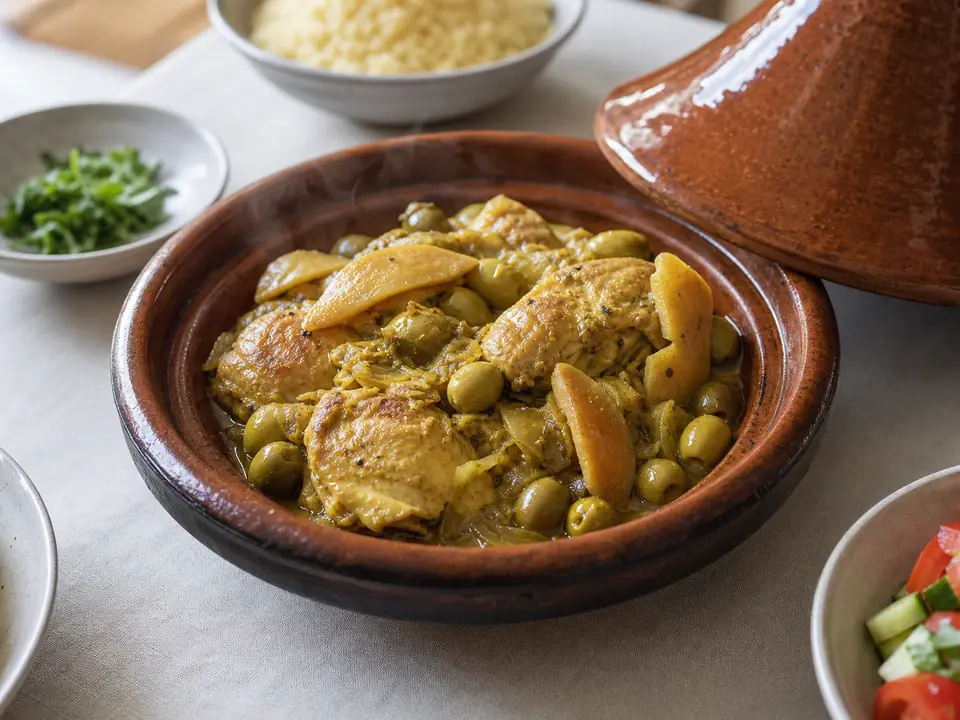
The menu
First-day grill
Boulfaf — grilled liver skewers in caul fat
The traditional first taste of the sacrifice: cubes of liver seasoned with cumin, wrapped in caul fat and grilled over coals. Eaten immediately, hot off the fire.
Offal speciality
Tqalia — spiced sautéed offal
Heart, liver and lung sautéed with garlic, cumin, paprika and coriander. A prized first-day dish that honours the whole animal.
Honeyed tagine
Mrouzia — lamb with raisins, almonds and honey
A deeply sweet, spice-laden tagine of lamb, raisins, almonds and honey, heavy with ras el hanout. A keeping dish made for the feast.
Centrepiece
Lamb shoulder tagine with vegetables
Slow-cooked lamb shoulder falling from the bone with seasonal vegetables — the hearty main for the gathered family.
Grain
Lamb couscous
The great communal couscous crowned with tender lamb and vegetables, bringing everyone around one dish. Steamed twice.
Drinks and sweets
Mint tea with dates and pastries
Sweet mint tea, dates and trays of pastries between the rich meat courses and for the visiting that fills the days.
Shopping list
- Lamb liver, heart and offal, plus caul fat (for boulfaf and tqalia)
- Lamb shoulder and neck or shank (for the tagines)
- Raisins, blanched almonds and honey (for mrouzia)
- Onions, garlic and fresh coriander and parsley
- Ras el hanout, cumin, paprika, saffron and cinnamon
- Seasonal vegetables (carrot, courgette, pumpkin, turnip)
- Couscous and chickpeas
- Preserved lemon and green olives
- Dates and pastries
- Charcoal, green tea and fresh mint
Prep timeline
-
Feast day, first
As soon as the meat is ready, thread the liver in caul fat and grill the boulfaf over hot coals to eat immediately.
-
First day
Sauté the tqalia offal with garlic and spice while the coals are hot — these first-day dishes are eaten fresh and not kept.
-
Second day
Start the mrouzia, which is a keeping dish; its honey and spice preserve the lamb and deepen over a day or two.
-
Feast lunch
Cook the lamb shoulder tagine low and slow, and steam the couscous once ahead of the family gathering.
-
To serve
Reduce the tagine, give the couscous its second steaming with lamb and vegetables, and set out dates, pastries and tea.
Host's tips
- Boulfaf is eaten first and fresh — grill the caul-wrapped liver the moment the coals are ready and serve straight away.
- Mrouzia is designed to keep: its heavy honey and spice preserve the meat, so make it to eat over the following days.
- Honour the whole animal — the offal dishes of the first day are a cherished part of Eid al-Adha, not an afterthought.
- Season liver simply with cumin and salt; its flavour needs little more than smoke and coals.
- Pace the feasting across several days, moving from grilled offal to tagines to couscous as the fresh meat is used.
Questions about this menu
What is eaten first on Eid al-Adha?
Boulfaf — skewers of lamb liver seasoned with cumin, wrapped in caul fat and grilled over coals — is traditionally the very first dish, eaten fresh the moment the meat is ready. Alongside it, tqalia of sautéed offal honours the whole animal. These first-day dishes are eaten immediately, not kept.
What is mrouzia?
Mrouzia is a rich, sweet lamb tagine heavy with ras el hanout, raisins, almonds and honey. Its abundant honey and spice act as a preservative, so it is made to be eaten over several days after Eid al-Adha. Deeply aromatic and intensely sweet-savoury, it is one of the great festive tagines of Morocco.
Why is the whole animal used?
Eid al-Adha commemorates sacrifice, and tradition holds that the meat is honoured by wasting nothing and by sharing generously with family, neighbours and those in need. Over several days the offal, then the tender cuts, then the keeping dishes are all cooked, so the celebration unfolds nose-to-tail with gratitude.
How do Moroccans make the meat last several days?
By moving through dishes in order: fresh offal and grilled cuts first, then tagines, then keeping dishes like mrouzia and khlea (preserved spiced meat) whose honey, fat and spice hold the meat safely. Couscous with lamb feeds the largest gathering. The feast is paced across the days of Eid.
Can I cook this without offal?
Yes, though the offal dishes are traditional and prized. Build the feast instead around grilled lamb chops or brochettes on the first day, then the lamb shoulder tagine, mrouzia and couscous. You keep the celebratory, meat-forward spirit of the Great Eid while focusing on the cuts you prefer.
Learn to cook this menu with a local in Marrakech
Every dish here is taught, hands-on, in a Marrakech cooking class — or taste them across the medina on a guided food tour.