Eid al-Adha menu
Eid al-Adha Feast Menu — From the Sacrifice to the Last Tagine
Eid al-Adha is not one meal but three, following the sheep from sacrifice to storecupboard. Day one is grilled liver wrapped in caul fat, cooked over coals within hours of the sacrifice; day two works through the offal in a spiced tagine; and by day three the remaining meat goes into mrouzia, a sweet, dried-fruit tagine built to keep for weeks. This menu follows that traditional order so nothing from the sheep is wasted or rushed.
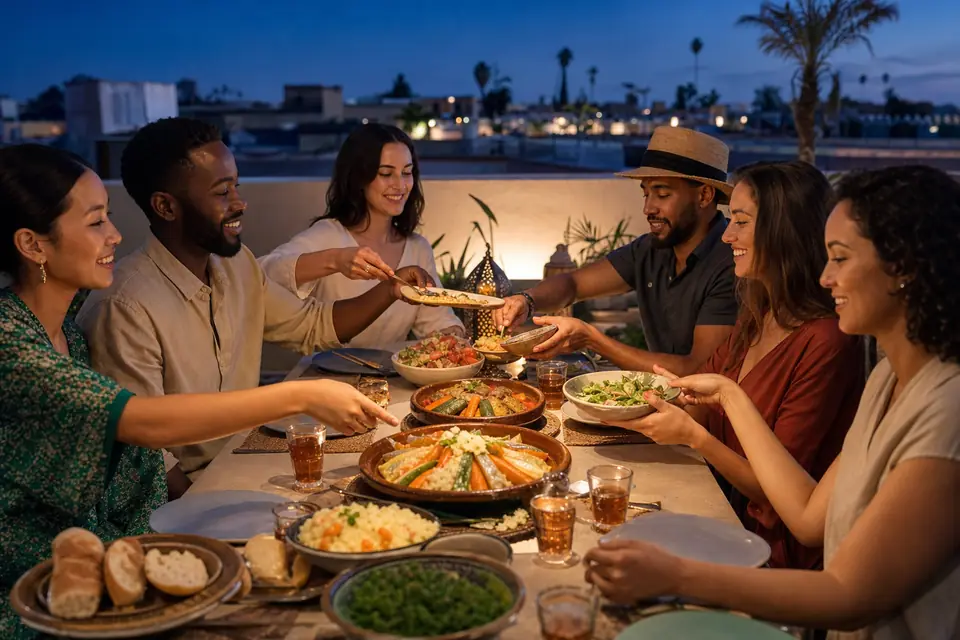
The menu
Day one, first course
Boulfaf — liver skewers wrapped in caul fat
Grilled quickly over charcoal within hours of the sacrifice, seasoned simply with cumin and salt; the first meat eaten on Eid.
Day one, main
Head and trotters (bouzelouf and kraa), slow-simmered
Cooked low for hours until meltingly tender, traditionally shared among the men who helped with the sacrifice.
Day two
Kouah — a tagine of heart, lung and kidney
The offal tagine, built with plenty of garlic, cumin and coriander to carry the stronger flavours of organ meat.
Day three
Mrouzia — lamb with raisins, almonds and honey
A sweet, spiced tagine using the remaining shoulder or leg meat, cooked slowly until it can be stored and reheated for days.
Day three, side
Seven-vegetable couscous with the leftover stock
Uses the bones and trimmings for a rich broth once the best cuts have gone into the mrouzia.
To finish
Mint tea and fresh fruit
A light close after several days of rich, meat-heavy meals; fruit is often the only dessert offered.
Shopping list
- A whole sheep, or the cuts arranged with your butcher (liver, offal, shoulder, leg)
- Caul fat for wrapping the liver skewers
- Ground cumin and coarse salt
- Garlic, fresh coriander and parsley
- Ras el hanout and ground ginger
- Raisins, blanched almonds and honey (for mrouzia)
- Cinnamon sticks and saffron
- Couscous and mixed vegetables for the final broth
- Bread for scooping and mopping sauce
- Gunpowder green tea and fresh mint
Prep timeline
-
Morning of Eid
After the sacrifice, the liver, heart and kidneys are set aside first; the liver is wrapped in caul fat for grilling within the hour.
-
Day one, midday
Grill the boulfaf over charcoal and start the head and trotters on a slow simmer.
-
Day two
Cook the remaining offal into a tagine while the larger cuts rest, salted, ready for the third day.
-
Day three
Build the mrouzia low and slow — at least two hours — so the meat is tender enough to fall apart, then simmer the couscous broth from the bones.
-
Following week
Mrouzia keeps well and is often reheated for days after Eid, getting better as the spices settle.
Host's tips
- Ask your butcher to help portion the animal into the traditional day-one, day-two and day-three cuts if this is your first time managing it yourself.
- Mrouzia is meant to be a keeping dish — make a generous batch, since it is often eaten cold or reheated well into the following week.
- Grill the liver the same day as the sacrifice; it does not keep and is traditionally the very first thing eaten.
- Freeze any cuts you cannot get through within a few days rather than letting the third-day tagine stretch on too long.
- Balance the richness of three meat-heavy days with plenty of fresh salad and fruit alongside each meal.
Questions about this menu
What is eaten on the first day of Eid al-Adha?
Grilled liver wrapped in caul fat, known as boulfaf, is traditionally the first thing cooked and eaten, often within an hour or two of the sacrifice, alongside the head and trotters which are set to simmer slowly.
What is mrouzia and why is it linked to Eid al-Adha?
Mrouzia is a sweet, spiced lamb tagine made with raisins, almonds and honey, slow-cooked until it can be stored for weeks. It is the classic way of using the remaining Eid meat once the fresher cuts have been eaten.
How long does an Eid al-Adha feast last?
The meal effectively stretches over two to three days, moving from the freshest cuts eaten first to the larger cuts, which go into keeping dishes like mrouzia once the household has settled from the sacrifice.
What do you do with the offal from the sacrifice?
It is usually cooked the second day in a well-spiced tagine — heart, lung and kidney together, sometimes called kouah — since offal does not keep as well as the larger cuts and is best used promptly.
Is Eid al-Adha meat shared with others?
Yes, sharing is central to the occasion — the meat is traditionally divided into thirds for the household, for relatives and neighbours, and for those in need, so cooking often scales up to feed more than one family.
Learn to cook this menu with a local in Marrakech
Every dish here is taught, hands-on, in a Marrakech cooking class — or taste them across the medina on a guided food tour.