Buying guide
Where to Buy Moroccan Pottery & Ceramics in Marrakech
Pottery souks, the Ensemble Artisanal and roadside potters
Moroccan pottery is a highlight of any Marrakech shopping trip: hand-painted plates and bowls, the blue-and-white of Safi, the luminous green glaze of Tamegroute, tagines and serving dishes, and the intricate zellige mosaic tradition. Knowing the regional styles — and how to check for lead-safe glazes and pack fragile pieces — helps you buy well and get it home intact.
Go here for
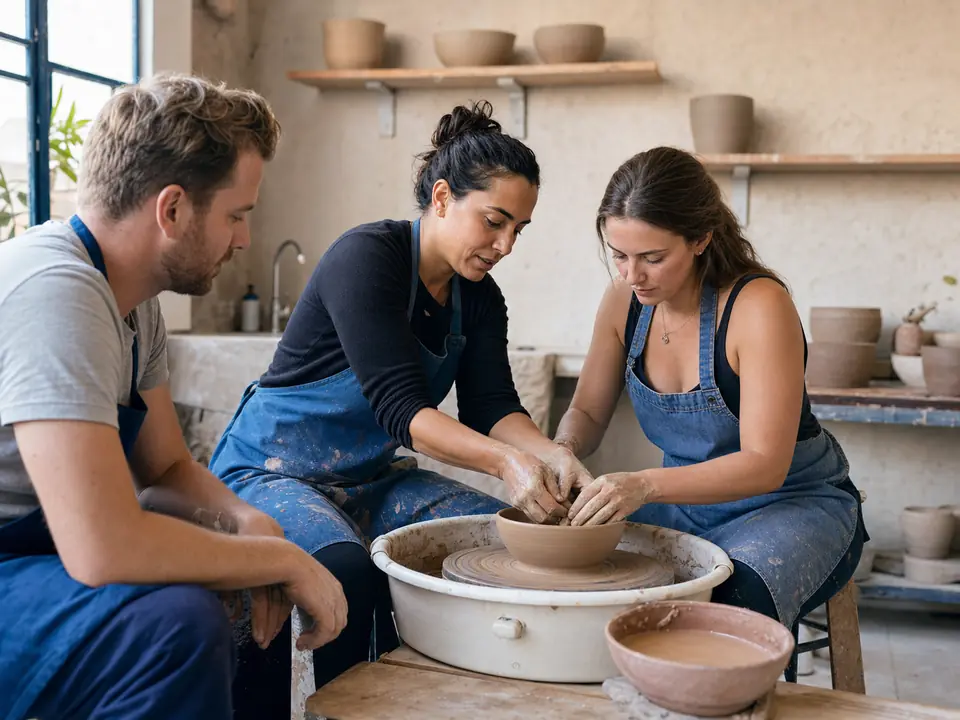
The regional styles
Safi, on the Atlantic coast, is Morocco's pottery capital, famous for intricate blue-and-white and polychrome designs. Tamegroute, a village near the southern oases, makes an unmistakable rustic pottery with a molten, uneven green glaze coloured by copper and manganese. Fez produces refined blue-and-white too. All three turn up in Marrakech's pottery stalls, alongside local everyday earthenware.
For the table, look at serving tagines, big shallow bowls for couscous, tea and coffee sets, and hand-painted plates. Zellige — cut geometric mosaic tiles — is a separate craft you'll see in fountains and tabletops.
Buying and packing safely
Buy pottery in the medina's ceramic stalls, at roadside potters on the routes into the city, and at the fixed-price Ensemble Artisanal, which is the easiest place to gauge fair prices and quality. Check pieces for cracks and chips, and sit bowls and tagine bases flat.
For anything you'll eat off regularly, favour reputable sellers and be mindful that some traditional decorative glazes may contain lead — use highly decorative or antique glazed pieces for display and serving dry foods rather than for acidic cooking or daily use. Pack each piece wrapped separately in clothes, cushioned in the middle of your case, or ask about shipping for large sets.
How to shop like a local
- Learn the styles: Safi blue-and-white, Tamegroute green glaze, Fez blue — it helps you judge quality and price.
- Check every piece for cracks and chips, and make sure bowls and tagine bases sit flat.
- Benchmark prices and quality at the fixed-price Ensemble Artisanal before haggling in the souks.
- For daily tableware, buy from reputable sellers; use very decorative or antique glazed pieces for display or dry serving, not acidic cooking.
- Wrap each piece separately in clothes and pack it centrally, or arrange shipping for big or heavy sets.
Bargaining etiquette
- Pottery opens high for tourists — counter low, bundle a set, and be ready to walk.
- Buying a matching set (plates, bowls, a tagine) unlocks a better per-piece price.
- Cross-check the Ensemble Artisanal price and negotiate from there.
What to avoid
- Don't use heavily decorated or antique glazed pieces for acidic cooking or daily eating if you're unsure about lead glaze; keep them for display and dry serving.
- Avoid buying cracked or chipped pieces, however pretty; they won't survive the trip.
- Don't pay large sums for shipping without written terms and a receipt.
Frequently asked questions
What are the main types of Moroccan pottery?
Safi blue-and-white and polychrome from the coast, the rustic molten-green glaze of Tamegroute in the south, and refined Fez blue-and-white, plus local everyday earthenware and zellige mosaic tiles. All the main styles turn up in Marrakech's pottery stalls.
Is Moroccan pottery food-safe?
Plain modern tableware from reputable sellers is generally fine, but some traditional decorative or antique glazes may contain lead. Use highly decorated or antique glazed pieces for display and dry serving rather than acidic cooking or daily use, and buy tableware from trusted sources.
How do I get pottery home safely?
Wrap each piece separately in clothes and pack it in the middle of your hold luggage, or arrange shipping for large sets. Check every piece for cracks and chips before buying, since flawed pieces rarely survive the flight.
Keep exploring Marrakech food
Turn your market haul into dinner with a hands-on Marrakech cooking class, walk the souks with a guide on a market food tour, learn the Moroccan spices you just bought, or cook them at home with our Moroccan recipes. For the bigger picture, browse our food culture guides.