Buying guide
Where to Buy a Couscoussier & Moroccan Cookware
Metal and kitchenware stalls in the souks, the Mellah and Bab Doukkala
Beyond the tagine, a Moroccan kitchen runs on a handful of specific tools: the couscoussier for steaming couscous, the tanjia urn for Marrakech's slow-cooked meat, the wide gsaa basin for kneading and rolling, and simple metal and wooden utensils. Marrakech's kitchenware stalls sell all of it cheaply and durably — here's what to look for.
Go here for
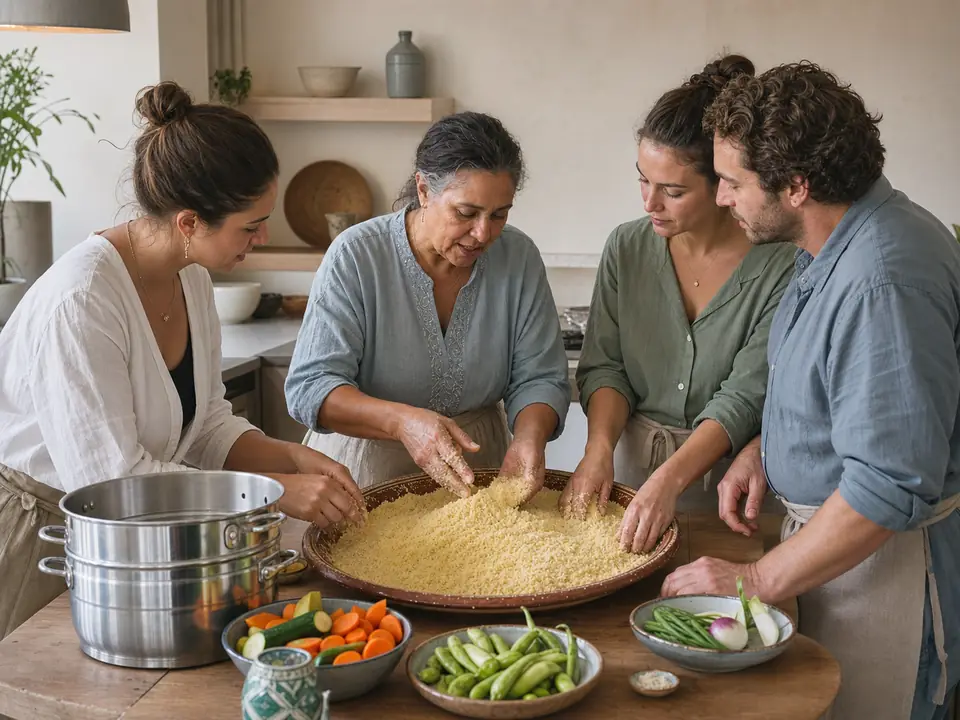
The essential pots
The couscoussier is a two-part pot: a wide lower vessel for the stew or water, and a perforated upper steamer basket where the couscous cooks in the rising steam. Traditional ones are aluminium or stainless steel; the steam-through design is what makes light, separate couscous possible. The tanjia is the tall clay or metal urn Marrakech is uniquely known for — meat, spices, preserved lemon and smen are sealed inside and cooked slowly in the embers of a ferran or hammam furnace.
The gsaa is the big shallow basin — earthenware, wood or metal — used for kneading bread dough and rolling and steaming couscous by hand. Together these three cover most traditional Moroccan cooking.
Where to buy and what to check
Kitchenware stalls cluster in the souks, around the Mellah and especially at the municipal markets like Bab Doukkala, where locals buy their everyday pots. The flea market at Souk el Khemis is the place for vintage copper and character pieces. Check that a couscoussier's two parts seat together snugly with no big gaps for steam to escape, and that handles are solidly riveted.
For most home cooks a stainless couscoussier is the practical buy — light, durable and flight-friendly. A clay tanjia is a wonderful souvenir but needs careful packing and the right slow, gentle cooking at home.
How to shop like a local
- Check a couscoussier's two parts seat together snugly, so steam rises through the couscous rather than escaping the sides.
- Choose stainless or aluminium for a practical, flight-friendly steamer; save clay pieces for careful packing.
- Look at the municipal markets (Bab Doukkala) for honest everyday cookware at local prices.
- Hunt the flea market (Souk el Khemis) for vintage copper pots, trays and character pieces.
- Make sure handles and rivets are solid before buying any metal pot.
Bargaining etiquette
- Everyday cookware at municipal markets is near-fixed; decorative and vintage pieces in the souks invite more haggling.
- Buying a couscoussier with a few utensils together earns a better combined price.
- At the flea market, counter and be ready to walk on 'vintage' finds.
What to avoid
- Don't buy a couscoussier whose parts don't seat snugly; escaping steam means poorly cooked couscous.
- Avoid thin, flimsy pots with wobbly handles; they won't last.
- Don't buy a heavy clay tanjia without a plan to pack it safely and cook it gently at home.
Frequently asked questions
What is a couscoussier?
A couscoussier is a two-part Moroccan steamer: a wide lower pot for the stew or water and a perforated upper basket where couscous cooks in the rising steam. The steam-through design is what produces light, separate couscous, and it's an inexpensive, practical buy in Marrakech.
What is a tanjia pot?
The tanjia is the tall clay or metal urn Marrakech is famous for. Meat, spices, garlic, preserved lemon and smen are sealed inside and cooked slowly for hours in the embers of a ferran or hammam furnace, producing meltingly tender meat. It's a distinctive souvenir but needs careful packing.
Where do I buy Moroccan cookware in Marrakech?
Kitchenware stalls in the souks, around the Mellah and at municipal markets like Bab Doukkala sell couscoussiers, pots and utensils at local prices, while the Souk el Khemis flea market is the place for vintage copper and character pieces.
Keep exploring Marrakech food
Turn your market haul into dinner with a hands-on Marrakech cooking class, walk the souks with a guide on a market food tour, learn the Moroccan spices you just bought, or cook them at home with our Moroccan recipes. For the bigger picture, browse our food culture guides.