Cooking with Courgette
Recipes with Courgette — A Tender Everyday Vegetable in Moroccan Cooking
Courgette (gara khadra) is a gentle, everyday vegetable in the Moroccan kitchen, valued for the way it soaks up spice and cooks quickly into tagines, couscous and cooked salads. Mild and tender, it plays a supporting role rather than a starring one, adding softness and bulk alongside more assertive vegetables and meats. It is one of the seven vegetables piled onto a Friday couscous, and it makes a simple, comforting cooked salad on its own. This guide covers how Moroccans cook courgette, the dishes it joins, how to keep it from going mushy, and how to buy it well.
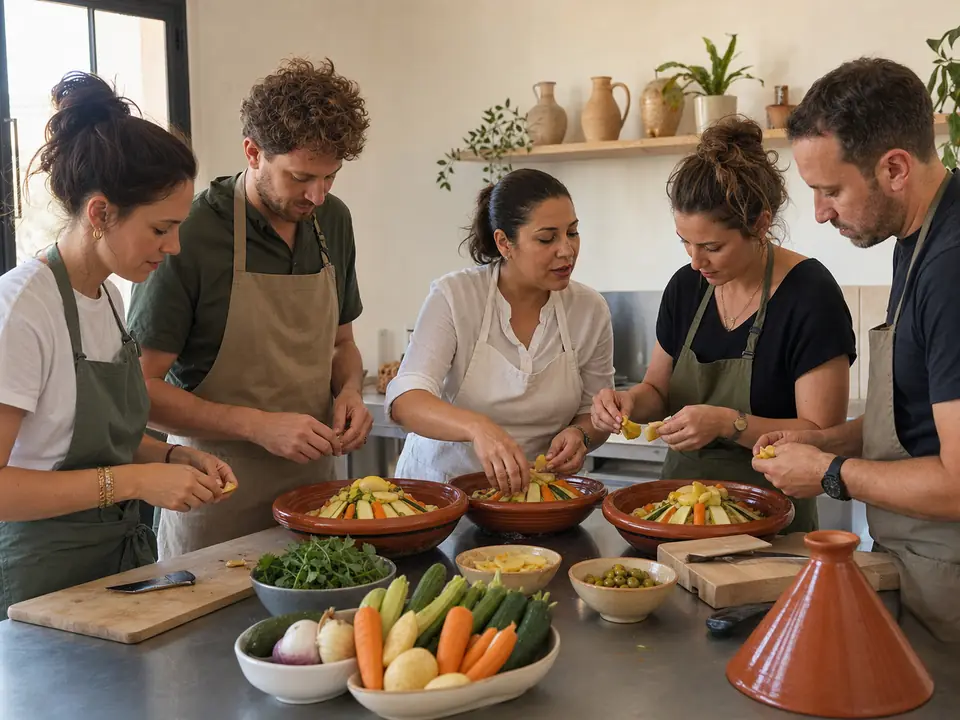
How Moroccans use courgette
Courgette is a quick-cooking supporting vegetable. In couscous it is one of the seven vegetables steamed over the broth until just tender. In tagines it is added toward the end, since it cooks fast and would collapse if put in early with the meat. It is also cooked down with garlic, cumin and paprika into a soft, spiced salade cuite (cooked salad), sometimes mashed. Because courgette is watery and mild, cooks lean on spice, garlic and herbs to give it character, and take care not to overcook it into a flavourless mush.
The best Moroccan recipes with courgette
Couscous with seven vegetables — courgette is one of the essential vegetables crowning the grain. Courgette cooked salad — softened with garlic, cumin, paprika and coriander, served warm or cold. Vegetable and meat tagines — courgette added late for tender bulk. Stuffed courgettes filled with spiced meat and rice in some homes. Courgette and chickpea tagine, a light meatless supper. Start with the seven-vegetable couscous or a simple courgette cooked salad to see how spice transforms this mild vegetable.
Cooking courgette without mush
Courgette's enemy is overcooking, which turns it to a watery pulp. Add it late — in a tagine, only in the final ten to fifteen minutes; in couscous, in the later rounds of steaming — so it turns tender but keeps some shape. Cut it into substantial chunks rather than thin slices so it holds together. For a cooked salad, let it soften and then cook off the excess water so the dish is not sloppy. Its mildness means it needs assertive seasoning — plenty of garlic, cumin, paprika and fresh coriander — to lift it from bland to satisfying.
Buying and storing courgette
Choose small to medium courgettes that are firm, glossy and heavy, with taut skin — large ones are watery and seedy with less flavour. Moroccan markets sell them cheaply in season, often the pale green variety. Store courgettes in the fridge and use within a few days, as they soften and spoil fairly quickly. Avoid any that are wrinkled, soft or blemished. Because courgette is mild and abundant, it is an easy, economical vegetable to bulk out couscous and tagines, so buy it fresh and cook it while it still has a firm, glossy skin.
Cook's tips
- Add courgette late — it cooks fast and turns to mush if put in early with the meat.
- Cut it into substantial chunks so it holds its shape.
- Season assertively with garlic, cumin, paprika and coriander to lift its mild flavour.
- For a cooked salad, cook off the excess water so it isn't sloppy.
- Choose small, firm, glossy courgettes; large ones are watery and seedy.
Questions about cooking with Courgette
How do I stop courgette going mushy in a tagine?
Add it late — only in the last ten to fifteen minutes of cooking — and cut it into substantial chunks rather than thin slices. Courgette cooks quickly, so putting it in early with the meat guarantees a watery mush. Added toward the end, it turns tender while keeping some shape and bite.
Is courgette used in Moroccan couscous?
Yes — courgette is one of the classic seven vegetables piled onto a traditional couscous, alongside carrots, turnip, pumpkin, cabbage and others. It is steamed over the broth until just tender. Its mild flavour and quick cooking make it a natural part of the vegetable medley that crowns the grain.
How do Moroccans make courgette taste of more?
Since courgette is mild and watery, Moroccan cooks lean on assertive seasoning — garlic, cumin, paprika, fresh coriander and good olive oil — and cook off excess moisture so flavours concentrate. A courgette cooked salad, softened and spiced then reduced, turns a bland vegetable into something savoury and satisfying with plenty of garlic and warmth.
Which courgettes should I buy?
Choose small to medium courgettes that are firm, glossy and heavy for their size, with taut, unblemished skin. Large courgettes tend to be watery and seedy with less flavour. Moroccan markets often sell a pale green variety cheaply in season. Use them within a few days, as they soften and spoil fairly quickly.
Can I stuff courgettes Moroccan-style?
Yes — in some homes courgettes are hollowed and stuffed with a spiced mixture of minced meat, rice, onion and herbs, then braised in a light tomato sauce. It is a homely, comforting dish rather than a restaurant classic. Choose fairly straight, medium courgettes for stuffing so they hold the filling and cook evenly.
Cook these dishes with a local in Marrakech
Learn to handle courgette the Moroccan way in a hands-on cooking class, or taste it across the medina on a guided food tour.