Cooking with Pumpkin
Recipes with Pumpkin — Sweet Autumn Flesh for Couscous and Tagines
Pumpkin (gara hamra) brings a mellow, honeyed sweetness to Moroccan autumn and winter cooking, its soft orange flesh melting into couscous and tagines and turning into gently spiced cooked salads. Moroccans treat pumpkin both sweetly — with cinnamon and a little sugar or honey — and savoury, with garlic and cumin, showing off its versatility. It is one of the seven vegetables of the classic couscous and a favourite for adding body and colour to meatless dishes. This guide covers pumpkin's place in the Moroccan kitchen, the dishes it enriches, how to season it, and how to buy and store it.
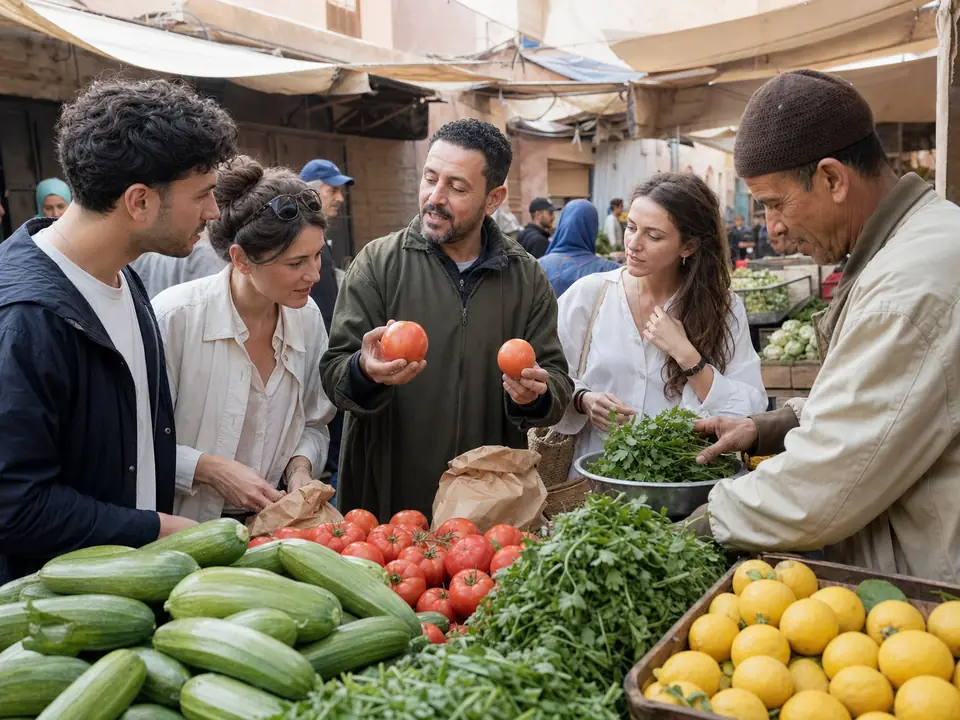
How Moroccans use pumpkin
Pumpkin is prized for its sweet flesh and how readily it softens. In couscous it is one of the seven vegetables, steamed until meltingly tender. It cooks down into a spiced cooked salad — sometimes savoury with garlic, cumin and paprika, sometimes sweet with cinnamon and a little honey or sugar. It adds sweetness and body to meat and vegetable tagines, and to hearty soups. Because its flavour is gentle and its texture soft, pumpkin takes on the seasoning around it, so cooks push it in either a sweet-spiced or savoury-garlicky direction depending on the dish.
The best Moroccan recipes with pumpkin
Couscous with seven vegetables — pumpkin adds sweetness and colour among them. Sweet pumpkin salad — softened with cinnamon, a little honey and orange blossom water. Savoury pumpkin salad — with garlic, cumin, paprika and coriander. Pumpkin and chickpea tagine — a comforting meatless dish. Pumpkin soup spiced with ginger and cumin. Start with a spiced pumpkin cooked salad; deciding whether to take it sweet or savoury is a lovely way to learn how Moroccan seasoning transforms one soft, mild vegetable two different ways.
Sweet or savoury, and cooking
Decide the direction first. For a sweet treatment, cook pumpkin down with cinnamon, a little honey or sugar and perhaps orange blossom water until jammy. For a savoury one, use garlic, cumin, paprika and coriander as you would for other cooked salads. Pumpkin cooks quickly and turns to purée if overdone, so in tagines and couscous add it later than sturdier roots like carrot and turnip. Cut it into even chunks and peel away the tough skin. Because the flesh is watery, cooking off excess moisture concentrates its sweetness and stops a salad from turning sloppy.
Buying and storing pumpkin
Moroccan markets often sell pumpkin in cut wedges from a large squash, so you can see the deep orange flesh — choose pieces that are firm, dense and brightly coloured, avoiding dry, stringy or pale flesh. A whole small pumpkin should feel heavy and sound hollow. Whole pumpkins keep for weeks or months in a cool, dry place, but once cut, wrap the flesh and refrigerate it, using it within a few days. The seeds can be cleaned, salted and roasted for a snack, so a whole pumpkin gives good value across several dishes.
Cook's tips
- Decide sweet (cinnamon, honey) or savoury (garlic, cumin) before you season pumpkin.
- Add pumpkin later than sturdier roots — it cooks fast and turns to purée if overdone.
- Cook off excess moisture to concentrate its sweetness and avoid a sloppy salad.
- Buy firm, densely coloured wedges; pale, stringy flesh lacks flavour.
- Roast the cleaned seeds with salt for a snack — nothing need go to waste.
Questions about cooking with Pumpkin
Is pumpkin used sweet or savoury in Moroccan food?
Both. Moroccans make a sweet pumpkin salad with cinnamon, honey and orange blossom water, and a savoury one with garlic, cumin and paprika. Pumpkin also adds gentle sweetness to savoury couscous and tagines. Its mild flavour takes on whichever seasoning direction the cook chooses, which is part of what makes it so versatile.
Is pumpkin one of the couscous vegetables?
Yes — pumpkin is one of the classic seven vegetables piled onto a traditional Moroccan couscous, adding sweetness and a splash of orange colour. It is steamed over the broth until meltingly tender. Because it softens quickly, it is usually added to the steaming later than firmer vegetables like carrot and turnip.
How do I stop pumpkin turning to mush?
Add it later than sturdier vegetables, since pumpkin cooks quickly and purées if overdone. Cut it into even chunks and watch it, pulling it from the heat once tender. In a cooked salad some breakdown is fine and even wanted, but cook off the excess water so the result is jammy and concentrated rather than watery.
What kind of pumpkin should I buy?
Choose firm, dense pumpkin with deep orange, moist-looking flesh — in Moroccan markets it is often sold in cut wedges so you can judge quality. Avoid pale, dry or stringy flesh. A whole small pumpkin should feel heavy for its size. Denser, sweeter-fleshed varieties give the best flavour for tagines, salads and couscous.
How do I store cut pumpkin?
Whole pumpkins keep for weeks or months in a cool, dry place, but once cut, scrape out the seeds, wrap the flesh well and refrigerate it, using it within a few days. Cut surfaces dry out and can mould, so keep them covered. The cleaned seeds can be salted and roasted rather than thrown away.
Cook these dishes with a local in Marrakech
Learn to handle pumpkin the Moroccan way in a hands-on cooking class, or taste it across the medina on a guided food tour.