Cooking with Raisins
Recipes with Raisins — Little Bursts of Sweetness Across the Moroccan Table
Raisins (zbib) scatter little bursts of concentrated sweetness through Moroccan cooking, from the jammy onion topping tfaya to the spiced lamb of mrouzia and the sweet couscous of celebration. Dried from the grapes that grow across the country, they dissolve their sugar into savoury sauces and stud sweets, breads and the tea tray. Small but characterful, raisins are a key player in the sweet-savoury balance Moroccans love. This guide covers how raisins are used, the dishes they lift, how to plump and add them, and how to buy and store them.
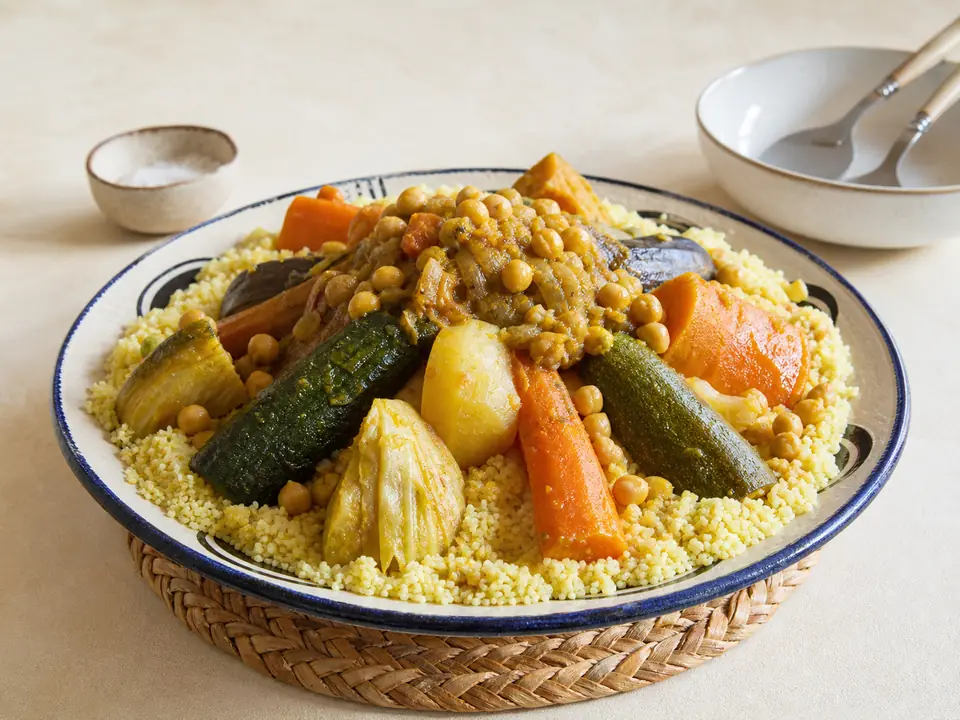
How Moroccans use raisins
Raisins are used mostly in sweet-savoury and sweet dishes. In savoury cooking they melt their sweetness into slow-cooked onions and meat — essential to tfaya and mrouzia — and stud sweet couscous and stuffings. In sweets and baking they go into pastries, sellou, breads and the tea tray. Their small size means they distribute sweetness evenly through a dish rather than sitting in big pieces like prunes. Cooks often plump them first so they turn juicy rather than staying hard and chewy, and they pair naturally with cinnamon, honey, onions and almonds in the sweet-savoury idiom.
The best Moroccan recipes with raisins
Tfaya — onions slow-cooked with raisins, honey, cinnamon and saffron, spooned over couscous or meat. Mrouzia — lamb with ras el hanout, honey, almonds and raisins. Sweet couscous studded with raisins and other dried fruit. Rice and vegetable stuffings for chicken or vegetables. Sellou and sweet pastries. Couscous tfaya for weddings. Start with tfaya — cooking onions and raisins down slowly with honey and cinnamon shows how raisins melt into a dish, sweetening and enriching the whole.
Plumping and using raisins
For juicy, tender results, plump raisins before use by soaking them in warm water, tea or orange blossom water for ten to twenty minutes, or simmering them briefly in the dish's liquid. In tfaya and mrouzia they can go in earlier than larger dried fruit, cooking down with the onions so their sweetness spreads through the sauce. Because they are intensely sweet, balance them with the salt of the meat, warm spice and a little acidity so the dish is rounded. Dark and golden raisins can be used interchangeably, though golden ones look pretty against pale rice and couscous.
Buying and storing raisins
Moroccan souks sell several kinds of raisins loose by weight, from small dark ones to plump golden sultanas — choose raisins that are soft and moist, not hard and sugary-crusted, which are old. Locally dried raisins from Moroccan grapes are widely available and inexpensive. Store raisins airtight in a cool, dry place, where they keep for months; if they dry out, a short soak revives them. Keeping a jar of raisins in the cupboard means the sweet-savoury classics like tfaya and mrouzia, and a quick sweet couscous, are always within easy reach.
Cook's tips
- Plump raisins in warm water, tea or orange blossom water before use for juicy results.
- In tfaya and mrouzia, add raisins earlier so their sweetness spreads through the sauce.
- Balance their intense sweetness with the meat's salt, warm spice and a little acidity.
- Golden raisins look pretty against pale rice and couscous; dark ones work just as well.
- Buy soft, moist raisins; hard, sugar-crusted ones are old, though a soak revives them.
Questions about cooking with Raisins
How are raisins used in savoury Moroccan dishes?
Raisins melt their sweetness into slow-cooked onions and meat, most notably in tfaya — the honeyed onion-and-raisin topping for couscous — and in mrouzia, spiced lamb with honey and almonds. Their small size spreads sweetness evenly through the sauce. They give the sweet-savoury contrast Moroccans love, balanced against the salt and spice of the dish.
Should I soak raisins before cooking?
For the juiciest results, yes — soak them in warm water, tea or orange blossom water for ten to twenty minutes, or simmer them briefly in the dish's liquid, so they plump and turn tender rather than staying hard and chewy. In slow-cooked dishes like tfaya, adding them to the pot to cook down with the onions also plumps them.
What is tfaya?
Tfaya is a sweet Moroccan topping of onions slow-cooked with raisins, honey, cinnamon and saffron until dark, soft and jammy, spooned over couscous or tender meat. The raisins are essential, melting their sweetness into the caramelised onions. Couscous tfaya is a festive dish, often served at weddings and to honour guests.
Can I use golden or dark raisins?
Both work and can be used interchangeably in Moroccan cooking. Golden raisins (sultanas) look attractive against pale rice, couscous and sweets, while dark raisins are traditional in tfaya and mrouzia. Choose by what you have and how you want the dish to look; the flavour difference is small, so softness and freshness matter more.
How do I store raisins?
Keep them airtight in a cool, dry place, where they last for months. If they dry out and harden, a short soak in warm water or tea softens them again. Choose soft, moist raisins when buying, and store them away from moisture and strong smells so they stay plump and ready for both savoury dishes and sweets.
Cook these dishes with a local in Marrakech
Learn to handle raisins the Moroccan way in a hands-on cooking class, or taste it across the medina on a guided food tour.