Cooking with Ras el Hanout
Recipes with Ras el Hanout — Cooking with Morocco's Master Spice Blend
Ras el hanout means 'head of the shop' — the spice merchant's finest blend, and no two are ever identical. A good mix folds together a dozen to thirty spices: cinnamon, cumin, coriander, ginger, turmeric, black pepper, cardamom, mace, nutmeg, rosebud, cloves and more, ground fresh to order. It is warm rather than fiery, aromatic rather than sharp, and it carries the deep, layered perfume that defines festive Moroccan cooking. This guide shows the dishes that lean on ras el hanout, how much to reach for, and how to judge a blend by nose before you buy it in the souk.
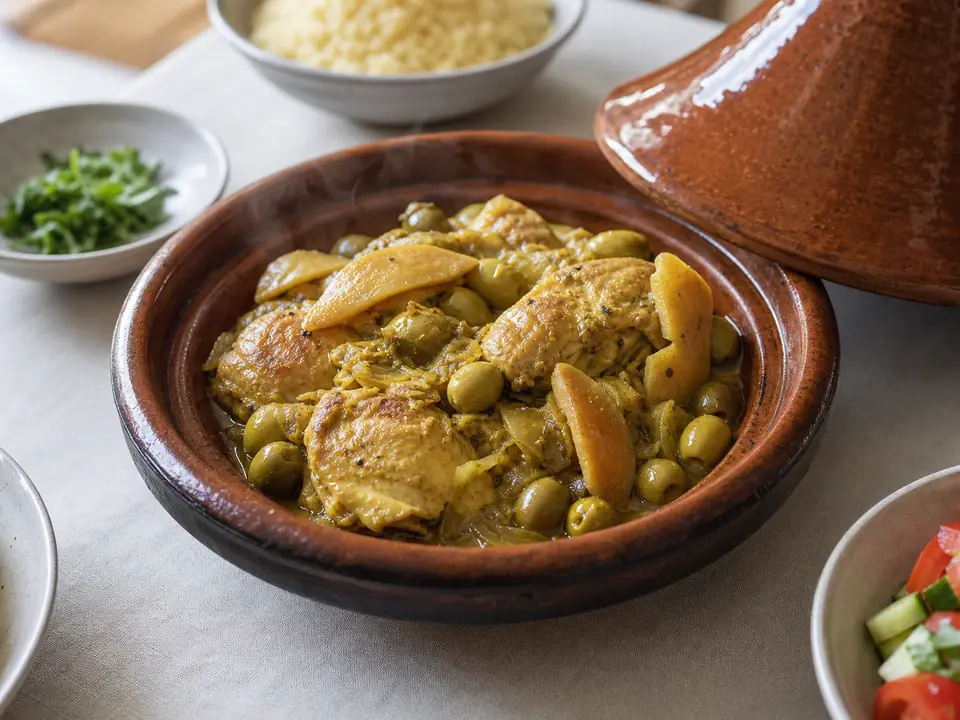
How Moroccans use ras el hanout
Ras el hanout is a finishing and marinating blend rather than an everyday seasoning. Cooks rub it into lamb and beef before a long braise, bloom it briefly in warm oil or smen to wake the aromatics, or stir it into a slow tagine so the flavours marry over hours. It shines in celebratory dishes — weddings, Eid, guests — where its complexity signals a cook has spent. It rarely appears in simple weeknight food, which relies instead on single spices like cumin and paprika. Because it already contains sweet warm notes, it pairs naturally with dried fruit, honey and almonds.
The best Moroccan recipes with ras el hanout
Mrouzia — the definitive ras el hanout dish, lamb slow-cooked with honey, raisins and almonds into a dark, sweet-spiced glaze traditionally made at Eid. Lamb or beef tagine with prunes and toasted almonds. Kefta and meatballs, where a pinch lifts minced lamb. Djaj mhamer, roast-braised chicken rubbed with the blend and saffron. Spiced couscous broth and stuffed vegetables also welcome it. For a first try, a lamb tagine with prunes lets the blend's warmth shine without competition. See more slow-braise ideas in our dishes guide.
How much to use and how to bloom it
Ras el hanout is potent, so start modestly: one to two teaspoons seasons a tagine for four to six, or a heaped teaspoon rubbed into 500g of minced meat. For the fullest flavour, bloom it — warm a spoonful in the oil or melted smen at the base of the pot for thirty seconds before adding onions, which toasts the spices and releases their oils. Add a second small pinch near the end if you want the aroma to bloom on the plate. Because blends vary wildly in strength, taste and adjust rather than trusting a fixed measure.
Buying and storing ras el hanout
The best ras el hanout is ground fresh to order from whole spices — ask the merchant to blend it while you watch, and smell it: it should be fragrant and complex, not dusty or flat. Pre-ground supermarket tubs lose their top notes within months. In Marrakech spice stalls expect to pay roughly 15-40 MAD for a generous 100g, more for premium blends with saffron or dried rosebud. Store it airtight, away from light and heat, and buy small amounts often. A guided spice tour teaches you to read a blend by aroma alone.
Cook's tips
- Bloom the blend in warm oil or smen for 30 seconds before adding onions to release its oils.
- Buy it ground fresh to order — pre-packed tubs lose their aromatic top notes fast.
- Start with 1-2 teaspoons for a tagine; blends vary in strength, so taste as you go.
- It loves dried fruit and honey — mrouzia and prune tagines are its natural home.
- Add a final pinch near the end of cooking so the aroma blooms on the plate.
Questions about cooking with Ras el Hanout
What is in ras el hanout?
There is no fixed recipe — each merchant has their own. Common backbone spices are cinnamon, cumin, coriander, ginger, turmeric, black pepper, cardamom, nutmeg, mace and cloves, often with dried rosebud and a little saffron. Good blends can hold twenty to thirty ingredients.
Is ras el hanout spicy hot?
No — it is warm and aromatic rather than chilli-hot. The heat comes gently from black pepper and ginger, not from fresh or dried chillies. If you want fire in a Moroccan dish you add harissa separately; ras el hanout is about fragrance and depth.
What can I substitute for ras el hanout?
Blend equal parts cumin, coriander and cinnamon with a little ginger, turmeric, black pepper and a pinch of nutmeg. It will not match a proper souk mix's complexity, but it gives the same warm, sweet-spiced direction for a tagine or a meat rub.
How long does ras el hanout keep?
Ground blends stay at their best for about six months, then slowly fade. Store airtight away from light and heat, and buy small quantities you will use quickly. If it smells dusty rather than fragrant, it has lost its top notes and is past its prime.
Can I use ras el hanout in couscous?
Yes — a teaspoon stirred into the broth adds warmth, though many cooks keep couscous broth simpler with ginger, turmeric and pepper. It is more at home in the meat and in celebratory couscous. Add it to the broth early so it has time to mellow.
Cook these dishes with a local in Marrakech
Learn to handle ras el hanout the Moroccan way in a hands-on cooking class, or taste it across the medina on a guided food tour.