Cooking with Parsley
Recipes with Parsley — The Other Half of Morocco's Herb Bunch
Flat-leaf parsley (maadnous) is coriander's inseparable partner in the Moroccan kitchen, the two sold tied in a single bunch and chopped together into almost every savoury dish. Fresh, grassy and clean, parsley brings brightness and body to the herb base of tagines and soups, packs into kefta and stuffings, and forms the green heart of chermoula alongside coriander. It is used by the handful, not the sprig. This guide covers parsley's essential role, the dishes it lifts, how to prepare it, and how to keep a big market bunch fresh through the week.
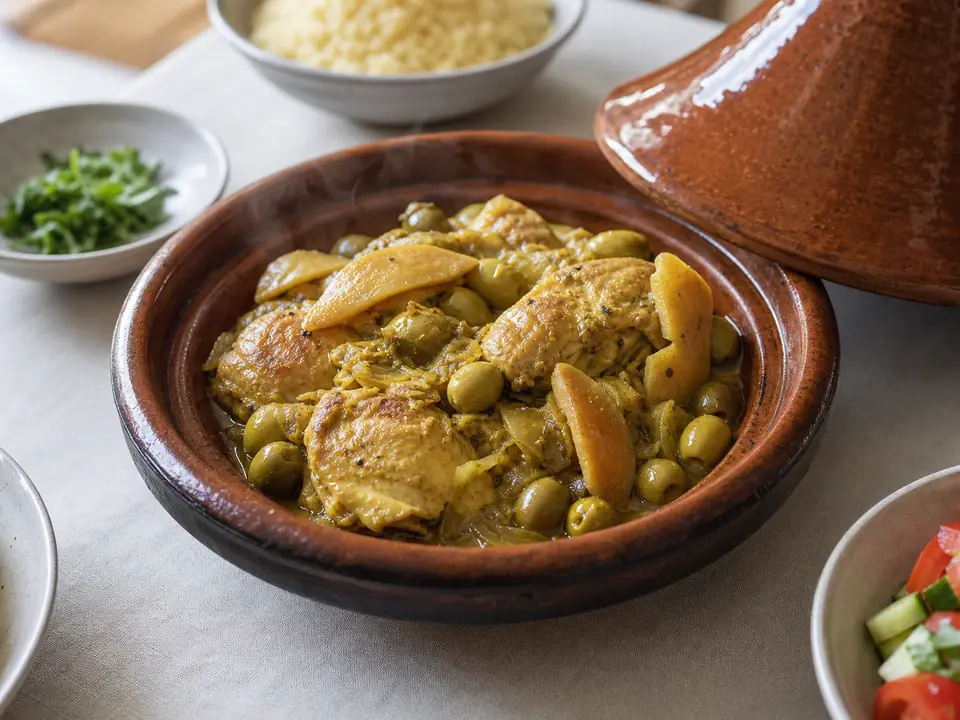
How Moroccans use parsley
Moroccan cooking uses flat-leaf parsley in generous handfuls, not as a token garnish. Chopped with coriander, it softens into the base of tagines and soups, mixes into kefta and stuffings, and blends into chermoula. Its clean, grassy freshness balances rich, fatty and heavily spiced dishes and adds green body to salads. The tender stems are chopped and used too. Parsley is more robust than coriander, so some cooks add it a little earlier, but a portion is usually kept back to stir in at the end for freshness. It is a workhorse herb, present almost everywhere.
The best Moroccan recipes with parsley
Chermoula — parsley and coriander form its green base for fish. Harira — chopped parsley and coriander finish the Ramadan soup. Kefta and meat stuffings — parsley is worked through the mince. Moroccan salads, including tabbouleh-style dishes where parsley leads. Tagines of all kinds. Bakoula (mallow) and cooked greens, where parsley joins the leaf. Start with chermoula or a herb-heavy kefta to see how a large quantity of chopped parsley becomes structural, not decorative, in Moroccan food.
Preparing and using parsley
Use flat-leaf parsley, which has far more flavour than the curly kind. Wash it well — market parsley can be gritty — then shake dry and chop leaves and tender stems together. Add a portion to the tagine or soup base to cook down for depth, and reserve some to stir in near the end for a fresh green lift. In kefta and stuffings, chop it finely so it distributes evenly. Parsley stands up to cooking better than coriander, so it is forgiving, but its brightest flavour still comes from being added generously and relatively late.
Buying and keeping parsley fresh
Moroccan markets sell parsley in large bunches, usually tied with coriander, for a few dirhams — choose deep green, perky bunches with no yellow or wilting leaves. To keep it, stand the stems in a glass of water, cover loosely and refrigerate, changing the water every couple of days; it stays fresh for up to two weeks, longer than coriander. Wash only before use. You can also chop and freeze parsley for cooking, where it keeps its flavour well even if the texture softens, handy for always having herbs to hand.
Cook's tips
- Use flat-leaf parsley — it has far more flavour than the curly kind.
- Chop the tender stems along with the leaves; they carry good flavour.
- Add some to the base to cook down, and keep a portion back to stir in fresh at the end.
- Wash well — market parsley is often gritty — then shake or spin dry before chopping.
- Store stem-down in water in the fridge; parsley keeps longer than coriander.
Questions about cooking with Parsley
What kind of parsley do Moroccans use?
Flat-leaf parsley (maadnous), which has a fuller, cleaner flavour than curly parsley. It is used in generous handfuls, chopped together with fresh coriander, in tagines, soups, chermoula, kefta and salads. Curly parsley can be substituted at a pinch, but flat-leaf is the authentic and more flavourful choice for Moroccan cooking.
Why are parsley and coriander used together in Morocco?
They complement each other — parsley is clean and grassy, coriander bright and citrusy — and together they give the balanced fresh-herb base of Moroccan savoury cooking. Markets even sell them tied in one bunch. Most tagines, soups and chermoula use both, softened into the base and stirred in fresh at the end.
Can I add parsley at the start of cooking?
Yes — parsley is more robust than coriander and stands up to cooking, so a portion is often added early to the tagine or soup base for depth. It is still good practice to keep some back to stir in near the end, so the dish gets both cooked-in body and a fresh green lift at serving.
How long does fresh parsley keep?
Stored stem-down in a glass of water, loosely covered, in the fridge, parsley stays fresh for up to two weeks, notably longer than coriander. Change the water every couple of days and wash the parsley only before use. You can also chop and freeze it for cooking, where it keeps its flavour well.
Is parsley just a garnish in Moroccan food?
No — in Moroccan cooking parsley is a structural ingredient used by the handful, not a decorative sprig. It forms part of the herb base of tagines and soups, packs into kefta and stuffings, and anchors herb salads. Its fresh, grassy flavour is essential to balancing the rich, spiced character of the cuisine.
Cook these dishes with a local in Marrakech
Learn to handle parsley the Moroccan way in a hands-on cooking class, or taste it across the medina on a guided food tour.