Cooking with Coriander
Recipes with Coriander — Morocco's Essential Green Herb and Seed
Coriander (qasbour) is, with parsley, the fresh green heart of Moroccan cooking — bundled together in the market as the herb pairing that flavours nearly every savoury dish. The bright, citrusy leaves go into chermoula, tagines, soups and salads, while the warm, lemony seeds season pickles, breads and spice blends. Few Moroccan pots start without a handful of chopped coriander softening in the base. This guide covers coriander in both its leaf and seed forms, the dishes that depend on it, and how to keep the delicate fresh herb from wilting.
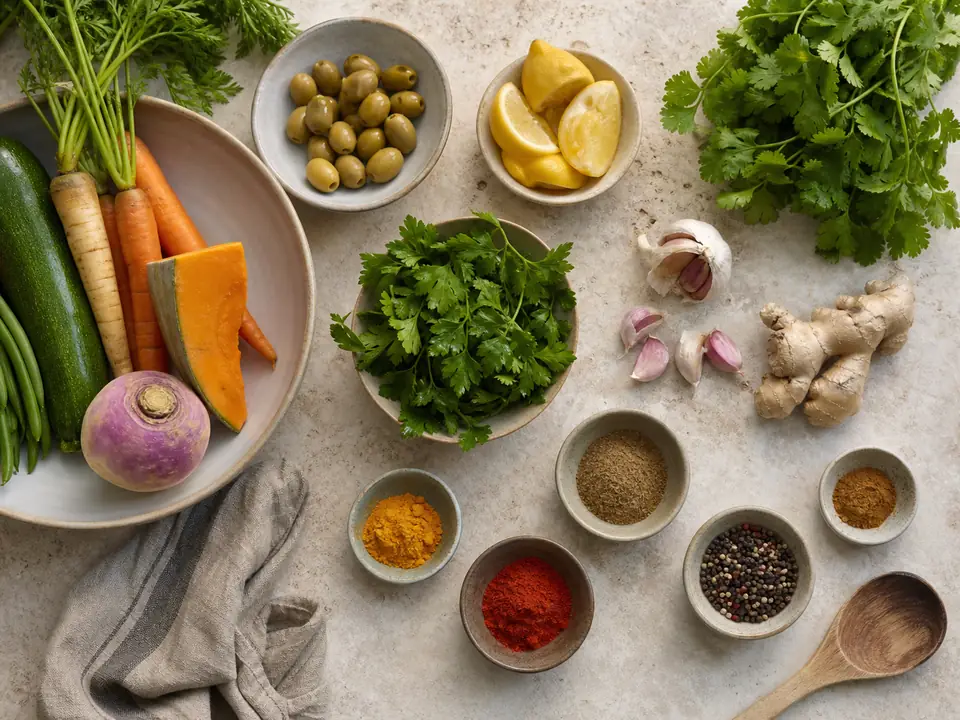
How Moroccans use coriander
Fresh coriander leaf is used in enormous quantity, chopped with parsley and stirred into the base of tagines and soups, blended into chermoula, and scattered raw over finished dishes. The two herbs are so linked that markets sell them tied in a single bunch. Coriander's bright, citrusy flavour balances rich meat and warm spice. The seeds, warm and gently lemony, are a different tool — toasted and ground into spice blends, used whole in preserving lemons and olives, and adding depth to marinades. Where the leaf is fresh and lifting, the seed is warm and grounding.
The best Moroccan recipes with coriander
Chermoula — coriander leaf is the green heart of the fish marinade, with garlic and cumin. Harira — a generous handful of chopped coriander and parsley finishes the soup. Tagines of every kind, the herbs softened into the base. Zaalouk, taktouka and bean salads, brightened with fresh coriander. Preserved lemons and olives, sometimes spiced with coriander seed. Begin with a proper chermoula — pounding coriander, garlic, cumin and paprika into a green marinade is the quickest way to understand the herb's central role.
Leaf versus seed, and how to use them
Use fresh coriander leaf generously and late: soften some in the tagine base for depth, and reserve a handful to stir in or scatter at the end so its fresh aroma survives. Chop the tender upper stems too, which carry plenty of flavour. Use the seed toasted and freshly ground for spice blends and marinades, or whole in preserves. The two are not interchangeable — the leaf is bright and fresh, the seed warm and citrus-woody. If you find fresh coriander soapy-tasting, parsley alone will carry a dish, but most Moroccan recipes lean on both together.
Buying and keeping coriander fresh
Buy fresh coriander in big, perky bunches with deep green leaves and no yellowing or sliminess — Moroccan markets sell it tied with parsley for a few dirhams. To keep it, stand the stems in a glass of water, cover loosely with a bag and refrigerate, refreshing the water; it lasts several days to a week. Wash and dry it just before use. Coriander seeds keep far longer — buy whole and toast and grind as needed, storing them airtight in a cool cupboard where they hold their warm aroma for a year or more.
Cook's tips
- Use fresh coriander generously — soften some in the base and add more at the end for freshness.
- Chop the tender stems too; they carry lots of flavour.
- Coriander and parsley are sold and used together — buy both for authentic flavour.
- Toast and grind coriander seed fresh for spice blends; use it whole in preserves.
- Keep the fresh herb stem-down in water, bagged, in the fridge to stop it wilting.
Questions about cooking with Coriander
Are coriander and cilantro the same thing?
Yes — coriander leaf and cilantro are the same herb, just different names; British and Moroccan usage says coriander. The seeds are called coriander seed everywhere. In Moroccan cooking the fresh leaf is used in large quantities alongside parsley, and the dried seed is a separate spice for blends, marinades and preserves.
Do Moroccans use coriander leaf or seed?
Both, for different purposes. The fresh leaf, chopped with parsley, is a fresh green base and finishing herb in tagines, soups, chermoula and salads. The seed, toasted and ground, seasons spice blends and marinades, and goes whole into preserved lemons and olives. They are complementary rather than interchangeable.
How do I keep fresh coriander from going slimy?
Stand the stems in a glass of water like a bouquet, drape a loose bag over the leaves, and keep it in the fridge, changing the water every day or two. Wash it only just before using, since wet leaves spoil faster. Discard any yellowing or slimy sprigs, which spread decay through the bunch.
What is chermoula?
Chermoula is Morocco's classic marinade and sauce, especially for fish, made from lots of fresh coriander (often with parsley), garlic, cumin, paprika, lemon juice and olive oil, pounded or blended to a green paste. Coriander is its defining fresh note. It is used to marinate, to cook fish in, and as a relish alongside.
Can I substitute parsley for coriander?
In part — parsley carries a dish if you dislike coriander, since the two are used together anyway, but the bright citrusy note of coriander will be missing. For chermoula in particular, coriander is central to the flavour. If you enjoy both, use them together as Moroccan cooks do, in roughly equal amounts.
Cook these dishes with a local in Marrakech
Learn to handle coriander the Moroccan way in a hands-on cooking class, or taste it across the medina on a guided food tour.