Cooking with Couscous
Recipes with Couscous — Morocco's Friday Dish and Its Many Forms
Couscous (seksou) is granted its own day in Morocco — Friday, after the midday prayer, is traditionally couscous day in most households, the week's most substantial family meal built around steamed semolina grains and a rich vegetable and meat stew. Properly made couscous is steamed, not boiled, over the very stew it will be served with, a two-part process that takes patience but rewards it with a lighter, fluffier grain than any quick-cook packet method achieves. This guide covers the classic versions and the technique behind them, with a few tips for getting the texture right.
Why Friday is couscous day
After the communal midday prayer, extended families often gather for the week's biggest meal, and couscous, needing time and multiple people to prepare properly, suits that gathering better than a quick weekday dish. The custom is widespread enough that many restaurants in Morocco serve couscous only on Fridays, treating it as a special, unhurried dish rather than an everyday menu item.
The best Moroccan recipes with couscous
Seven-vegetable couscous, the classic Friday version, lamb or beef simmered with a colourful mix of carrot, turnip, pumpkin, courgette and cabbage. Couscous with tfaya, chicken crowned with caramelised onions and raisins. Seffa, sweetened couscous with cinnamon, sugar and almonds, served as a course of its own. Fish couscous, less common but found in coastal towns, among the many classic dishes worth trying. Seven-vegetable couscous is the dish most worth learning properly.
Steaming couscous the traditional way
Traditional couscous is steamed in a couscoussier over the simmering stew below, then removed, raked with wet hands to break up clumps, and steamed a second or third time, each round making the grains lighter and more separate. This process, taking well over an hour in total, is what separates a proper Moroccan couscous from the five-minute instant version, and it is worth the effort at least once to understand the difference.
Buying couscous in Morocco
Traditional coarse, hand-rolled couscous is sold in markets and specialist grain shops, though most households now use good-quality medium-grind couscous from a packet as a time-saving base, still steamed the traditional way rather than simply soaked in boiling water. A kilo runs roughly 10-20 MAD, cheap given how far it stretches for a family meal.
Cook's tips
- Steam couscous over its accompanying stew rather than boiling or microwaving it for the proper light, fluffy texture.
- Rake the couscous with wet hands between steamings to break up clumps and separate the grains.
- Steam at least twice, ideally three times, for the best texture, even with packet couscous.
- Save the Friday seven-vegetable version for a proper weekend gathering — it rewards the extra time and effort.
- Try seffa, the sweet cinnamon-and-almond version, as a change from the usual savoury vegetable couscous.
Questions about cooking with Couscous
Why is couscous eaten on Fridays in Morocco?
After the communal midday prayer, families traditionally gather for the week's largest meal, and couscous, which takes time and often several hands to prepare properly, suits that unhurried Friday gathering better than a quick weekday dish.
How do you steam couscous properly?
Steam it in a couscoussier over the simmering stew, then remove, rake with wet hands to break up clumps, and steam again, repeating two or three times in total. This gives noticeably lighter, more separate grains than quick-soak methods.
What vegetables go in a traditional Moroccan couscous?
Carrot, turnip, pumpkin, courgette and cabbage are the classic seven-vegetable mix, simmered with lamb or beef in a rich broth that also steams the couscous itself, ladled generously over the grains at serving.
What is seffa?
A sweetened version of couscous or vermicelli, steamed and topped with cinnamon, sugar and almonds, sometimes served as a course on its own at celebrations rather than as the main savoury dish.
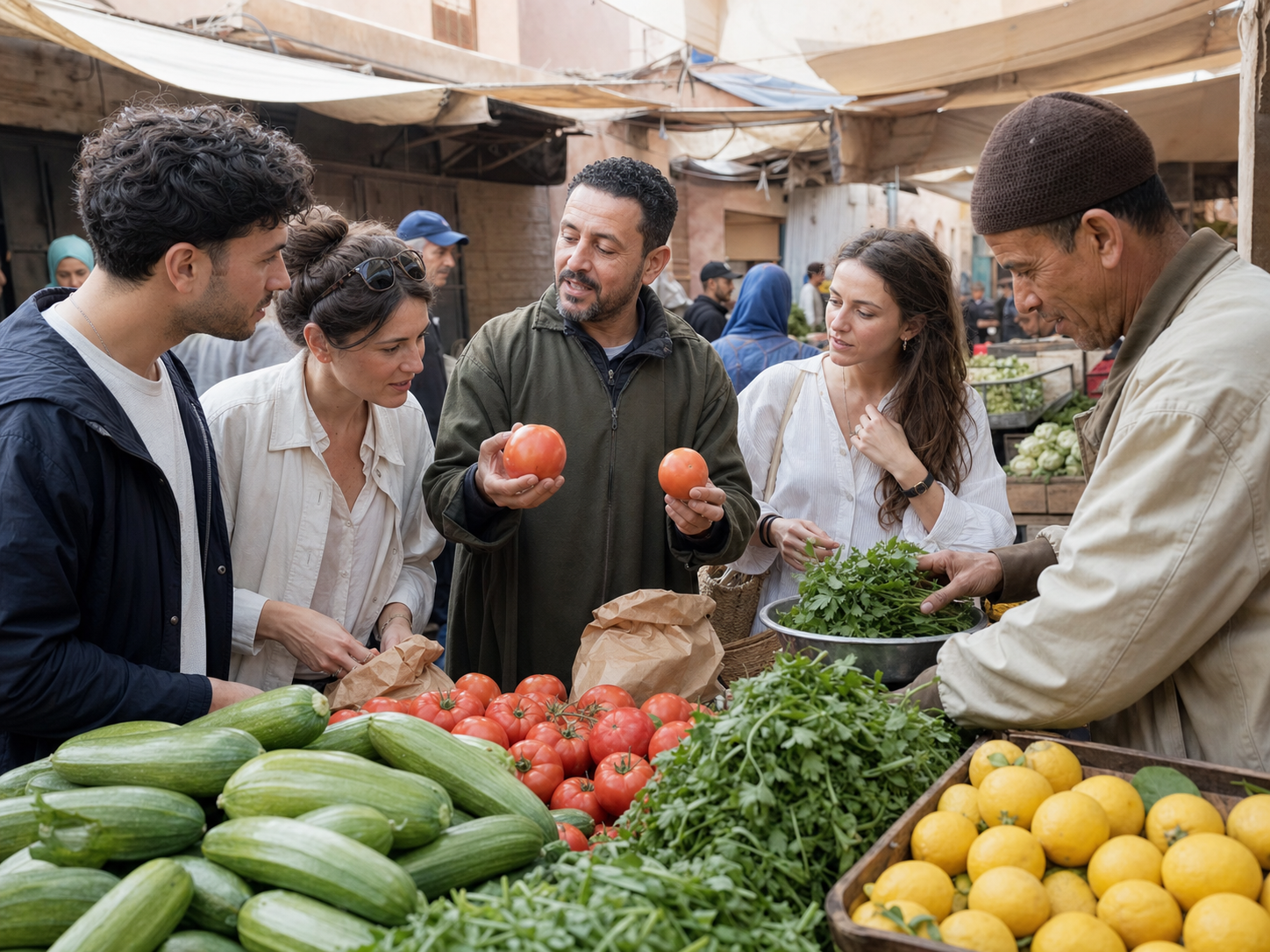
Cook these dishes with a local in Marrakech
Learn to handle couscous the Moroccan way in a hands-on cooking class, or taste it across the medina on a guided food tour.