Travel tips
A Guide to Photographing Moroccan Food and Markets
Few places photograph as well as a Moroccan souk — the spice pyramids, the glowing dried fruit, the smoke of the night grills, the geometry of stacked bread. But the markets are workplaces and the vendors are people, not backdrops, so good food photography here is as much about etiquette as light. This guide covers how to make beautiful market and food images in Morocco while respecting the people in them.
- Read
- 7 min
- Topic
- Travel tips
- Updated
- 20 July 2026
At a glance
- Always ask before photographing people, vendors or their stalls up close.
- Soft morning and late-afternoon light flatters markets and food best.
- Buy something if you shoot a stall in detail — it is fair and welcome.
- Look for the details: spices, textures, hands, steam and colour.
Etiquette first
The single most important rule is consent. Many Moroccans, especially older people and women, dislike being photographed, and pointing a camera at someone without asking can cause genuine offence. Ask first — a smile and a gesture toward the camera usually suffice — and accept 'no' gracefully. Vendors may expect a small purchase or tip if you photograph their stall in detail, which is entirely fair. Never sneak shots of people; the resulting tension is not worth it and it damages the trade's goodwill toward visitors.
Light and timing
Markets look best in soft, angled light. Early morning, as stalls are set up, gives you calm scenes, fresh produce and gentle light with fewer crowds; late afternoon warms the colours; and the Jemaa el-Fna night stalls offer dramatic smoke-and-lamplight shots after dark, where a steady hand or a high ISO helps. Harsh midday sun flattens colour and casts hard shadows in the narrow lanes, so it is the weakest time to shoot.
What to photograph
Moroccan food photography rewards attention to detail and texture as much as the wide scene.
- Spice and produce displays: the pyramids of colour, shot close for graphic impact.
- Tagines and steam: the lifted lid and rising steam make a story.
- Hands at work: pouring tea, rolling msemen, weighing olives (with permission).
- Bread and geometry: stacked khobz, patterned tiles, market repetition.
- Street grills at night: smoke, fire and lamplight on Jemaa el-Fna.
Getting the shot respectfully
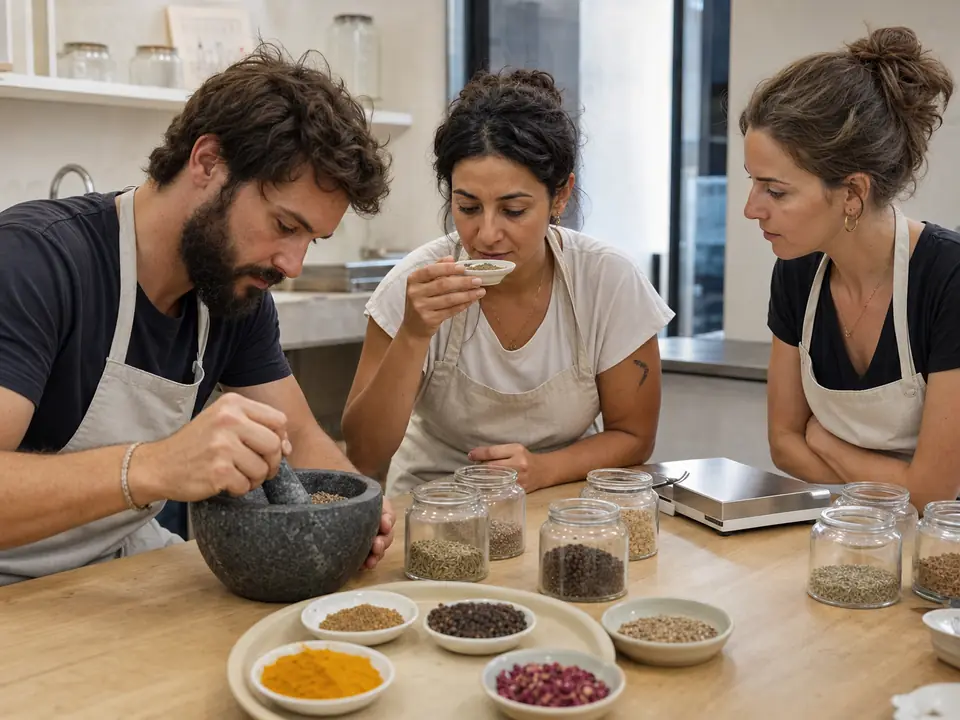
The best food images often come from engagement rather than stealth: buy some olives, chat with the seller, and the photo follows naturally with a smile rather than a scowl. A cooking class or guided market tour is an ideal setting to photograph freely, since you are a welcomed participant — see our note on shopping the spice souk and food tours. Shoot generously, share prints or images back where you can, and leave the market glad you came.
Frequently asked questions
Is it okay to photograph people in Moroccan markets?
Only with their consent. Many Moroccans, especially older people and women, dislike being photographed, so always ask first with a smile or a gesture and accept a refusal gracefully. Never take covert shots of people — it causes real offence and damages goodwill toward visitors.
Do I need to pay to photograph a market stall?
Often it is fair to. If you photograph a vendor's stall in detail, they may reasonably expect a small purchase or tip, and buying something is the easiest way to earn a genuine, relaxed photo. Think of it as fair exchange rather than a fee.
When is the best light for market photography in Morocco?
Early morning and late afternoon give soft, angled light and warmer colours, with calmer crowds in the morning. The Jemaa el-Fna night stalls offer dramatic smoke-and-lamplight shots after dark. Harsh midday sun flattens colour and casts hard shadows in the narrow lanes.
What food subjects photograph best in Morocco?
Close-ups of spice and produce pyramids, the steam rising from a lifted tagine, hands at work pouring tea or rolling bread, stacked khobz and patterned tiles, and the fire and smoke of the night grills. Detail and texture often make stronger images than wide scenes.