Travel tips
Gluten in Moroccan Food: A Traveller's Guide
Bread and couscous are not side dishes in Morocco — they are close to the backbone of the meal, which makes travelling gluten-free here a genuine challenge rather than a minor inconvenience. It is very possible to eat well, but it takes more planning than in a menu built around rice or potatoes.
- Read
- 7 min
- Topic
- Travel tips
- Updated
- 20 July 2026
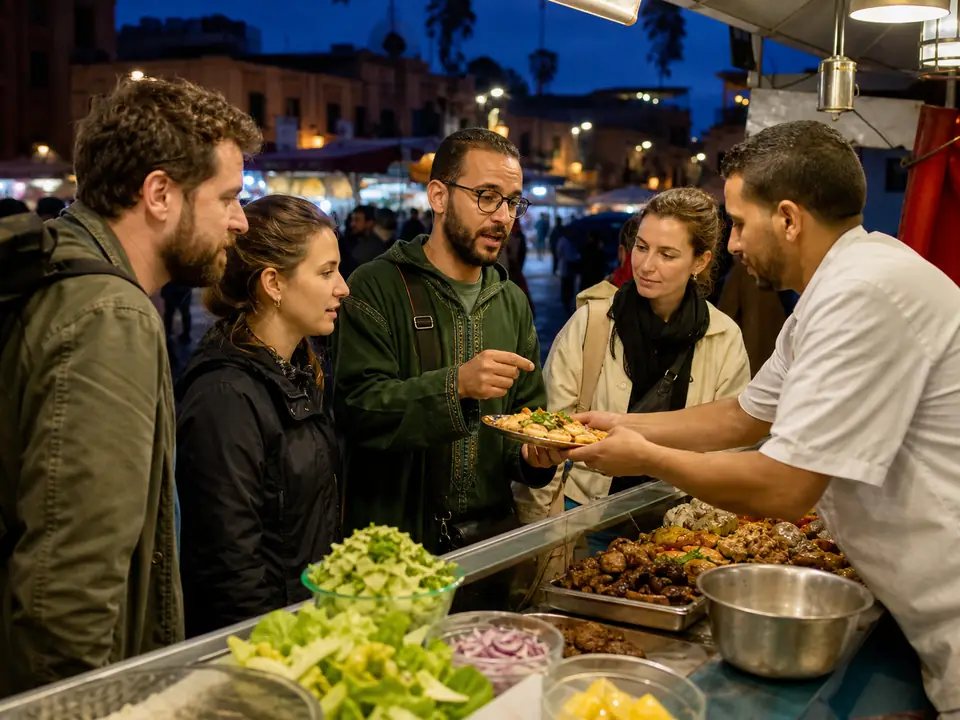
At a glance
- Bread and couscous, both wheat-based, are served at nearly every meal, so gluten is genuinely everywhere.
- Most tagines are naturally gluten-free, but some cooks thicken sauces with a little flour.
- Harira soup often contains a flour-and-water thickener (tadouira) — always ask.
- Awareness of gluten sensitivity is still limited in traditional settings, so clear, simple phrasing helps.
The core challenge
Wheat is structurally central to Moroccan eating in a way that goes beyond having bread on the table. Khobz, the daily round loaf, functions as the primary utensil for scooping tagines and salads (see our bread guide), and couscous, a wheat semolina product, is the other great staple — see cooking with a couscoussier. Declining both removes two of the meal's central components, not just a side item, which is why gluten-free travel here needs more active management than in many other cuisines.
What is naturally safe
- Grilled meat and fish: generally safe as long as no flour-based coating or marinade thickener is used.
- Rice dishes: less central than couscous but available, and naturally gluten-free.
- Salads: cooked salads like zaalouk and taktouka are typically just vegetables, oil and spices.
- Chickpeas and lentils on their own: naturally gluten-free, though check the dish they are served in.
- Most tagine sauces: built from vegetables, spices, oil and water rather than a roux, though some cooks add a spoonful of flour to thicken — ask.
The hidden risks
Harira, the beloved tomato-lentil soup, is the single biggest trap: many versions include a flour-and-water or flour-and-egg mixture called tadouira, stirred in to thicken the soup, which is not obvious just by looking at it. Spice blends and stock cubes can occasionally include gluten-containing fillers, and shared kitchen surfaces or fryers used for bread and pastries raise a cross-contamination risk for anyone with a serious sensitivity or coeliac disease, particularly in home-style kitchens rather than modern restaurants with separate prep areas.
How to navigate it
Awareness of gluten sensitivity, as distinct from a general wheat allergy, is still relatively limited in traditional settings, so simple, direct phrasing works better than technical terms — asking clearly whether a dish has flour or bread in it, rather than assuming 'gluten-free' will be understood as a concept, tends to get a more useful answer. Modern riads and restaurants catering to international visitors are increasingly used to the request and can usually accommodate it; smaller, traditional family-run places may need more explanation or a safer default order like grilled meat and a plain salad.
Frequently asked questions
Is couscous gluten-free?
No. Couscous is made from wheat semolina and contains gluten. It is not a suitable option for anyone avoiding gluten, despite sometimes being mistaken for a grain like rice or quinoa.
Are Moroccan tagines gluten-free?
Most are, since the sauce is typically built from vegetables, spices, oil and water rather than a flour-based roux. Some cooks do add a small amount of flour to thicken certain sauces, so it is worth asking if you have a serious sensitivity.
Does harira soup contain gluten?
Often, yes — many versions include a flour-and-water or flour-and-egg mixture (tadouira) stirred in as a thickener, which is not visually obvious. Always ask before ordering harira if you are avoiding gluten.
How do I ask for gluten-free food in Morocco?
Simple, direct phrasing works best, since 'gluten-free' as a concept is not always widely understood in traditional settings — ask clearly whether a dish contains flour or bread. Modern riads and international-facing restaurants are generally more familiar with the request than small traditional eateries.