Heritage & regions
Moroccan Jewish Food Heritage
Morocco was home to one of the oldest and largest Jewish communities in the Arab world, and Moroccan Jewish cooking is a rich and distinctive strand of the country's culinary heritage. From the slow-cooked Sabbath stew skhina to particular ways with preserved lemon and a repertoire of sweets, Judeo-Moroccan food both drew on and shaped the wider cuisine.
A long history
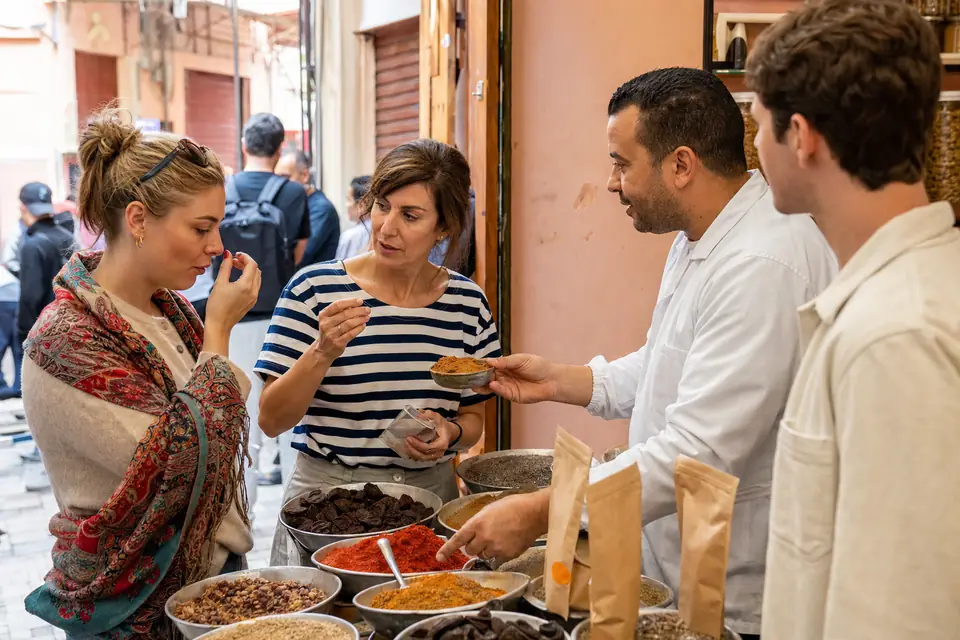
Jews lived in Morocco for many centuries — an ancient community joined later by Sephardic Jews expelled from Spain in 1492, who brought Andalusian influences with them. Jewish quarters, the mellahs, existed in cities across Morocco, often near the markets, and the Mellah of Marrakech, with its excellent spice-and-produce souk, remains associated with this heritage. Though most Moroccan Jews emigrated in the 20th century, their culinary legacy endures both in Morocco and in the Moroccan Jewish diaspora.
Judeo-Moroccan cooking shared the same markets, spices and techniques as Muslim Moroccan cooking, so the two traditions overlap deeply, while religious dietary laws (kashrut) and the rhythm of the Jewish week and festivals gave Jewish cooking its own particular dishes and adaptations.
The Sabbath and its dishes
The Jewish Sabbath (Shabbat), during which cooking is not permitted, shaped some of the most distinctive Judeo-Moroccan dishes — slow-cooked meals started before sundown on Friday and left to cook gently overnight to be eaten on Saturday. The classic is skhina (also called dfina or s'hina) — a rich, slow-cooked pot of meat, chickpeas, potatoes, wheat or rice and often whole eggs, cooked overnight into deep, savoury tenderness. It's the Moroccan cousin of the wider Jewish tradition of overnight Sabbath stews (like cholent).
These overnight-cooked dishes are emblematic of Jewish culinary ingenuity in working within religious rules, and skhina in particular is a beloved centrepiece of the Judeo-Moroccan Sabbath table.
Flavours, sweets and legacy
Judeo-Moroccan cooking is known for particular flavours and dishes — a fondness for preserved-lemon and olive cooking, sweet-and-savoury combinations, fish dishes (fish being significant in Jewish tradition), and a repertoire of sweets and pastries. Certain sweets, festival foods (for Passover, Rosh Hashanah, Mimouna and other holidays), and preparations became specialities of the community. The Mimouna celebration at the end of Passover, in particular, is famous for its sweets and moufletta pancakes.
The influence flows both ways: Judeo-Moroccan cooking drew on the wider Moroccan larder, and some dishes and techniques crossed between communities. Today this heritage is honoured as an integral part of Morocco's culinary and cultural mosaic, kept alive in Morocco and carried on by the large Moroccan Jewish diaspora, for whom these foods are a powerful link to their heritage.
Good to know
- Skhina (dfina) is the classic slow-cooked overnight Sabbath stew of Judeo-Moroccan cooking.
- Jewish and Muslim Moroccan cooking share markets, spices and techniques and overlap deeply.
- The Mellah quarters, like Marrakech's, are associated with this food heritage.
- Preserved-lemon cooking, sweet-savoury dishes, fish and distinctive sweets are hallmarks.
- The Mimouna festival ending Passover is famous for moufletta pancakes and sweets.
Frequently asked questions
What is Moroccan Jewish food?
The Judeo-Moroccan culinary heritage of one of the Arab world's oldest Jewish communities — sharing Morocco's markets, spices and techniques while shaped by Jewish dietary laws and festivals. It's known for the slow-cooked Sabbath stew skhina, preserved-lemon dishes, fish and distinctive sweets.
What is skhina (dfina)?
Skhina (also dfina or s'hina) is the classic Judeo-Moroccan Sabbath stew — a rich pot of meat, chickpeas, potatoes, wheat or rice and often whole eggs, started before sundown on Friday and slow-cooked overnight to be eaten on Saturday, since cooking isn't permitted on the Sabbath.
Where did Moroccan Jewish food flourish?
In the Jewish quarters (mellahs) of cities across Morocco, often near the markets — the Mellah of Marrakech, with its excellent spice-and-produce souk, remains associated with this heritage. The tradition endures in Morocco and among the Moroccan Jewish diaspora.
From the kitchen
Explore the food behind the culture with these recipes: