Heritage & regions
Berber (Amazigh) Food Heritage
The deepest roots of Moroccan cuisine are Amazigh — the food of the Berbers, North Africa's indigenous people, who have farmed and cooked in these lands for millennia. Long before the arrivals of Arabs, Andalusians and others, Amazigh cooking established the foundations of what became Moroccan food: the tagine, couscous, and a hearty, resourceful mountain-and-rural cuisine.
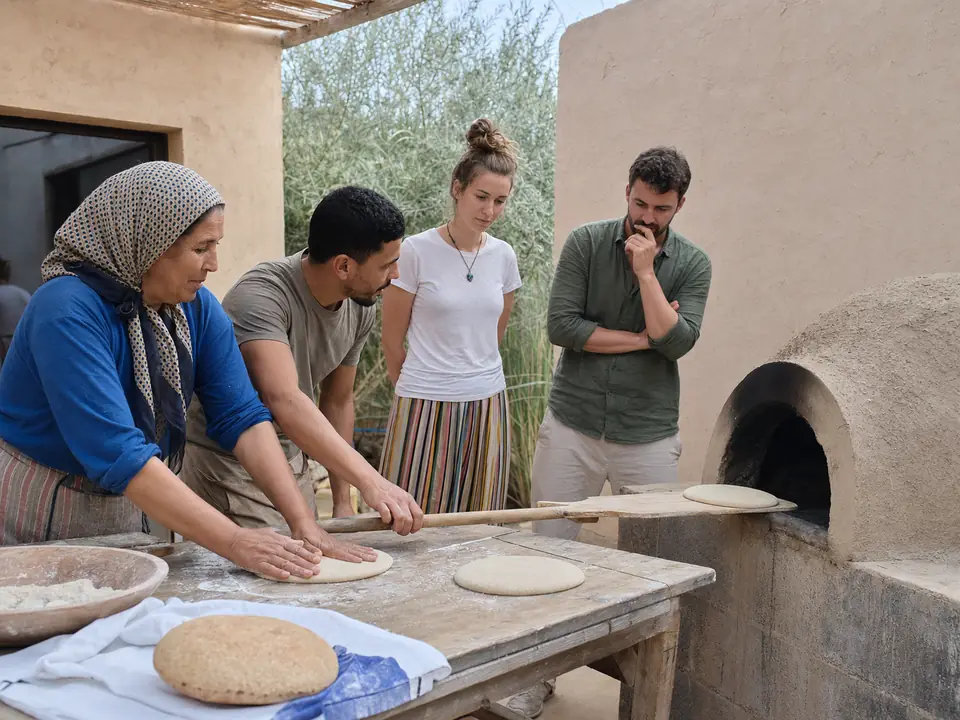
The indigenous foundation
The Amazigh (Berber) peoples are the indigenous inhabitants of Morocco and North Africa, and their culinary heritage is the bedrock of Moroccan cuisine. Two of the country's defining dishes have deep Amazigh roots: couscous, the steamed semolina dish that is a North African staple of Berber origin, and the tagine, both the conical earthenware pot and the slow-cooked stew, long central to Amazigh cooking. These indigenous foundations were later enriched by Arab, Andalusian and other influences, but their base is Amazigh.
Amazigh food is characteristically resourceful and rooted in the land — making the most of local grains, vegetables, pulses, herbs and whatever meat was available, in a cuisine shaped by mountain and rural life rather than courtly refinement.
Mountain and rural cooking
Much Amazigh cooking is the food of the Atlas mountains, the valleys and the rural countryside — hearty, warming and unfussy. Barley features strongly, in barley breads and in dishes like the barley-based soups and the fava-bean purée bissara. Tagines of local vegetables, pulses and modest amounts of meat, communal breads baked in wood ovens or on griddles, and simple, nourishing dishes reflect a way of life close to the land and its seasons.
Dishes like berkoukes (a hand-rolled large couscous or pasta), tagines built on the day's produce, and rustic breads are typical of this heritage. Amazigh cooking prizes wholesome, filling food suited to hard-working rural and mountain life, using preserved and stored ingredients to bridge the seasons.
A living heritage
Amazigh food traditions remain very much alive, especially in the Berber-speaking regions of the Atlas, the Rif, the Souss and the south. Argan oil and amlou, for instance, come from the Amazigh south and its argan groves. The communal, land-rooted, resourceful spirit of Amazigh cooking continues to shape everyday Moroccan food, and many 'Moroccan' dishes are, at root, Berber.
For anyone exploring Moroccan cuisine, recognising its Amazigh foundation is essential: the tagine and couscous that define Moroccan food to the world are, in their origins, part of an indigenous North African heritage thousands of years old. The other great influences on Moroccan cooking built upon this Amazigh base rather than replacing it.
Good to know
- The tagine and couscous, defining Moroccan dishes, have deep Amazigh (Berber) roots.
- Amazigh cooking is hearty, resourceful and rooted in mountain and rural life.
- Barley breads, bissara and rustic vegetable tagines are characteristic.
- Argan oil and amlou come from the Amazigh south and its argan groves.
- Later Arab and Andalusian influences built on the Amazigh base rather than replacing it.
Frequently asked questions
What is Berber (Amazigh) food?
It's the indigenous food heritage of North Africa's Amazigh (Berber) people — the foundation of Moroccan cuisine. It gave rise to defining dishes like couscous and the tagine, and is characteristically hearty, resourceful and rooted in mountain and rural life.
Did couscous and tagine originate with the Berbers?
Yes — both have deep Amazigh roots. Couscous is a North African staple of Berber origin, and the tagine (pot and dish) has long been central to Amazigh cooking. Later influences enriched them, but their base is indigenous Amazigh.
Is Berber food still eaten in Morocco?
Very much so, especially in the Berber-speaking regions of the Atlas, Rif, Souss and south. Its communal, land-rooted, resourceful spirit continues to shape everyday Moroccan food — many 'Moroccan' dishes are, at root, Berber.
From the kitchen
Explore the food behind the culture with these recipes: