Tanger-Tetouan-Al Hoceima
Food in Tangier
Mediterranean-Atlantic seafood, cosmopolitan dining, legendary literary cafes
- Population
- 950,000
- Region
- Tanger-Tetouan-Al Hoceima
- Best time
- May to October for warm Mediterranean weather. June to September is peak season, with the most restaurant options open. Spring and autumn are quieter and very pleasant.
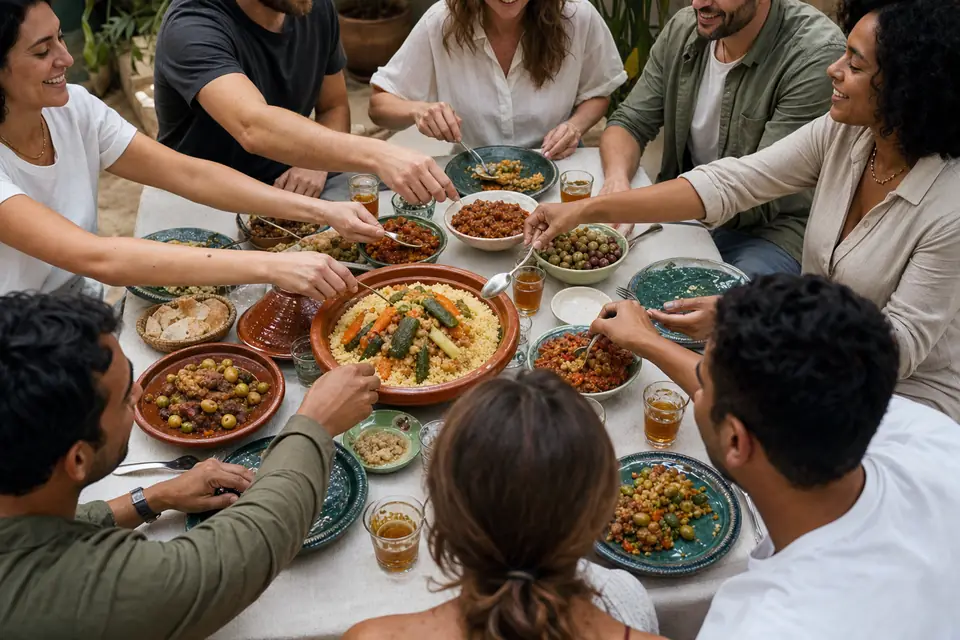
Tangier is where Africa meets Europe across the 14-kilometre Strait of Gibraltar, and its food reflects this extraordinary geography. The city draws from two oceans -- the Mediterranean and the Atlantic converge at Cap Spartel just west of town -- giving it access to an unmatched variety of seafood. Add centuries of cosmopolitan influence (Spanish, French, British, American and international bohemians all left their mark during Tangier's freewheeling International Zone era) and you get a food scene that is uniquely diverse for a Moroccan city.
The Kasbah and medina are where Tangier's culinary history lives. The legendary Cafe Hafa, clinging to a clifftop overlooking the strait, has served mint tea to writers from Paul Bowles to William Burroughs. The Grand Socco (Place du 9 Avril) is the gateway between the old city and the Ville Nouvelle, ringed with juice vendors and pastry shops. Inside the medina, small restaurants serve tangia-style beef, charcoal-grilled sardines and the msemen-and-honey breakfasts that fuel the morning. The fishing port, rebuilt and modernised, is home to restaurants where you can eat the day's catch with views of the Spanish coast.
Modern Tangier, especially the neighbourhoods around Place de France and the new marina, has attracted a wave of contemporary restaurants and wine bars. The city's proximity to Spain gives it an appreciation for tapas-style eating, and you'll find a growing number of restaurants serving small plates alongside Moroccan classics.
Signature dishes of Tangier
These are the dishes that define Tangier's food identity -- the plates that locals are proud of and visitors should seek out.
Sardines Tangier-style
Whole sardines stuffed with chermoula, layered with tomatoes and peppers, then baked in a tagine. Tangier's signature fish dish.
Bissara bil zeit
Thick fava bean soup drizzled generously with olive oil and cumin -- a northern Moroccan breakfast institution.
Shrimp pil-pil
Prawns sizzled in olive oil with garlic and chilli -- showing Tangier's Spanish influence.
Brochettes at the port
Skewers of lamb, kefta or mixed seafood grilled over charcoal at the fishing-port restaurants.
Msemen with honey and butter
Flaky layered flatbread served hot with wild honey -- the quintessential Tangier breakfast.
Mint tea at Cafe Hafa
Not a dish but a ritual: sweet mint tea served on tiered terraces overlooking the Strait of Gibraltar.
Where to eat in Tangier
Every city has its food neighbourhoods -- the streets, quarters and markets where locals eat and where you should too.
Kasbah / Medina
Historic quarter with traditional restaurants, tea houses and the famous Cafe Hafa clifftop terrace.
Grand Socco
The main square connecting old and new Tangier -- juice vendors, pastry shops and affordable restaurants.
Fishing port (Port de Tanger Ville)
Rebuilt harbour area with seafood restaurants serving the morning's catch. Views of Spain on clear days.
Place de France / Boulevard Pasteur
Elegant cafes and modern restaurants in the Ville Nouvelle. The social centre of contemporary Tangier.
Marina Bay
New waterfront development with upscale dining, international restaurants and bars.
The cooking identity of Tangier
Tangier cooking bridges Mediterranean and Atlantic traditions. Seafood dominates -- sardines, anchovies, shrimp, calamari and sole are prepared in every way from grilled to tagine-baked to Spanish-style pil-pil. The northern Moroccan palate favours olive oil over butter, uses more fresh herbs (coriander, parsley, mint) and less of the heavy spice blends common further south. Spanish influences appear in the fondness for garlic, chilli and small-plate eating. French pastry traditions remain strong. The overall effect is lighter and more Mediterranean than the cooking of Marrakech or Fes.
Market guide
The Marche Central in the Ville Nouvelle has a good fish section and produce stalls. The Grand Socco market sells fresh vegetables, herbs and spices brought in from the Rif hinterland. Inside the medina, spice shops cluster near the Petit Socco (Place du Souk Dakhil) and offer northern Moroccan blends that differ from Marrakech-style ras el hanout. For olives, the stalls along Rue de la Liberte have excellent Riffian varieties.
Best time to visit for food
May to October for warm Mediterranean weather. June to September is peak season, with the most restaurant options open. Spring and autumn are quieter and very pleasant.
Food tips for Tangier
- Have mint tea at Cafe Hafa at sunset for one of Morocco's most iconic experiences -- arrive early to get a terrace seat.
- Eat at the port fish restaurants for the freshest catch, but check prices before ordering as some tourist-facing places inflate them.
- Try shrimp pil-pil -- Tangier's Spanish-influenced garlic-chilli prawns are unlike anything else in Morocco.
- Take the 20-minute drive to Cap Spartel where the Atlantic meets the Mediterranean -- several restaurants there serve grilled fish in an unforgettable setting.
- Explore the medina's small restaurants rather than eating only at the Grand Socco tourist spots.
Frequently asked questions about food in Tangier
What is Tangier famous for food-wise?
Tangier is known for its Mediterranean-Atlantic seafood, cosmopolitan dining influenced by Spanish, French and international cultures, and its legendary cafe scene. Sardines Tangier-style (baked with chermoula) and shrimp pil-pil are signature dishes.
Is Tangier a good food city?
Yes. Tangier has one of Morocco's most diverse dining scenes, combining excellent seafood, northern Moroccan cooking, Spanish-influenced tapas-style eating and a growing contemporary restaurant culture. Its proximity to Europe gives it a unique culinary cosmopolitanism.
Where should I eat seafood in Tangier?
The fishing port (Port de Tanger Ville) has the freshest catch at the best prices. The Corniche along the beach has more upscale options. For traditional tagine-baked fish, try the small medina restaurants near the Petit Socco.
What is Cafe Hafa?
Cafe Hafa is a legendary clifftop tea terrace in Tangier, built in tiers overlooking the Strait of Gibraltar. It has been serving mint tea since 1921 and was a hangout for Paul Bowles, the Rolling Stones and Tennessee Williams. Go for the view and the history, not the food.
How does Tangier food differ from southern Morocco?
Northern Moroccan cooking is lighter and more Mediterranean. It uses more olive oil (less butter), more fresh herbs, less heavy spicing and more seafood. Spanish and French colonial influences are stronger in Tangier than in Marrakech or Fes.