Moroccan tagine
Best Tagine in Oujda — Eastern Moroccan Flavours
Oujda's tagines carry the flavours of Morocco's east, shaped by the border with Algeria: often spicier and heartier than the western versions, cooked for a local crowd in a city few tourists reach. The medina canteens are where to find them at their best.
- City
- Oujda
- Cuisine
- Moroccan tagine
- Typical price
- 40-120 MAD
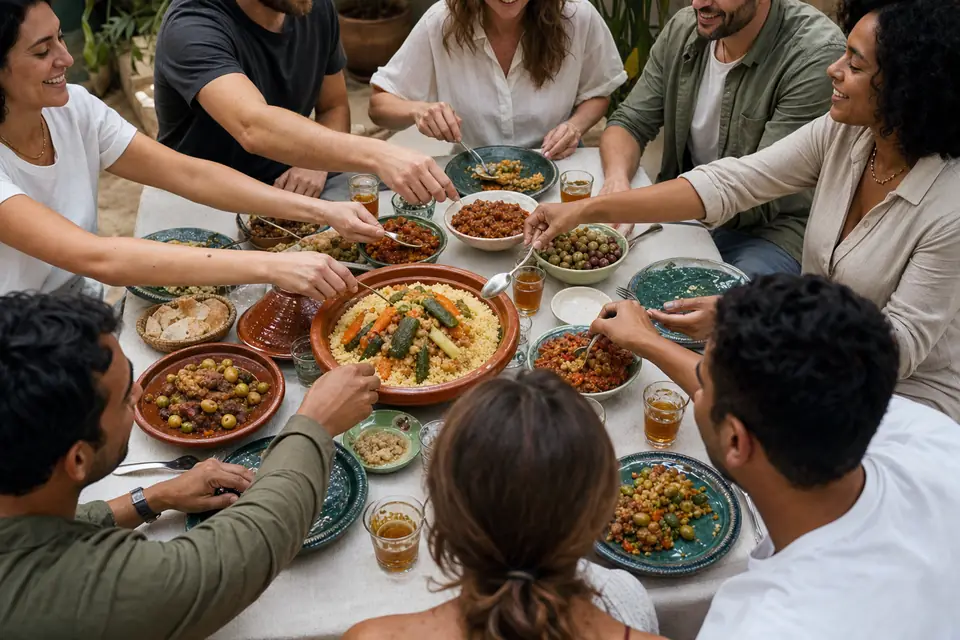
In Oujda, the national tagine classics — chicken with preserved lemon and olives, lamb or beef with prunes, kefta with egg — meet the distinctive flavours of eastern Morocco. The city's position on the Algerian border gives its cooking a cross-cultural character, and its tagines and stews can carry a spicier, more robust seasoning than the milder, sweeter versions of the west and the imperial cities. This is hearty, honest food cooked for locals rather than tourists.
The Oriental region around Oujda has its own culinary identity, influenced by both Moroccan and Algerian traditions and by the high plains and steppe landscape of the east. Alongside tagines you will find grilled meats prominent — the east loves its charcoal grills — and hearty soups and stews suited to the region's continental climate, which brings hot summers and cold winters. Vegetable and meat tagines built for sustenance are the everyday fare.
Because Oujda sees few tourists, its food scene is authentic and affordable, centred on the medina, the area around Bab Sidi Abdelwahab, and the working districts. Small canteens serve slow-cooked tagines at lunch to a mostly local crowd, at honest prices and with the reduced, glossy sauce that marks a properly made one. The city's lively, music-loving character (it lies near the cradle of Raï) gives its eateries a spirited atmosphere.
Order a tagine at a medina canteen at lunch, expect a heartier, spicier eastern style, and share it with bread. In this far-eastern city, tagine is honest local food, distinct in flavour from the western Morocco most visitors know, and well worth trying for that difference alone.
How to eat well
- 1
Expect a heartier, spicier eastern style, shaped by the nearby Algerian border.
- 2
Eat at medina canteens near Bab Sidi Abdelwahab at lunch, when the tagines are freshest.
- 3
Oujda sees few tourists, so tagines are honestly priced for a local crowd.
- 4
The east loves charcoal grills — pair or alternate a tagine with grilled meats.
- 5
Share one tagine between two with bread; a glossy, reduced sauce marks a good one.
Frequently asked questions
How is Oujda's tagine different?
It carries the flavours of eastern Morocco and the Algerian borderlands — often spicier and heartier than the milder, sweeter western versions — cooked for a local crowd in a city few tourists reach.
Where should I eat tagine in Oujda?
At the small canteens of the medina and around Bab Sidi Abdelwahab, which serve slow-cooked tagines at lunch to a mostly local crowd at honest prices.
What is eastern Moroccan cuisine like?
Shaped by both Moroccan and Algerian traditions and the eastern steppe landscape, it favours hearty tagines, prominent charcoal grills, robust spicing, and street foods like karan — distinct from the cuisine of western and central Morocco.