Moroccan couscous
Best Couscous in Marrakech — The Friday Tradition
Couscous in Morocco is a Friday ritual, steamed for the family lunch after midday prayers. In Marrakech the best plates are the seven-vegetable version, mounded high and crowned with tender lamb or chicken, and Friday is the day to seek it out.
- City
- Marrakech
- Cuisine
- Moroccan couscous
- Typical price
- 50-130 MAD
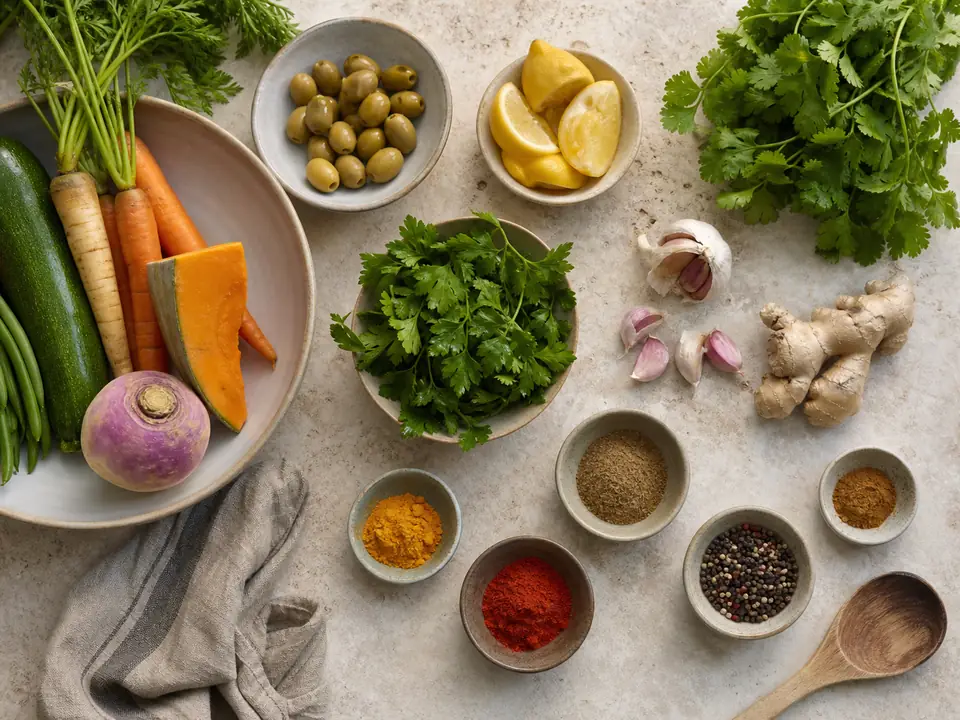
Couscous is not an everyday dish in Morocco the way it appears on tourist menus — traditionally it is the great Friday lunch, when families gather after the midday prayer around a single vast platter. The Marrakech benchmark is couscous with seven vegetables (couscous bidaoui-style with carrot, turnip, courgette, pumpkin, cabbage, chickpeas and more) piled over meat, the whole thing moistened with a ladle of the spiced broth it steamed above.
The magic is in the grain and the steaming. Real couscous is not boiled; the semolina is hand-rolled and steamed in stages over the simmering stew in a couscoussier, fluffed and separated with butter or oil between steamings until it is light and each grain is distinct. A good plate is fragrant with saffron, ginger and onion, sometimes finished with sweet caramelised onion and raisins (tfaya) for a sweet-savoury version served with chicken.
Because it is a Friday dish, that is the day to eat it well: many restaurants and canteens in the medina and Gueliz put couscous on as the plat du jour on Fridays, and it will be freshly steamed rather than reheated. On other days you can still find it, but Friday is when both the cooking and the tradition are at their best. A home-style or guesthouse couscous, cooked for the family table, is often the finest of all.
Eat it the traditional way if you can — from the shared platter, using the right hand to roll a small mouthful, or simply with a spoon. Order one generous couscous between two, and don't fill up before it arrives: it is designed to be the centrepiece.
How to eat well
- 1
Eat couscous on a Friday — it is the traditional day, so it will be freshly steamed and at its best.
- 2
Look for couscous with seven vegetables (aux sept légumes) for the classic Marrakech version.
- 3
Try the tfaya version — chicken with sweet caramelised onions and raisins — for a sweet-savoury contrast.
- 4
Properly made couscous is steamed, not boiled; the grains should be light and separate, never a wet lump.
- 5
One platter easily feeds two; it is a generous, filling dish meant for sharing.
Frequently asked questions
What day is couscous served in Marrakech?
Friday is couscous day across Morocco, eaten as the family lunch after midday prayers. Many restaurants feature it as the Friday special, freshly steamed; it can be harder to find well-made on other days.
What is the traditional Marrakech couscous?
Couscous with seven vegetables — carrot, turnip, courgette, pumpkin, cabbage, chickpeas and more — steamed over and topped with lamb or chicken and moistened with the spiced broth.
Is couscous the same as tagine?
No. Tagine is a slow-cooked stew in a conical dish; couscous is steamed semolina grain served with a vegetable-and-meat stew ladled over it. They are separate dishes, though both are Moroccan staples.