Budgeting
Self-Catering in Morocco — Markets, Kitchens & Apartment Cooking
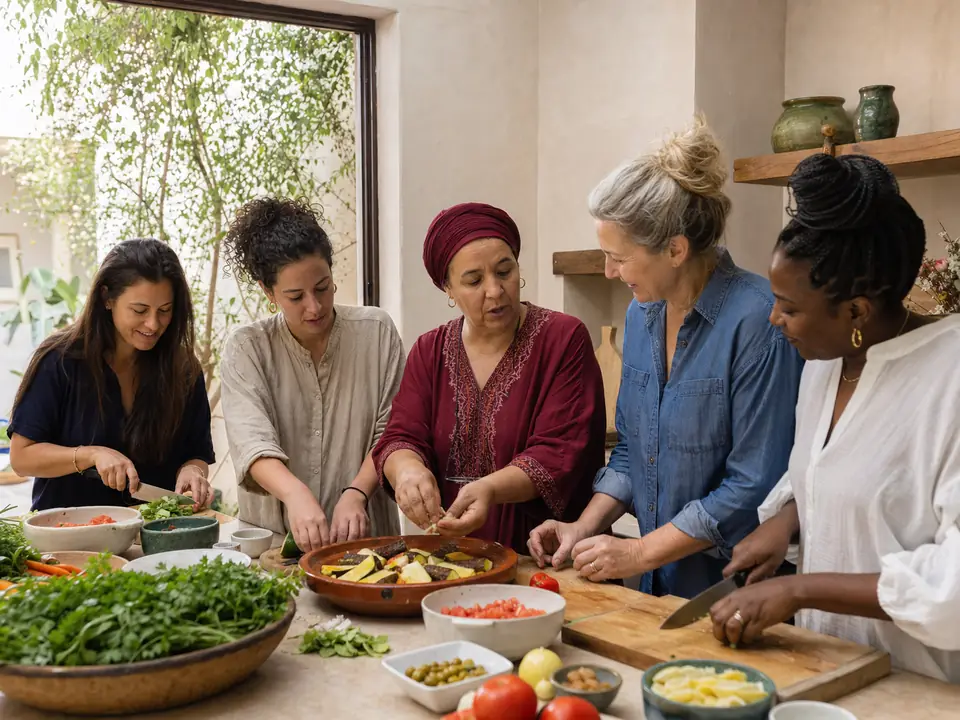
For longer stays or travellers who love to cook, renting an apartment with a kitchen unlocks a different, cheaper and deeply enjoyable side of Moroccan food. The souks and markets overflow with superb, inexpensive produce, and the everyday dishes are simple enough to recreate. Shopping and cooking for yourself is both a big money-saver and one of the best ways to understand the cuisine from the inside.
- Read
- 9 min
- Guide
- Budgeting
- Updated
- 20 July 2026
At a glance
- Markets are cheap and superb — self-catering slashes food costs on long stays.
- Buy produce daily from the souk; refrigeration and storage are limited.
- Simple dishes — salads, tagines, grilled fish — are easy to cook at home.
Shopping the market
The joy of self-catering in Morocco is the market. Every neighbourhood has its produce sellers, and the larger souks offer vegetables, fruit, herbs, olives, spices, bread, eggs and fresh meat and fish at prices that make cooking at home genuinely cheap. Buy little and often — daily if you can — since produce is freshest that way and home refrigeration in rentals is often modest. A cloth bag and small change are all you need.
Learn a few market habits: prices at fixed-stall grocers are usually set, while at open souks a little gentle bargaining is normal for larger amounts. Shop where locals shop for the best value, taste before buying olives and dates where offered, and ask the butcher or fishmonger to prepare your cut or clean your fish. Our markets guide covers where to go.
What to cook at home
You do not need to attempt an elaborate pastilla to eat well at home. The everyday Moroccan repertoire is very achievable: a spread of cooked salads like zaalouk and taktouka, a simple vegetable or chicken tagine, grilled fish with chermoula, lentils, or eggs with khlii. Bread you can buy fresh daily rather than bake. These dishes need few utensils and forgive improvisation.
A basic kitchen kit goes a long way — a pot or a tagine, a knife, and a few staple spices (cumin, paprika, ginger, ras el hanout) bought in small amounts from the spice souk. Our recipe library has straightforward versions of the classics, and cooking them with market ingredients you have just bought is one of the most satisfying ways to learn the cuisine.
The economics and the balance
The savings are real. On a longer stay, cooking most of your own meals from market produce costs a fraction of eating out three times a day, and the raw ingredients are cheap enough that even generous cooking stays inexpensive. Self-catering also lets you control diet, allergens and portions, which suits families and travellers with specific needs.
The sensible approach is a blend rather than an all-or-nothing. Cook breakfasts and some dinners at home, shop the markets for the pleasure of it, and still go out for the things worth eating out for — a cook-shop lunch, a street-food evening, the occasional special meal. That mix gives you the savings of self-catering and the experiences of eating out both.
Frequently asked questions
Is self-catering in Morocco worth it?
For longer stays and travellers who enjoy cooking, very much so. Market produce is superb and inexpensive, so cooking most of your own meals costs a fraction of eating out three times a day, and it lets you control diet and portions. It is also one of the best ways to understand the cuisine from the inside.
Where do I buy ingredients for cooking in Morocco?
At neighbourhood produce sellers and the larger souks, which offer vegetables, fruit, herbs, olives, spices, bread, eggs and fresh meat and fish cheaply. Buy little and often, ideally daily, since produce is freshest that way and rental fridges are often modest. Shop where locals shop for the best value and gentle bargaining at open souks.
What Moroccan dishes are easy to cook in an apartment?
The everyday repertoire is very achievable: cooked salads like zaalouk and taktouka, a simple vegetable or chicken tagine, grilled fish with chermoula, lentils, or eggs with khlii. Buy bread fresh rather than baking it. These need few utensils and a handful of staple spices, and forgive improvisation.
Should I self-cater for my whole trip?
A blend works best rather than all-or-nothing. Cook breakfasts and some dinners at home for the savings and the pleasure of the markets, but still eat out for the things worth it — a cook-shop lunch, a street-food evening, an occasional special meal. That mix captures both the savings of self-catering and the experiences of eating out.