Practical
Pre-Booking vs Walk-In for Moroccan Food Experiences
Morocco runs on both worlds at once — a WhatsApp-and-website booking economy for the tourist trade, and a turn-up-and-see culture for everyday eating. Knowing which applies to a given experience saves money, avoids disappointment and keeps your trip flexible. The rule of thumb: book the things with limited capacity and fixed times, and walk in for the things that are always on.
- Read
- 8 min
- Guide
- Practical
- Updated
- 20 July 2026
At a glance
- Book capacity-limited, scheduled experiences: cooking classes and popular tours.
- Walk in for cook-shops, street food and most casual restaurants.
- Booking ahead rarely costs more and often secures a better slot or small group.
What to book ahead
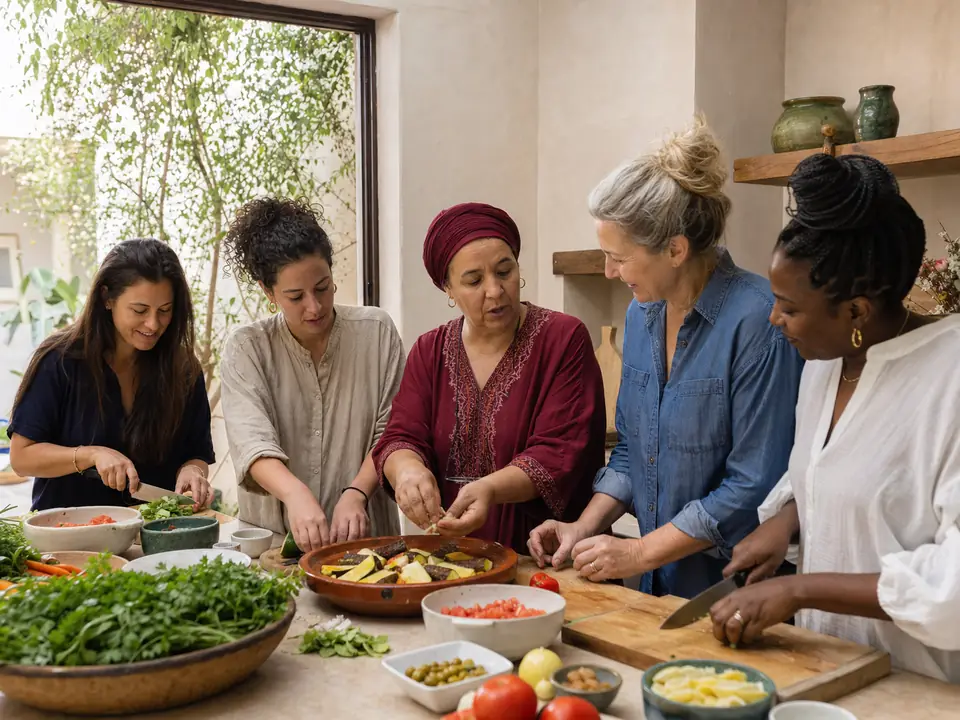
Cooking classes should almost always be reserved. They run at set times, cap numbers, and often shop the market for your group beforehand, so they cannot absorb walk-ins on the day. Booking a day or two ahead — more in peak season — also lets you request a smaller group or a specific dish, which materially improves the experience.
Popular food tours, sought-after riad dinners and any special evening (a rooftop table at sunset, a festival meal) are the same. Capacity is limited, demand is real in high season, and turning up on spec risks a wasted evening. For these, a short lead time protects the experience without locking you into rigid days.
What to walk into
Everyday eating in Morocco is a walk-in culture and should stay that way. Cook-shops, street stalls, grill counters, juice stands and the vast majority of casual restaurants take no reservations and expect you to appear. This is where spontaneity pays off — following a queue of locals to a busy counter is the single best way to eat well.
Even many mid-range sit-down restaurants are happy to seat walk-ins outside the peak dinner rush. The exceptions are the handful of famous fine-dining rooms and the most Instagrammed rooftops, where a call ahead saves a wait. As a default, keep your daytime and casual eating unplanned and reserve the planning energy for the set-piece experiences.
Booking without overpaying
Booking ahead in Morocco rarely means paying a premium, and it often means paying less than the walk-up tourist rate a tout might quote. Reserve directly with the operator where you can — many use WhatsApp — rather than through a third-party reseller that adds a margin. A direct message also lets you confirm price, inclusions and dietary needs in writing.
Keep some slack in the plan. Over-booking a trip with fixed-time experiences robs Morocco of its improvised pleasures, so aim for one booked highlight a day at most and leave the rest open. That balance — a reserved anchor plus free hours to wander and graze — is how experienced travellers get the best of both systems.
Frequently asked questions
Do I need to book a cooking class in Marrakech in advance?
Yes, almost always. Classes run at fixed times, limit group sizes and often buy market ingredients for your group beforehand, so they rarely accommodate same-day walk-ins. Booking a day or two ahead, or longer in peak season, also lets you request a smaller group or particular dishes, which improves the experience.
Can I just walk into restaurants in Morocco?
For the vast majority, yes — cook-shops, street stalls, grill counters and casual restaurants all expect walk-ins and take no reservations. Only the handful of famous fine-dining rooms and the most popular rooftop terraces really benefit from booking ahead. Keeping your casual eating spontaneous is part of how you find the best local food.
Is it cheaper to book food experiences ahead or on the day?
Booking directly with the operator ahead of time is usually the same price or cheaper than the walk-up rate, and it avoids the inflated figures touts sometimes quote on the spot. Reserve directly rather than through a reseller to skip the added margin, and confirm price and inclusions in writing. The main saving is protecting your time and securing a good slot.
How far ahead should I book in peak season?
In the busy spring and autumn windows and around major holidays, book capacity-limited experiences like cooking classes and top tours several days to a week ahead. Casual eating still needs no booking at all. If your dates are fixed and a specific experience matters to you, reserving it early removes the risk of it selling out.