City guides
Oujda Food Guide — Eastern Morocco's Border Table
Oujda sits in Morocco's far east, a stone's throw from the Algerian border, and its food carries that frontier identity — heartier, more grill-focused, and seasoned by centuries of cross-border exchange. Few tourists make it here, which is precisely the appeal for travellers who want a Moroccan food city getting on with its own life. The eastern kitchen has specialities you will not find in Marrakech.
- Read
- 8 min
- Guide
- City guides
- Updated
- 20 July 2026
At a glance
- Oujda's food leans grill-heavy and shares much with neighbouring Algeria.
- Karan, a baked chickpea-flour flan, is the local street snack to try.
- This is off-trail Morocco — cheap, honest, and free of tourist pricing.
The eastern identity
Oujda's cuisine reflects its position at the crossroads of Morocco, Algeria and the wider Maghreb. The result is a table that loves grilled and roasted meat, robust seasoning and dishes that travel across the border in both directions. You will notice more emphasis on brochettes, kefta and roasted lamb than on the delicate court cooking of the imperial cities.
Because the city sees so few foreign visitors, eating here is refreshingly free of tourist theatre. Prices are local, menus are informal, and the welcome is curious and warm. It is a place to eat where the people of the east eat, in plain grill houses and market counters rather than terraces built for tour groups.
What to eat in Oujda
The signature street food is karan (also kalinté or garantita in the region), a baked flan of chickpea flour sold in slices from carts and hole-in-the-wall counters — cheap, warm and dusted with cumin. It is a snack of the working city and a genuine eastern speciality worth tracking down. Alongside it, the grill counters turn out excellent brochettes and kefta sandwiches.
Oujda is also known regionally for its sweets and its coffee culture, and the surrounding plains supply good produce, citrus and olives. Look, too, for the local takes on shared Maghrebi dishes — a heartier couscous, robust harira — that carry a subtly different accent from their western Moroccan cousins.
Where to eat and browse
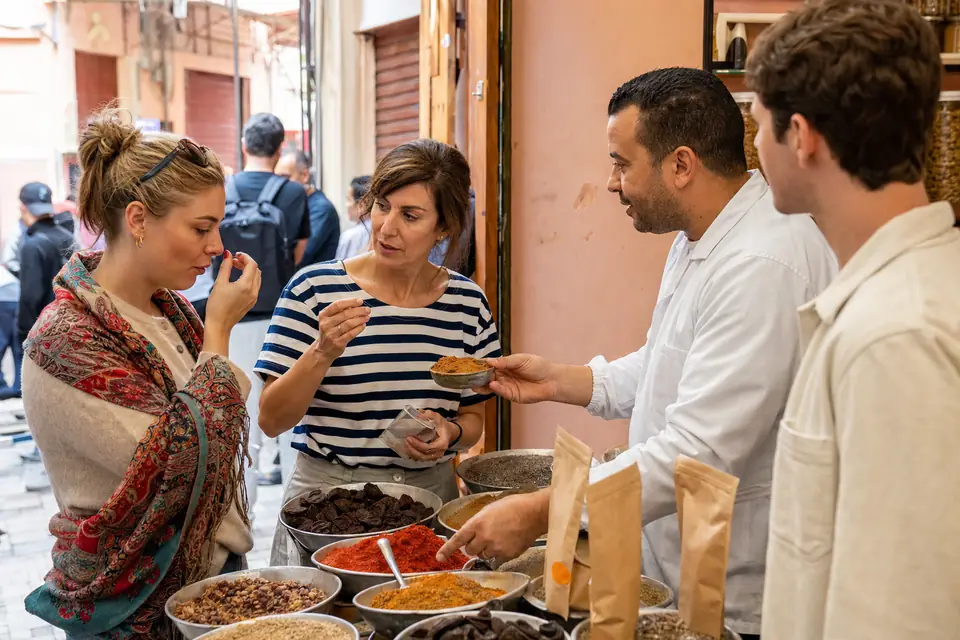
The central market and the streets of the medina are the place to graze — spice stalls, olive sellers, snack counters and grills clustered together. As in any Moroccan city, follow the local crowd and the smoke to the busiest grill, and eat what is cooking to order. Turnover is high in a working market, which keeps things fresh and safe.
Oujda works best as an honest stopover for travellers crossing the east, or as a base for exploring the nearby Beni-Snassen mountains and the coast at Saidia. Set your expectations to 'real working city' rather than 'polished destination' and you will eat cheaply and memorably among people genuinely pleased to see a visitor.
Frequently asked questions
Is Oujda worth visiting for food?
For adventurous travellers who want off-trail, authentic Moroccan eating, yes. Oujda's grill-heavy, Algerian-influenced kitchen and specialities like karan are distinct from the tourist cities, and prices are genuinely local because so few foreigners visit. It is more a rewarding stopover than a headline destination, best combined with the eastern coast or mountains.
What is karan and where do I find it?
Karan is a baked flan made from chickpea flour, sold warm in slices from carts and small counters and often dusted with cumin, and it is an eastern Moroccan street-food speciality. Look for it around the central market and busy streets, where local workers buy it as a cheap, filling snack. It is one of the dishes that makes Oujda's food distinct.
How is eastern Moroccan food different?
The eastern kitchen around Oujda is heartier and more grill-focused, shaped by centuries of exchange across the nearby Algerian border. Expect more emphasis on brochettes, kefta and roasted meats, robust seasoning, and regional versions of shared Maghrebi dishes. It contrasts with the refined court cooking of Fes and the tourist-oriented tables of Marrakech.
Is Oujda a good base for exploring?
Yes — it is a useful base for the Beni-Snassen mountains and the Mediterranean beach resort of Saidia, and a natural stop for anyone travelling in Morocco's far east. Treat it as a working city with honest food rather than a polished tourist destination. The lack of visitors is part of what keeps the eating authentic and affordable.