Itineraries
The 2-Week Morocco Grand Culinary Circuit
Two weeks is the sweet spot for eating across Morocco. It is long enough to reach the regional kitchens most visitors miss — the argan-oil cooking of the Souss, the desert bread baked in sand, the Andalusi tables of the north — without the forced-march feeling of a shorter loop. This circuit is built so the food regions unfold in a logical order, with rest days where the driving is hardest.
- Read
- 12 min
- Guide
- Itineraries
- Updated
- 20 July 2026
At a glance
- Route the fortnight by food region, not just by famous sights.
- Build in a rest day after every long transfer so appetite survives.
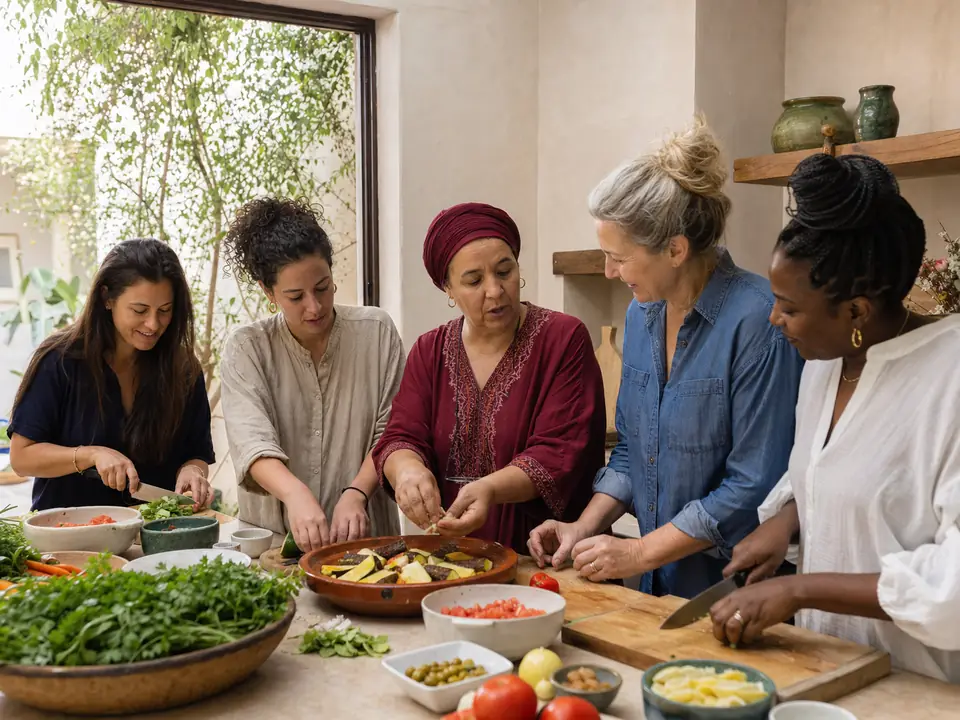
- Anchor the trip with one cooking class early and one late.
Week one — Marrakech, the Atlas and the desert
Begin in Marrakech for three nights: a food tour and a cooking class in the first two days give you the vocabulary for everything that follows. Eat tanjia, graze Jemaa el-Fna in the evenings, and let the city set the rhythm of big lunches and late dinners.
Then climb. A night in a High Atlas village introduces mountain Berber cooking — barley breads, walnut and honey, tagines cooked slowly over wood. Push on toward the desert via the Dades or Draa valleys, stopping for roadside dates and the sweet, dense bread of the south, and spend a night under canvas eating medfouna, the stuffed 'Berber pizza' baked in the sand.
Week two — Fes, the north and the coast
Cross to Fes for three nights and shift gear entirely: this is refined, urban, Andalusi cooking — pastilla, sweet-savoury tagines, and the country's best pastries. Give it time, ideally with a second cooking class focused on the more technical Fassi dishes.
Come down to the coast to finish. Essaouira or one of the smaller Atlantic ports gives you grilled sardines straight off the boats, spider crab and a salt-air palate cleanse after two weeks of spice. If your flight allows, a night in Casablanca or Rabat adds a modern, seafood-forward city meal before you leave.
Pacing, transfers and rest
The single biggest mistake on a fortnight is under-resting. Moroccan lunches are large and the driving days are long, so plan a genuine rest day after each big transfer — the desert leg especially. Appetite is a resource; protect it.
Consider hiring a driver for the Atlas-and-desert stretch rather than self-driving, so you can taste at roadside stops without watching the map. Use trains for the flat imperial-city legs, which are comfortable and let you snack as you go — see our ONCF rail food guide for what to bring.
Frequently asked questions
Is two weeks enough to eat across Morocco?
It is the ideal length for a first deep dive. Two weeks reaches four distinct food regions — Marrakech and the Atlas, the desert south, imperial Fes and the north, and the Atlantic coast — with enough breathing room to enjoy each. A shorter trip forces you to pick two of those, while three weeks starts to add the far south and east.
Should I self-drive or hire a driver for a food circuit?
For the mountain and desert legs a driver is worth it, because the pleasure is in stopping at roadside grills, date stalls and viewpoints without navigating hairpins. For the flat imperial-city corridor the train is comfortable and lets you eat as you travel. Many travellers mix the two — train between cities, a driver for the Atlas and Sahara.
How much should I budget for food on a two-week trip?
Eating a mix of street food, cook-shops and the occasional nicer restaurant, many travellers spend a comfortable amount per day without trying hard to economise; splurge meals and cooking classes sit on top. Street food and market meals keep daily costs very low, while riad dinners and tourist terraces cost several times more. See our budgeting guides to plan a daily figure that suits your style.
Which regional dish surprises visitors most on this route?
Usually medfouna, the desert's stuffed flatbread baked in hot sand and embers, which few travellers have heard of before arriving. Argan-oil dishes in the Souss and the sweet-savoury Fassi tagines also tend to reset people's idea of Moroccan food. The circuit is designed precisely to deliver these regional surprises rather than the same three dishes everywhere.